

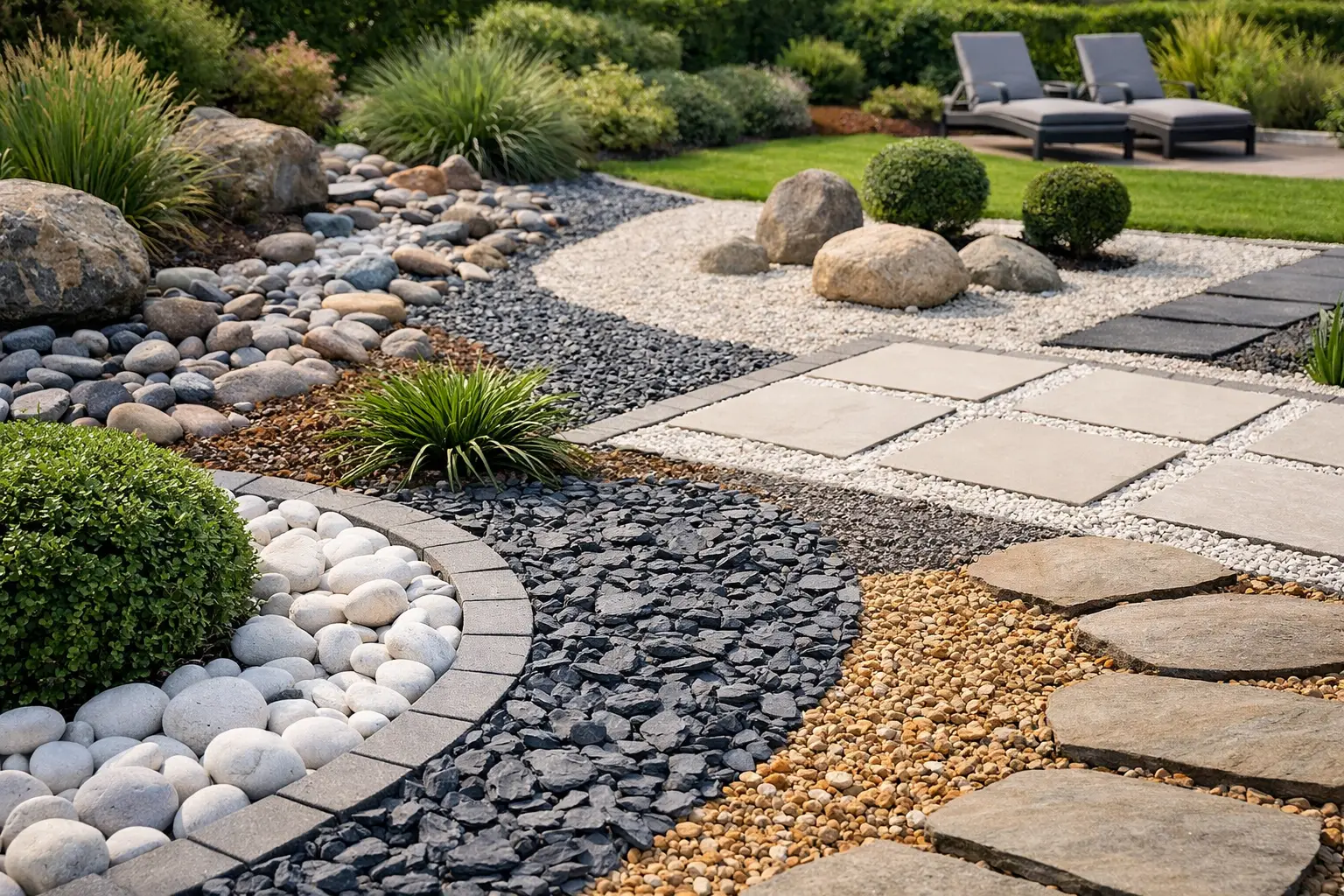
A few yards of the right stone can make a front bed look intentional, turn a muddy side yard into a usable path, or give a backyard gathering area a clean finished edge. The best decorative gravel landscape ideas do more than add color and texture. They solve everyday problems such as runoff, bare soil, maintenance-heavy beds, and worn-down walkways.
For Birmingham homeowners, gravel is especially practical because it holds up through heavy rain, summer heat, and changing seasons. The key is matching the stone size, color, and installation method to the job. A beautiful gravel project should still look good after a downpour, stay where you put it, and make the rest of the landscape easier to maintain.
Start With the Job, Then Choose the Stone
Decorative gravel is not one-size-fits-all. Smooth river gravel has a softer, natural look and works well around plant beds and water features. Crushed stone and angular gravel lock together more firmly, making them a better choice for paths, sitting areas, and other surfaces that get foot traffic. White or gray marble creates a crisp, bright accent, while red rock brings warmth to brick homes and traditional Southern landscapes.
Before selecting a color, think about where the material will go. Light-colored stone can brighten a shaded bed but may show leaf litter more quickly. Darker gravel can ground a planting area and hide soil better, though it may absorb more heat in full sun. In a low-traffic bed, appearance can lead the decision. On a walkway or patio base, stability should come first.
1. Frame Foundation Beds With Clean Gravel Borders
A narrow gravel border along the front of a foundation bed gives mulch and planting areas a defined edge. It works particularly well where turf struggles beside the house or where rainwater splashes soil onto siding. Use edging to separate the gravel from the lawn, then install a layer deep enough to cover the soil evenly without burying the lower stems of shrubs.
This idea looks sharp with river gravel, marble, or red rock, depending on the house color. A neutral gravel often complements painted siding and stone veneers, while a warmer red rock can tie into brick. Keep the strip simple rather than overly wide. Its purpose is to create a clean transition and reduce trimming, not compete with the plant bed.
2. Build a Dry Creek Bed Where Water Already Travels
A dry creek bed is one of the most useful decorative gravel landscape ideas for properties with a low spot, a downspout outlet, or runoff that cuts through the yard after a hard rain. Instead of fighting the water with a shallow layer of loose stone, shape a broad, gentle channel that guides water toward a safe drainage area.
Use larger river gravel or mixed stone sizes for a natural creek appearance. Place larger pieces along bends and edges, then fill the center with smaller gravel. This variation keeps the feature from looking flat and helps the stones stay in place. The goal is not merely decoration. Proper slope and discharge location matter, especially when runoff could affect a neighbor’s property or the home foundation.
Make Drainage Look Planned
A dry creek bed becomes part of the landscape when it starts and ends naturally. Tuck it into a mulch bed, run it through a planted slope, or finish it near a rain garden. Ornamental grasses, liriope, and hardy shrubs can soften the edges without blocking water flow. If a drainage problem is significant, it is wise to confirm the grading plan before bringing in material.
3. Replace a Muddy Side Yard With a Gravel Walkway
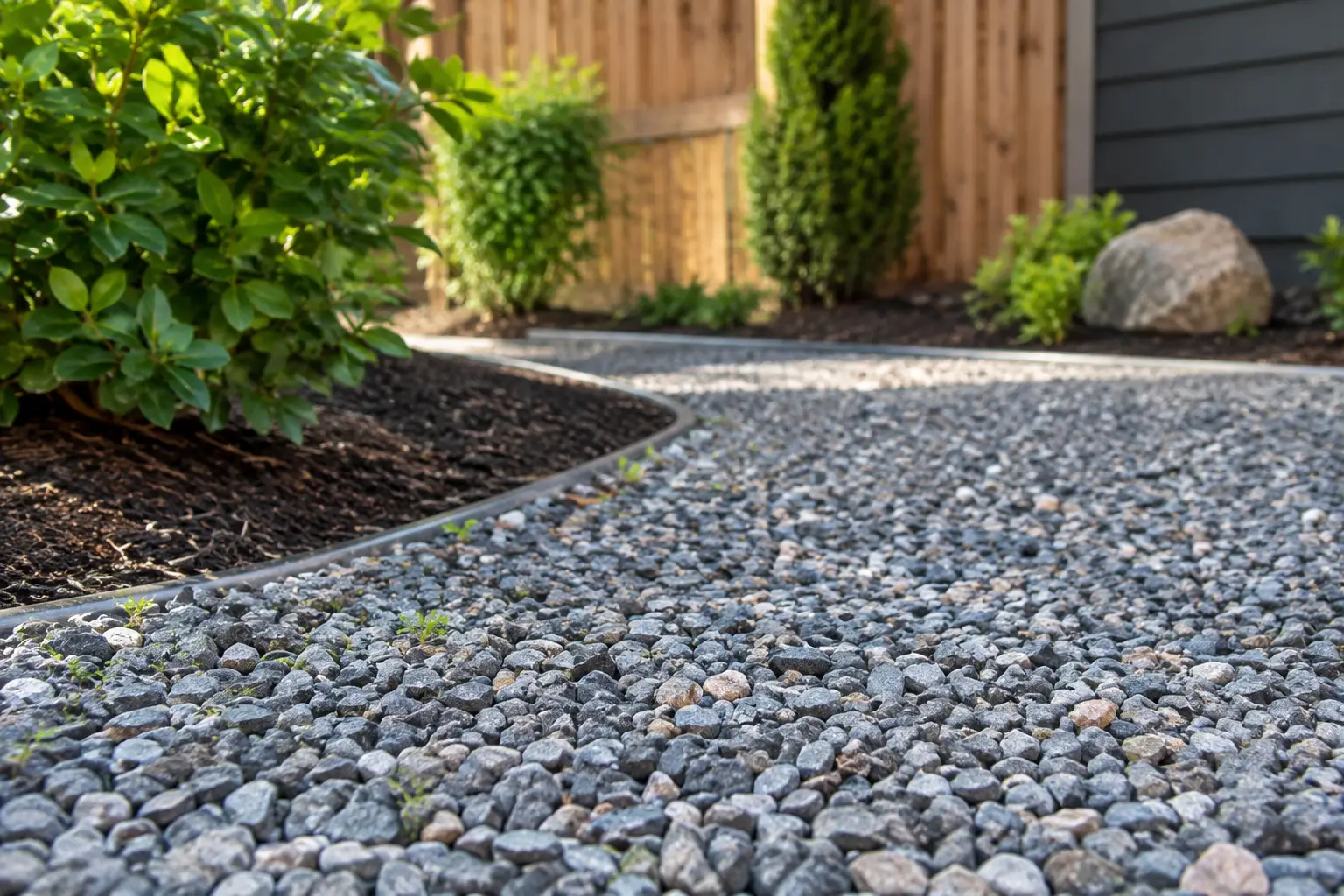
The narrow area between a home and fence often becomes a muddy shortcut for trash cans, garden tools, and pets. A gravel path gives that space a purpose. Start with a firm, compacted base, use landscape fabric where appropriate to reduce soil mixing and weed growth, and contain the path with edging.
For walking surfaces, choose a smaller angular gravel that compacts better than round stone. Smooth river rock can shift underfoot, making it less comfortable for a frequently used route. A path that is two to three feet wide usually handles regular household traffic, but wider is better if you need room for wheelbarrows or equipment.
4. Create a Simple Fire Pit or Seating Area
Gravel is a practical surface beneath Adirondack chairs, a bistro set, or a backyard fire pit. It drains well, looks finished, and can be refreshed more easily than a struggling patch of grass. A defined circle, square, or rectangle also gives the outdoor area structure without requiring a full paver patio.
Use a compactable base below the decorative top layer, especially if chairs will be moved often. Angular gravel is typically the better choice for a stable seating surface. Keep the fire feature on a safe, level area and follow the manufacturer’s clearance guidance. If the space is near a wood fence, overhanging trees, or dry plant material, choose another location.
5. Use Gravel to Highlight Large Containers and Garden Art
A small gravel pad beneath oversized planters can make an entryway or patio corner feel more finished. It is also helpful under pots that drain heavily, where water and soil can stain concrete. Choose a stone color that supports the container rather than matches it exactly. Dark charcoal pots often stand out against pale marble, while terra-cotta looks at home with tan river gravel or red rock.
This is an easy project for homeowners who want a noticeable change without rebuilding an entire bed. The same approach works around a birdbath, bench, garden sculpture, or mailbox planting. Add a firm edge so the gravel does not drift into the lawn during mowing.
6. Add Contrast Around Evergreen Shrubs
Evergreen shrubs, boxwoods, and low-maintenance ornamental grasses have strong forms that show up well against gravel. A stone bed can give these plants a more architectural appearance than mulch, particularly in modern or minimalist landscape designs. It also avoids the regular mulch replacement that many front beds need each year.
There is a trade-off: gravel does not improve soil as it breaks down, and it can make future planting changes more involved. Keep a clear soil area around each plant’s base, and do not pile stone against trunks or crowns. In established beds with healthy plants, gravel can be a durable finishing material. In a new garden where soil-building is a priority, mulch may be the better first choice.
7. Refresh a Mailbox or Address Bed
A small mailbox bed is a good place to use a bolder material, such as red rock or bright marble. Because the space is compact, a few bags or a partial yard can make a visible difference. Pair the stone with heat-tolerant plants that will not hide the mailbox, such as compact shrubs, ornamental grasses, or seasonal color.
Make sure the bed stays clear of the street, driveway sightlines, and mailbox access. A low, tidy design is easier to maintain and looks appropriate from the road.
8. Make a Low-Maintenance Backyard Garden Edge
Gravel can create a useful separation between lawn and vegetable beds, raised planters, or cutting gardens. A path of stone keeps shoes cleaner after rain and gives you a place to kneel, harvest, and work without compacting growing soil. It also makes the garden look organized when plants are between seasons.
For this use, install a noticeable depth of gravel and edge the path well. Garden paths receive more traffic than homeowners expect, especially during spring planting and summer harvesting. If loose gravel migrates into the beds, a wider border or taller edging will save cleanup later.
9. Accent a Slope With Stone and Plants
Slopes are difficult to mow and can lose soil during heavy rain. Decorative gravel paired with deep-rooted plants can turn a troublesome incline into an attractive feature. Larger stone is often more stable than small pea gravel on a slope, but the right choice depends on the grade and drainage pattern.
Do not expect gravel alone to stop erosion on a steep slope. It may need grading, retaining, erosion-control fabric, or a more substantial drainage plan underneath. For a mild incline, stone combined with shrubs and groundcovers can reduce maintenance while adding texture year-round.
10. Choose Delivery and Quantity With the Project in Mind
Gravel projects often look small until it is time to carry material from the driveway to the backyard. Buying in bulk can be a better value for paths, large beds, creek beds, and seating areas, while bagged material may fit a very small touch-up. Measure the length and width of the space, decide on the needed depth, and allow a little extra for settling and uneven areas.
For most decorative applications, a depth of about two to three inches is common. Paths and surfaces that need more stability may require a deeper base beneath the finish stone. The team at Landscape Source can help Birmingham-area customers think through material type, quantity, pickup, and delivery placement before a project begins. Clear placement instructions can save a lot of wheelbarrow trips once the truck arrives.
The best gravel project is one that fits how you actually use the yard. Choose stone that works with the home, prepare the base carefully, and give water a clear place to go. Then a practical material becomes a long-lasting part of the landscape, not another weekend repair waiting to happen.

Leave a Reply