

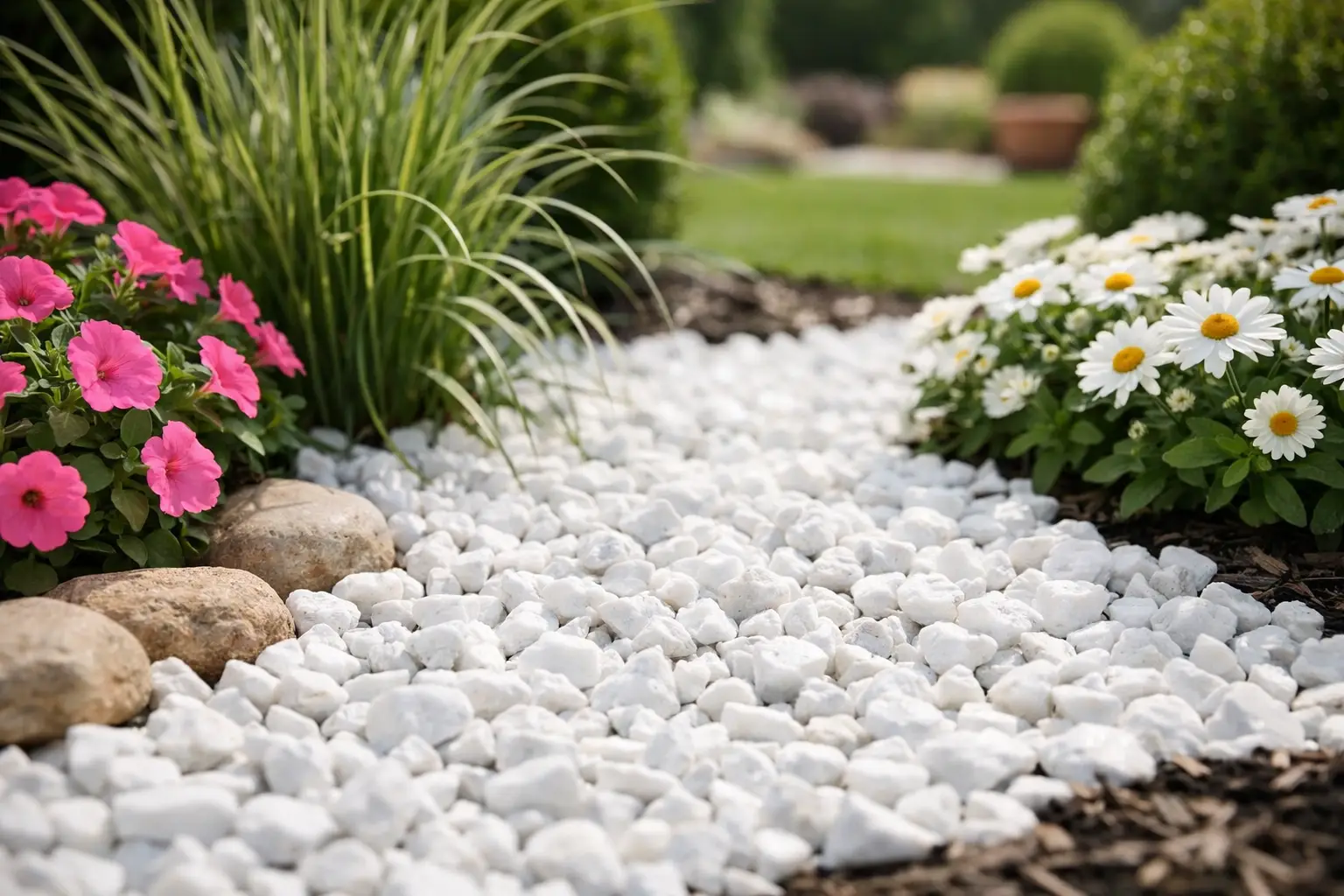
A fresh layer of marble chips for flower beds can make a front foundation planting or backyard garden look finished in a single afternoon. Their crisp white color stands out against green foliage, brick, and dark mulch, giving Birmingham properties a clean, classic look that holds up season after season. Before you choose stone, though, it helps to know where marble works best and what it asks of your landscape over time.
Why Choose Marble Chips for Flower Beds?
Marble chips are decorative landscape stone made from crushed marble. They are most often white or light gray, with natural variation that gives a bed more character than a flat, uniform surface. For homeowners who want a bright, formal accent around the house, mailbox, walkways, or specimen plants, marble is a strong choice.
Unlike organic mulch, marble does not break down into the soil or need a full replacement every year. A properly prepared bed can keep its finished appearance for years with occasional raking and a small amount of top-off material. That long service life can make stone a practical option for permanent plantings and areas where you do not want to repeat the same mulching project each spring.
Marble chips also help block sunlight from reaching bare soil, which can reduce weed growth. They hold the soil surface in place during ordinary rain and can keep mud from splashing onto siding, patios, and lower leaves. In Birmingham’s frequent heavy rain, that cleaner edge around a bed is a real benefit.
The look is not for every yard. White stone creates contrast, so it becomes a feature rather than blending quietly into the background. If you prefer a softer, natural woodland feel, pine bark, hardwood mulch, river gravel, or a warmer-colored decorative stone may be a better fit.
Where Marble Chips Work Best
Marble is especially effective in defined planting beds with clear borders. It pairs well with boxwoods, ornamental grasses, evergreen shrubs, roses, liriope, and plants with deep green leaves. It also works nicely around statues, fountains, garden benches, and light-colored stone or brick homes.
Use it where you want a tidy, intentional finish and where the bed is not constantly being replanted. A front entry bed with established shrubs is a better long-term stone bed than a vegetable garden or an annual flower bed that gets turned over every season.
Bright Areas and Formal Plantings
In sunny areas, marble’s light color can help a landscape feel open and polished. It reflects more light than dark mulch or darker gravel, which makes it especially popular along walkways and around foundation beds that need more visual definition.
That reflection has a trade-off. The stone can make a sunny location feel brighter and warmer around low-growing plants. Most established shrubs handle that just fine, but tender annuals and plants already stressed by afternoon heat may need more attention. Look at how much direct sun the bed receives before committing to a bright white surface.
Beds With Good Edging
Every decorative stone needs a border. Metal edging, brick, natural stone, concrete curbing, or a sturdy landscape edge keeps marble chips in the bed and out of the lawn. This matters near driveways, sidewalks, and high-traffic paths, where loose chips can migrate with foot traffic, rain, and blowing leaves.
A defined edge also makes maintenance easier. You can rake the stone back into place without fighting grass runners or watching the material spill into surrounding areas.
Consider Your Plants Before Choosing Marble
Marble is primarily calcium carbonate, the same basic mineral found in limestone. It is generally a stable landscape material, but fine dust and gradual weathering can contribute alkalinity near the soil surface. That does not mean every plant in a marble bed will struggle. It does mean plant selection deserves some thought.
Plants that prefer acidic soil, including azaleas, camellias, gardenias, blueberries, and hydrangeas grown for blue blooms, may not be the best match for a marble-covered bed. In those areas, pine bark, pine straw, or another mulch that supports the desired soil conditions is often the simpler choice.
For established shrubs and many common landscape plants, marble can be a good-looking, low-maintenance surface treatment. If you are uncertain about a particular planting, test your soil and ask for advice before ordering. Matching the material to the plants from the beginning is easier than changing an entire bed later.
How Deep Should Marble Chips Be?
For most flower beds, spread marble chips about 2 to 3 inches deep. Two inches is often enough for a clean decorative layer with reasonable weed suppression. Three inches gives a fuller look and better coverage in beds with exposed soil, but going much deeper can make planting and maintenance more difficult.
Keep stone a few inches away from the base of shrubs, tree trunks, and plant crowns. Piling any mulch or stone directly against stems can hold unwanted moisture, hide pests, and make it harder for plants to breathe at ground level. Leave a small open ring around each plant, then feather the chips outward.
Avoid using stone to correct a drainage problem. Marble chips can help keep the soil surface tidy, but they do not solve compacted soil, standing water, or a poorly graded yard. If water collects in a bed after rain, address the grade, drainage route, or soil condition before adding decorative material.
Estimating How Much You Need
Bulk material makes it easier to cover a full bed evenly without piecing together dozens of small bags. Start by measuring the length and width of the planting area, then multiply them to get square footage. Curved beds can be measured in sections and added together.
As a practical estimate, one cubic yard of marble chips covers about 162 square feet at 2 inches deep or about 108 square feet at 3 inches deep. Irregular shapes, settling, and a little extra coverage around edges can change the final amount, so it is wise to allow a modest cushion rather than coming up short.
For a 120-square-foot foundation bed, one yard is typically enough for a 2-inch layer. For a larger 300-square-foot bed, plan on roughly 2 yards at that same depth. A material-yard team can help confirm the quantity once you have your measurements.
Preparing a Bed for Marble Chips
Good preparation is what keeps a stone bed looking sharp. Remove existing weeds, grass, old mulch, and large roots first. Smooth the soil surface, shape the bed edge, and make sure water flows away from the home’s foundation.
Landscape fabric can be useful beneath marble in some applications, particularly around established shrubs where you want to separate the stone from the soil. It may reduce soil mixing and make future cleanup easier. However, fabric is not a permanent weed solution. Weed seeds can still settle and sprout on top of it, and fabric can become exposed or tangled when plants are moved.
For beds that are replanted often, many homeowners skip fabric and focus instead on thorough weed removal, proper stone depth, and routine hand weeding. The right approach depends on how permanent the bed is and how often you expect to change the plantings.
Maintaining a Marble Chip Bed
Marble does not decompose, but it is not completely maintenance-free. Leaves, pine needles, soil, and grass clippings can dull the bright surface over time. A leaf blower on a low setting or a light rake will keep debris from building up. Take care not to blow chips into the lawn, driveway, or street.
Expect to pull occasional weeds, especially after windy weather or a season of falling leaves. If the chips shift from heavy rain or foot traffic, rake them level. You may also need a small top-off every few years as material settles into the soil or gets carried away during routine yard work.
Avoid using harsh chemicals that could discolor nearby plants or create runoff concerns. Keeping the bed clean, edged, and evenly covered will do more for its appearance than trying to make old stone look brand new.
Getting Marble Chips Delivered for a Cleaner Project
Stone is heavy, and moving it one bag at a time can turn a simple bed refresh into a long weekend. Buying marble in bulk gives homeowners and landscape crews the material needed for consistent coverage at a more practical scale. It also makes it easier to complete several beds, a walkway border, or a full front-yard update at once.
For Birmingham-area projects, Landscape Source Inc. can help you select an appropriate amount of decorative material and arrange delivery with clear placement instructions. If a truck can safely access the area, having the load placed close to the project can save significant wheelbarrow time and keep the job moving.
Marble chips are a lasting choice when the bed, plant selection, and edging all support them. Take a few measurements, look closely at your sun exposure and existing plants, and choose a coverage depth that gives the space a clean finish without burying what you worked hard to grow.

Leave a Reply