

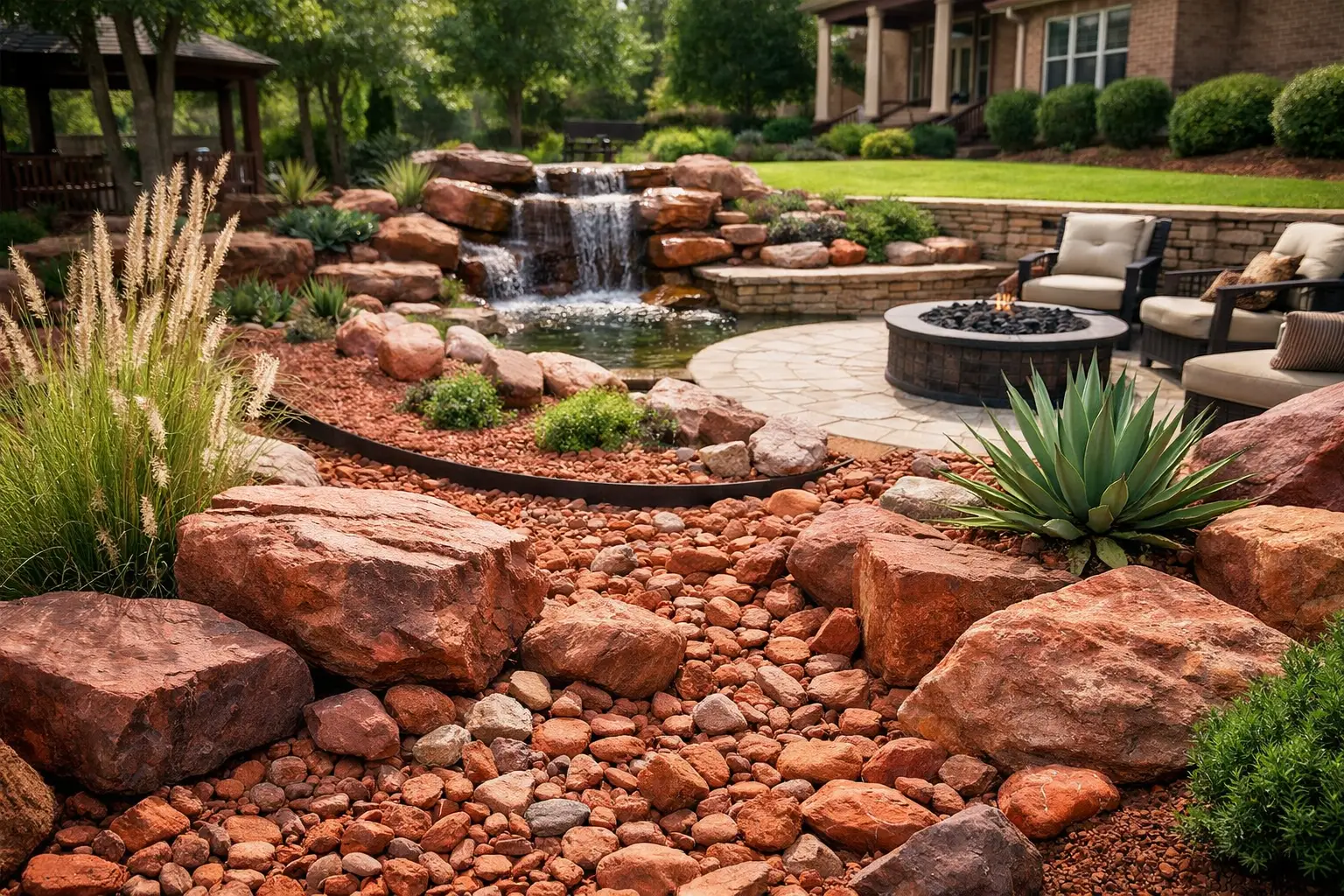
A fresh load of red rock can change a faded Birmingham planting bed in an afternoon. The best red rock landscaping ideas use its warm, natural color with a clear purpose: defining an entry, controlling muddy splash areas, or giving shrubs and evergreens a finished backdrop that does not wash away in the first hard rain.
Red rock is not right for every space, but it is a dependable choice for homeowners who want a long-lasting alternative to mulch and for crews building crisp, low-maintenance beds. Its color works especially well against Alabama brick, dark green foliage, black metal accents, and light concrete.
1. Frame the front foundation beds
A red rock foundation bed gives the front of a house a clean, intentional look. Use it around established shrubs, ornamental grasses, and low-growing evergreens, keeping a neat edge between the stone and lawn. The contrast helps individual plants stand out instead of blending into a dark mulch bed.
This is one of the most practical red rock landscaping ideas for homes with brick exteriors. Red tones can complement traditional red or brown brick without looking too matched. If your brick is already strongly red, choose plants with varied green, blue-green, or silvery foliage so the bed still has visual separation.
Keep rock several inches away from siding and do not pile it against the foundation. A consistent depth of about 2 to 3 inches is usually enough for coverage without making the bed look overfilled.
2. Build a welcoming walkway border
Walkways tend to collect grass clippings, soil, and mulch that has drifted out of nearby beds. A narrow strip of red rock along a sidewalk or paver path creates a clear boundary and makes routine cleanup easier. It also gives guests a finished line from the driveway to the front door.
For a softer look, place the rock in a curved bed with liriope, dwarf shrubs, or seasonal color on the outer edge. For a more formal entrance, use straight lines and a defined metal, stone, or concrete edge. The edge matters because it keeps grass from creeping in and prevents rock from scattering onto the walk.
Avoid using loose, rounded decorative rock directly on a path where people will walk often. It can shift underfoot. Use it beside the path as an accent instead, while keeping the walking surface stable and level.
3. Solve a muddy downspout area
The spot beneath a downspout can quickly become bare, muddy, and difficult to mow. Red rock creates a durable splash zone that helps protect soil from the force of runoff. Start with a shallow, shaped area below the downspout, then direct water away from the house using a gentle slope or an appropriate drain extension.
This project needs more than decorative stone. Water must have somewhere to go. If runoff regularly pools near your home, address grading or drainage before adding rock. Stone can cover a problem, but it cannot correct water moving toward a foundation.
A modest rock channel can look purposeful when it connects the downspout area to a larger bed or a dry creek feature. Use larger pieces near the outlet if the water hits with force, then transition to smaller material farther out.
4. Create a dry creek bed that looks natural
A dry creek bed is a useful way to guide water through a low area while adding texture to the landscape. Red rock can bring warmth to the design, especially when mixed thoughtfully with neutral river gravel or larger natural stone. The mix keeps the feature from looking like one uniform stripe of color.
Shape the creek wider at bends and slightly narrower in straight runs, just as a natural stream changes direction and width. Bury a portion of larger accent stones so they look settled into the ground rather than placed on top of it. Plant ornamental grasses, ferns, or moisture-tolerant perennials along the edges where conditions allow.
For drainage work, size and depth depend on the amount of water your property receives. A small decorative swale may only need a shallow channel, while a serious runoff route may need professional planning. This is a good place to ask for help matching the material to the job instead of choosing solely by color.
5. Add contrast around specimen plants
A single Japanese maple, crape myrtle, or sculptural evergreen deserves more attention than a plain circle of mulch. A red rock ring gives that focal plant definition and makes the space look cared for through every season. It can be especially effective where grass struggles under mature trees or around a mailbox planting.
Leave breathing room around the plant trunk. Stone should never be mounded up like a volcano, and it should not trap moisture against bark. Use a wide, low ring with a clean edge, then maintain it by removing leaves and windblown debris as needed.
Red rock holds its color and does not break down like organic mulch. The trade-off is that it is less convenient if you plan to divide perennials, change plantings often, or refresh annual color several times a year. For beds that stay mostly permanent, it is an excellent fit.
6. Refresh a side yard or utility area
Side yards are often too narrow for a full garden and too visible to ignore. Red rock can turn an overlooked strip beside an HVAC unit, fence, or utility route into a tidy, low-maintenance surface. Pair it with stepping stones if the area is used for access.
Maintain required clearance around HVAC equipment and keep stone out of areas where it could interfere with drainage or service access. If the ground is heavily traveled, compacted base material and properly set stepping stones may be necessary before the decorative rock goes down.
This approach also works around trash-bin pads and hose connections. The goal is not to cover every inch of the yard with stone. It is to give hard-working areas a surface that stays cleaner than exposed soil.
7. Pair red rock with a modern black-and-green palette
For a more contemporary look, use red rock as the warm element against black landscape edging, charcoal planters, dark fencing, and rich green plant material. The combination feels sharp without being cold. It is a strong choice for renovated ranch homes and newer outdoor living spaces.
Limit competing colors nearby. If you use red rock, bright orange pots, yellow gravel, and multiple colored pavers can make a small yard feel busy. Repeating a few materials creates a more polished result. Let the rock provide warmth, then use foliage and structure to do the rest.
8. Use it as a finishing layer around hardscapes
Patios, retaining walls, fire pit areas, and outdoor kitchens benefit from a transition between hard surfaces and planting beds. A band of red rock can soften that transition, cover exposed soil, and make the overall installation look complete. It is particularly useful where mulch might blow onto a patio or float away during heavy rain.
Choose the rock size based on the scale of the hardscape. Smaller material generally suits narrow accent strips, while larger pieces carry more visual weight beside a broad retaining wall or large patio. Consistency matters more than using the biggest stone available.
Plan the Bed Before the Rock Arrives
The fastest rock installation starts with preparation. Remove weeds and old debris, shape the bed, and install edging before delivery. A quality landscape fabric can help reduce weed pressure in many decorative beds, but it is not a permanent cure. Leaves, dust, and organic material eventually collect on top of stone and can support new weed growth, so occasional maintenance is still part of the plan.
Measure the length and width of each area, then multiply to find square footage. Your needed volume depends on bed depth and rock size, so provide those measurements when ordering bulk material. Ordering by the yard is often more practical and economical than hauling multiple bags for a larger project.
Think through truck access before scheduling delivery. Move vehicles, mark sprinkler heads or low branches if needed, and decide exactly where the load should go. Clear placement instructions can save considerable wheelbarrow work later. Landscape Source can help Birmingham-area homeowners and landscape crews plan a material order that fits the job and arrange dependable local delivery.
Red rock earns its place when it solves a real landscaping need while making the property look better. Start with the area that stays muddy, bare, or unfinished, choose a design that suits how you use the space, and give the material a clean edge to do its best work.

Leave a Reply