

A low spot beside the driveway, a muddy planting bed, or water collecting near a foundation can turn a good-looking yard into a recurring headache. River gravel for drainage can help move surface water away while giving finished areas a clean, natural look. The key is using it in the right location and understanding where a different type of aggregate will do a better job.
River gravel is a popular choice around Birmingham homes because it looks more finished than utility stone. Its smooth, rounded shape and mixed earth tones work naturally alongside mulch beds, stone borders, walkways, and landscape accents. For projects where drainage and appearance matter equally, it can be an excellent material. For hidden drain systems carrying a lot of water, however, the stone’s shape deserves a closer look.
What River Gravel Does Well for Drainage
Water needs an open path through the landscape. Gravel creates voids between the stones, allowing water to move down through the material rather than sitting on top of compacted soil. When river gravel is installed over a properly graded base, it can reduce puddling, protect bare soil from erosion, and help keep water from washing mulch out of a bed.
It is especially useful in visible drainage areas. A gravel strip under a downspout, a dry creek bed that carries runoff during heavy rain, or a decorative swale can all benefit from river gravel. These features slow and direct water while looking intentional during dry weather.
River gravel also works well as a finishing layer around hardscape edges and in landscape beds that need better surface drainage. In Alabama’s frequent downpours, a stone border can keep muddy splashback off siding, help define planting areas, and reduce the mess that develops where roof runoff hits the ground.
The size of the material matters. Smaller river gravel creates a more even, refined surface and is easier to spread around beds and borders. Larger river rock has more visual presence and performs well in dry creek beds or areas exposed to stronger runoff. A supplier can help match the size to the look of the space and the amount of water it needs to handle.
When River Gravel Is Not the Best Choice
The same smooth, rounded shape that makes river gravel attractive can make it less stable than angular crushed stone. Rounded stones do not lock together as tightly. Under regular foot traffic, wheelbarrows, or concentrated water flow, they may shift more easily than crushed limestone or a purpose-made drainage aggregate.
That does not mean river gravel will not drain. It does. The question is whether the project needs appearance, stability, or maximum water-carrying capacity to come first.
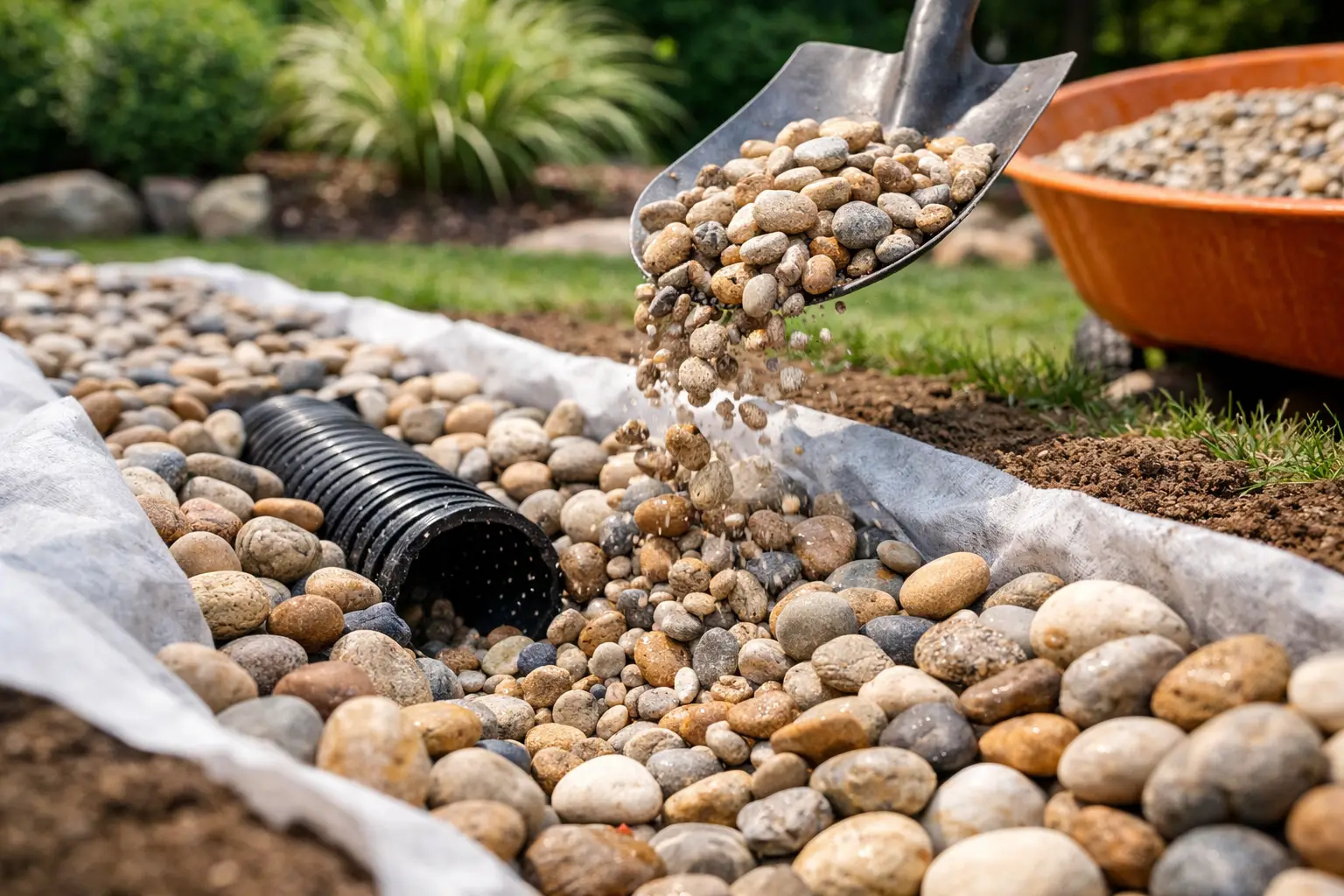
For a French drain, catch basin, or perforated drainpipe installation, angular drainage stone is often the stronger choice. Its sharp edges hold the material in place and create consistent open spaces around the pipe. It is usually installed below grade and covered, so there is little reason to pay for a decorative stone where no one will see it.
A practical approach is to use angular stone for the working layer around a drainpipe, then finish exposed sections with river gravel if the design calls for it. This gives the drainage system a stable base without giving up the polished look homeowners want near patios, beds, and entry areas.
River gravel may also be a poor fit on a steep slope with fast-moving runoff. Water can push lighter, smaller stones downhill over time. Larger stone, properly placed edging, and a designed swale may help, but a serious erosion problem often needs grading, drainage piping, or professional site evaluation before gravel is added.
Best Places to Use River Gravel for Drainage
River gravel is most effective when it is part of a complete plan rather than a quick cover-up for standing water. Good placement begins with identifying where water comes from, where it naturally wants to go, and what should be protected along the way.
Downspout discharge areas
A downspout that empties onto exposed soil can create a trench after a few storms. A shallow gravel bed beneath and beyond the downspout helps absorb the impact of falling water and keeps the area looking tidy. The bed should be graded away from the house so water continues moving outward, not back toward the foundation.
If the downspout handles a large roof section, gravel alone may not be enough. A downspout extension, buried drain line, or catch basin may be necessary to carry water to a suitable outlet.
Dry creek beds and decorative swales
A dry creek bed is one of the best-looking uses for river gravel. It creates a defined path for runoff while adding texture to the landscape. The bed should follow the natural grade, with enough width and depth to handle the water expected during a hard rain.
For a natural result, use larger stones along the edges and at turns, then fill the center with a smaller river gravel. Landscape fabric can help separate soil from stone in light-flow areas, but it should not be treated as a cure for poor grading. Water still needs a clear route through the property.
Borders beside patios, walkways, and beds
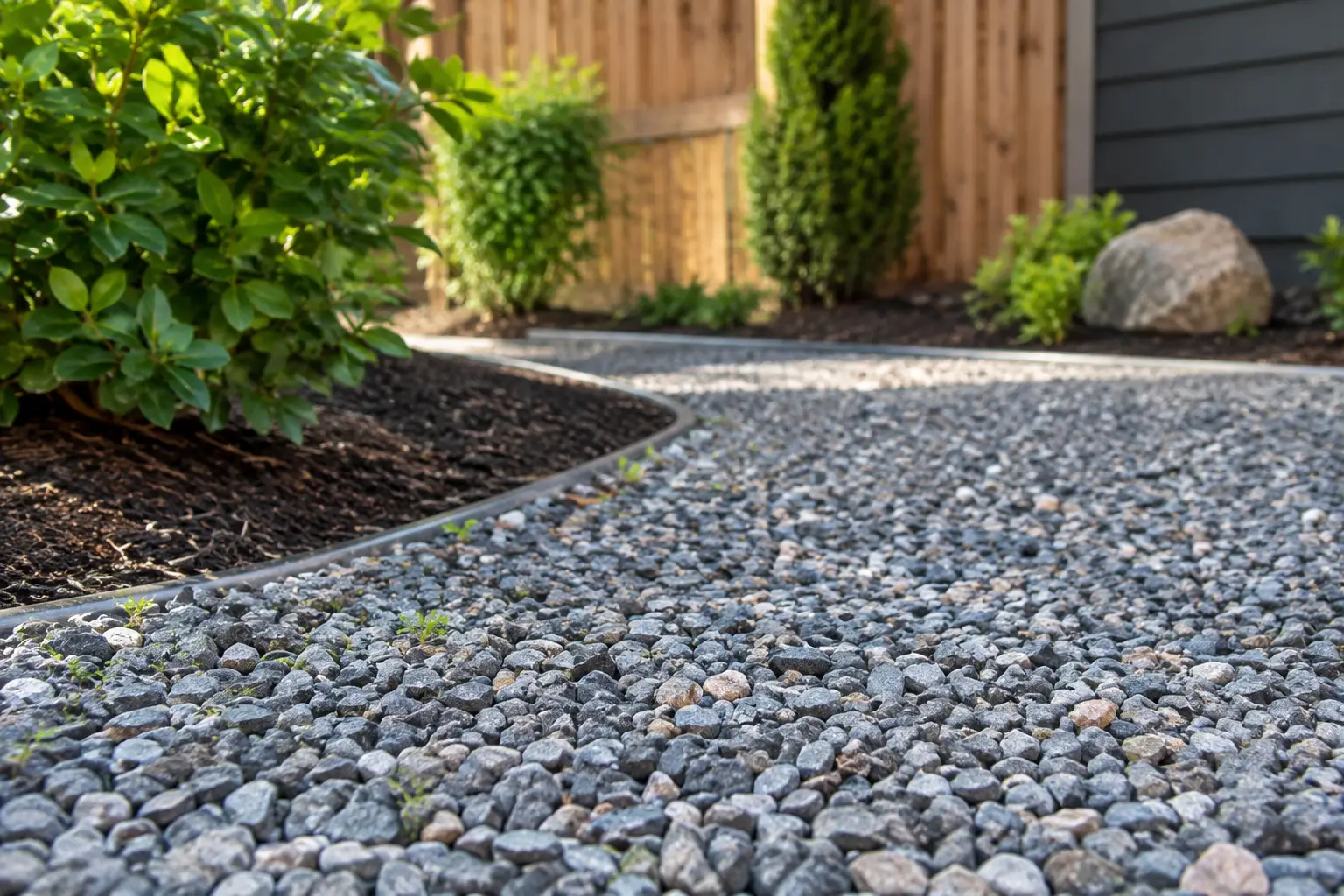
A narrow strip of river gravel can collect water that runs off hard surfaces and prevent mulch from washing into the lawn. It can also provide a clean transition between a patio and a planting bed. Install durable edging if you want crisp lines, especially where mowers, foot traffic, or leaves could move the stones into adjacent areas.
Areas with minor surface puddling
For shallow puddles caused by compacted topsoil, removing the problem soil and replacing it with a graded gravel layer can improve drainage. This works best for small, localized areas. If water remains after several dry days, or if it appears near the home’s foundation, the issue may be below the surface and deserves a more complete solution.
How to Install River Gravel So It Performs
A good gravel drainage feature starts below the visible stone. Simply pouring gravel over wet ground rarely fixes the underlying issue. Water can still sit beneath the gravel, and the stone may slowly disappear into soft soil.
First, shape the area so it slopes toward a safe drainage direction. Even a gentle, consistent slope makes a difference. Keep water moving away from structures, and avoid directing it toward a neighbor’s property, a driveway entrance, or a spot that will create a new erosion problem.
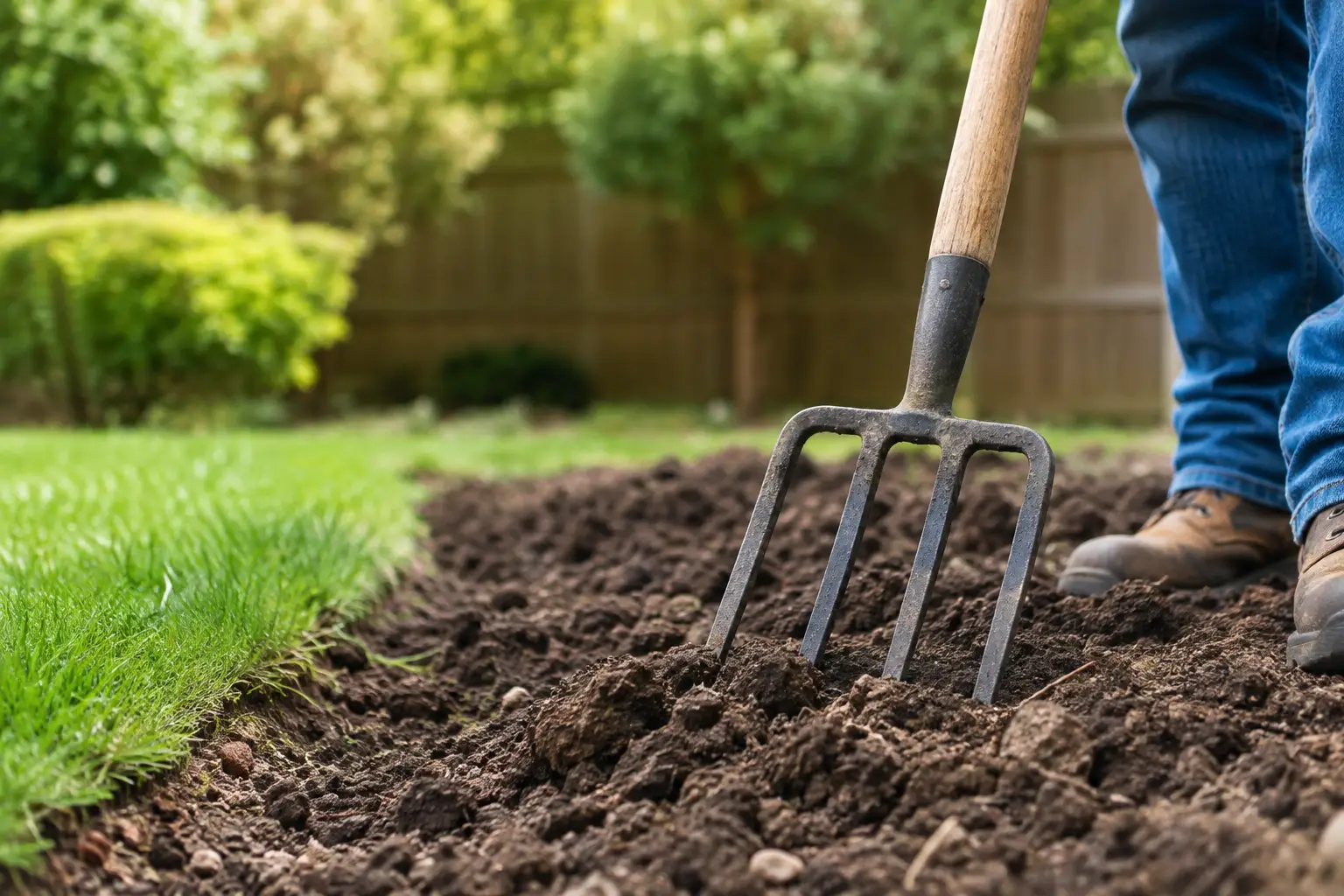
Excavate enough depth for the intended use. A decorative gravel border may need only a few inches of material, while a dry creek bed or drain-adjacent feature may require a deeper base. Remove roots, loose organic material, and heavily compacted soil as needed so the new layer has a stable foundation.
Use a quality landscape fabric when it serves a purpose: separating soil from gravel and reducing weed growth in an accessible decorative area. Choose a permeable fabric, not solid plastic, because water needs to pass through it. In high-flow channels, fabric can become exposed or torn if it is not secured well, so stone size and proper shaping matter more than fabric alone.
Spread the gravel evenly, then rake it into place. Keep the finished surface slightly below nearby pavement or edging to limit stone migration. After the first few rains, inspect the area. Add material where water has shifted the gravel, clear leaves that block the flow path, and make adjustments before a small issue becomes a washout.
Estimating How Much Gravel You Need
Bulk gravel is commonly sold by the cubic yard. To estimate your order, measure the length and width of the area in feet, multiply them together, then multiply by the planned depth in feet. Divide the result by 27 to convert cubic feet to cubic yards.
For example, a 12-foot by 4-foot border at 3 inches deep requires 12 cubic feet, or a little under one-half cubic yard. It is wise to allow extra material for settling, uneven ground, curves, and minor adjustments. Larger drainage features can use more material than expected because depth matters as much as surface coverage.
If you are unsure whether to choose river gravel, crushed stone, or a combination of both, bring the project measurements and a few photos to the yard. The team at Landscape Source Inc. can help you think through the material, quantity, and delivery placement before the truck arrives.
A well-placed gravel feature should make the yard easier to enjoy after rain, not create another area to maintain. Start with the water path, choose river gravel where its natural finish and drainage benefits fit the job, and use the right base material where performance needs to come first.

Leave a Reply