

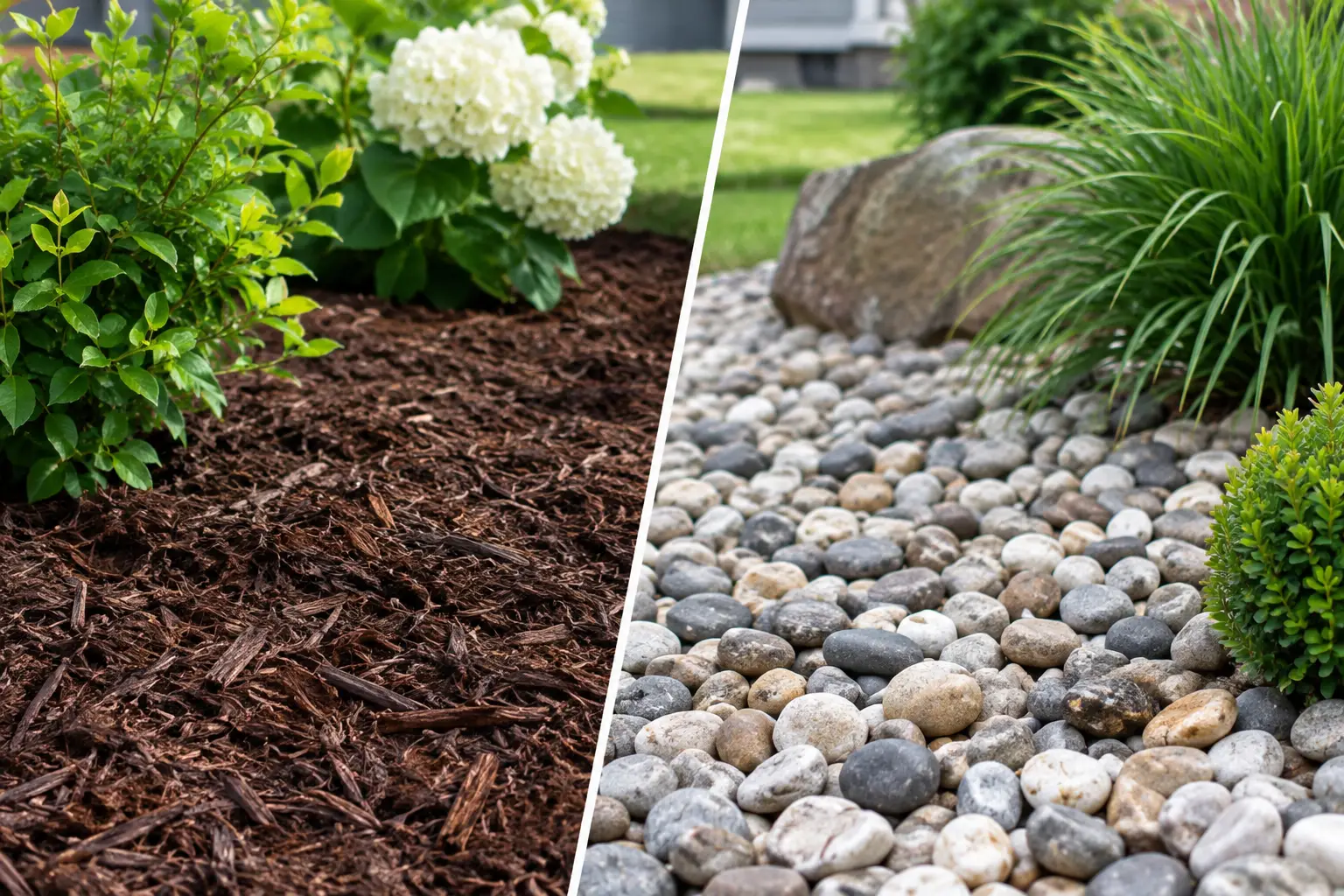
A fresh layer of mulch can make a Birmingham flower bed look finished before lunch. Decorative rock can give that same bed a crisp, long-lasting look for years. The right choice is not simply about appearance, though. In mulch versus rock landscaping, the best material depends on what you are planting, how much sun and water the area receives, how you use the space, and how much maintenance you want to handle later.
For many local properties, the strongest plan uses both materials in different places. Mulch is often the better partner for living plants, while gravel and stone are practical around paths, drainage areas, and permanent landscape features.
Mulch versus rock landscaping at a glance
Mulch is an organic material, commonly made from shredded hardwood or pine bark. It breaks down gradually, adds a natural look to beds, and helps moderate soil conditions around plants. Because it decomposes, it will need refreshing regularly.
Rock landscaping includes materials such as decorative gravel, river gravel, marble, red rock, and crushed limestone. Stone does not break down like mulch, so it can last much longer. It is especially useful where you need drainage, a stable walking surface, or a clean accent that will stay in place through the seasons.
Neither choice wins every project. A sunny front bed with shrubs may benefit from mulch, while a side-yard drainage run may call for gravel. Matching the material to the job saves money and prevents a landscaping decision from becoming a redo next spring.
When mulch is the better choice
Mulch is usually the practical choice for planting beds, tree rings, and areas where you want soil and plants to stay healthier with less day-to-day attention. A properly applied layer helps slow moisture loss during Birmingham’s hot stretches. It also shades the soil, which can help limit weed germination and protect shallow roots from sharp temperature changes.
As organic mulch breaks down, it contributes organic matter to the soil. That is helpful in many residential beds where compacted or clay-heavy soil needs gradual improvement. Homeowners who are adding annual color, perennials, shrubs, or young trees often appreciate that mulch supports the bed rather than merely covering it.
Mulch also offers a softer, more traditional landscape finish. Dark brown mulch can make green foliage and colorful flowers stand out, while natural tones work well around established shade trees and woodland-style yards. It is easy to spread, easy to refresh, and simple to adjust when you move a plant or change a bed line.
What mulch requires
The trade-off is replacement. Most mulch beds need a fresh layer each year or every other year, depending on the product, sun exposure, rainfall, and how much of the original layer remains. A typical depth is about 2 to 3 inches after settling. Going much deeper can hold too much moisture near plant crowns and tree trunks.
Keep mulch a few inches away from stems, trunks, siding, and foundations. Mulch piled against a tree trunk is often called a mulch volcano, and it creates conditions that can stress bark and roots. A clean, even layer looks better and gives plants the benefits without smothering them.
Mulch does not eliminate weeds. It reduces them, particularly when the bed is weeded before application, but windblown seeds can still sprout at the surface. Regular bed edging and occasional hand weeding are part of the job.
When rock is the better choice
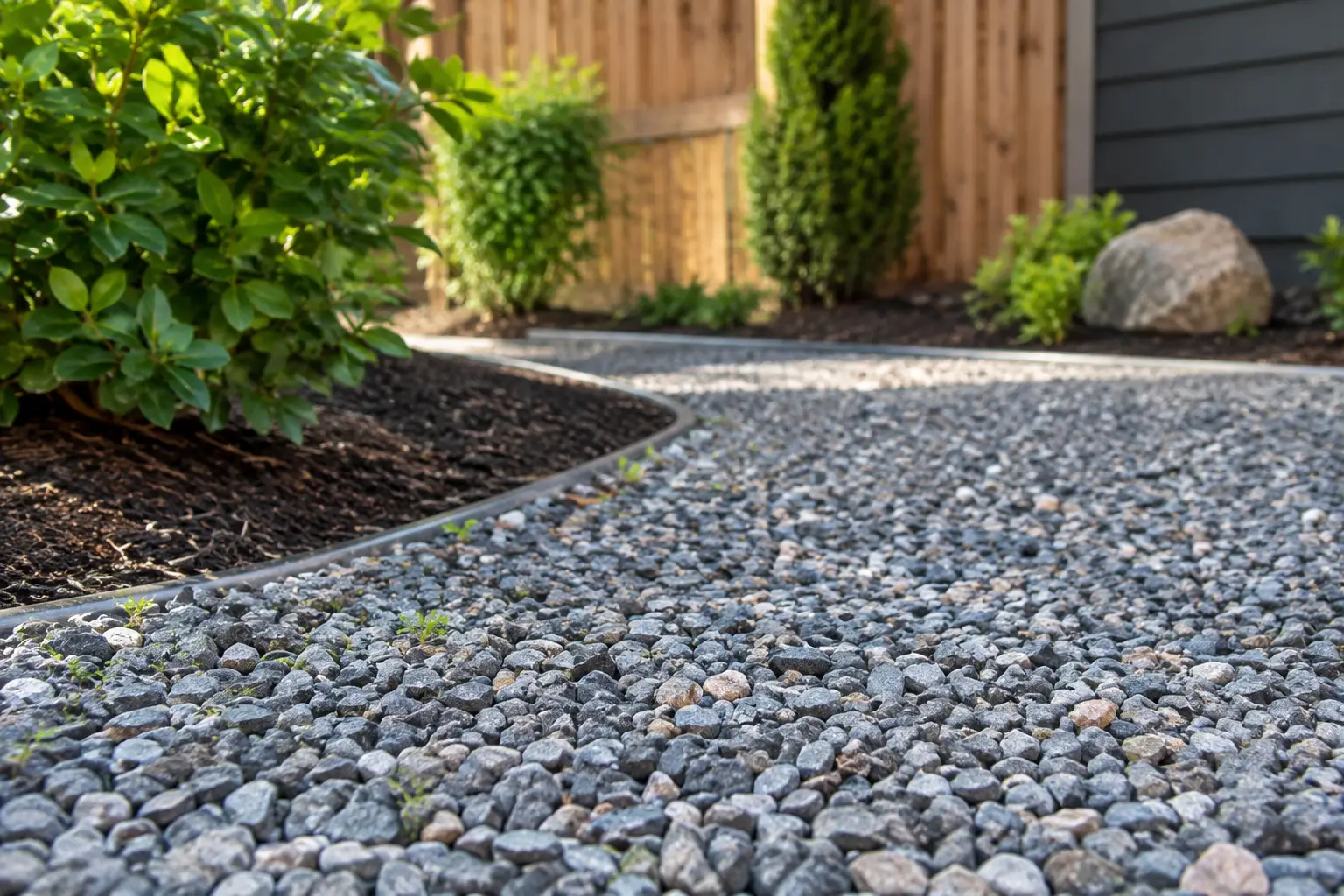
Rock earns its place where permanence and drainage matter more than soil improvement. A gravel walkway, a dry creek bed, a strip along a fence, or an area beneath downspouts can all benefit from stone that will not wash away or decompose quickly. It is also a smart option for low-maintenance plantings with drought-tolerant selections that do not need frequent digging or seasonal changes.
In Birmingham landscapes, drainage can be a deciding factor. Heavy rain needs a path away from foundations and low spots. Depending on the project design, crushed stone, river gravel, or larger decorative rock can help manage runoff and protect bare soil from erosion. The correct size and base material matter, especially for paths and areas that will receive foot traffic.
Rock can deliver a distinct look as well. Smooth river gravel gives a softer, natural appearance. Marble and pale decorative gravel brighten a darker corner. Red rock adds warm color, while limestone can suit a more structured, classic design. For a contractor creating a consistent finish across several properties, bulk stone also makes color and coverage easier to control.
What rock requires
Stone lasts, but it is not maintenance-free. Leaves, pine needles, and soil can collect between rocks over time. Once organic debris accumulates, weeds can grow on top of the landscape fabric or in the debris itself. Removing weeds from rock is often more time-consuming than pulling them from mulch.
Rock also holds heat. In a full-sun bed, light-colored or dark-colored stone can reflect and retain heat around nearby plants. That can be tough on moisture-loving shrubs, tender annuals, and shallow-rooted plants during Alabama summers. Use rock thoughtfully near the house, where reflected heat may already be a factor.
Changing your mind later is another consideration. Mulch is easy to remove or cover with a new layer. Rock is heavy, and once installed across a large bed, it takes real labor to shovel out, haul away, and replace. Choose a color and material you can live with for several years.
Cost is about more than the first load
At first glance, mulch often costs less to install because it is lighter, easier to spread, and commonly purchased for annual bed refreshes. Rock generally has a higher upfront material and labor cost, particularly when the project needs fabric, edging, base preparation, or multiple stone sizes.
Over several years, however, mulch requires repeat purchases while rock can remain in place. That does not automatically make rock less expensive in the long run. The calculation depends on bed size, the cost of future maintenance, and whether the rock installation is appropriate for the site in the first place.
Buying bulk materials by the yard is often more practical than making repeated trips for bags, especially for large beds, new construction landscaping, or professional jobs. Before ordering, measure the length and width of the area and decide on your finished depth. A material supplier can help translate those measurements into a workable quantity, reducing the chance of coming up short or ordering far too much.
A practical approach for Birmingham yards
Use mulch where plants need help: around trees, shrubs, vegetable gardens, perennial beds, and seasonal color. It keeps the landscape looking cared for while supporting the soil beneath it.
Use rock where the landscape needs structure: along walkways, in drainage features, around utility areas, or in low-water designs with permanent plantings. Install solid edging so stone stays where it belongs, especially near lawns and driveways. For paths, do not skip preparation beneath the visible stone. A good base makes the difference between a firm surface and a rut-filled one.
If you are unsure, start by looking at the area after a heavy rain and again in the hottest part of the afternoon. Water flow, sun exposure, and the types of plants already there will tell you more than a color sample alone. A shaded azalea bed and a sunny side-yard runoff channel should not receive the same material simply because one look is popular.
Landscape Source Inc. can help homeowners and crews compare bulk mulch, decorative gravel, river rock, marble, limestone, and other materials for the job at hand. Reliable delivery is particularly useful when a project needs several yards of material placed where the work will happen, rather than piled at the curb.
Choose for the job you want done
Mulch creates a healthy, adaptable setting for planted beds. Rock creates a durable finish for drainage, paths, and long-term accents. The best-looking yards often rely on each material where it performs best, not on a single rule for the entire property.
Bring your measurements, a few photos of the area, and a clear idea of how you want to use the space. With the right material and the right amount delivered where you need it, a weekend landscape project can start with a lot less guesswork.

Leave a Reply