

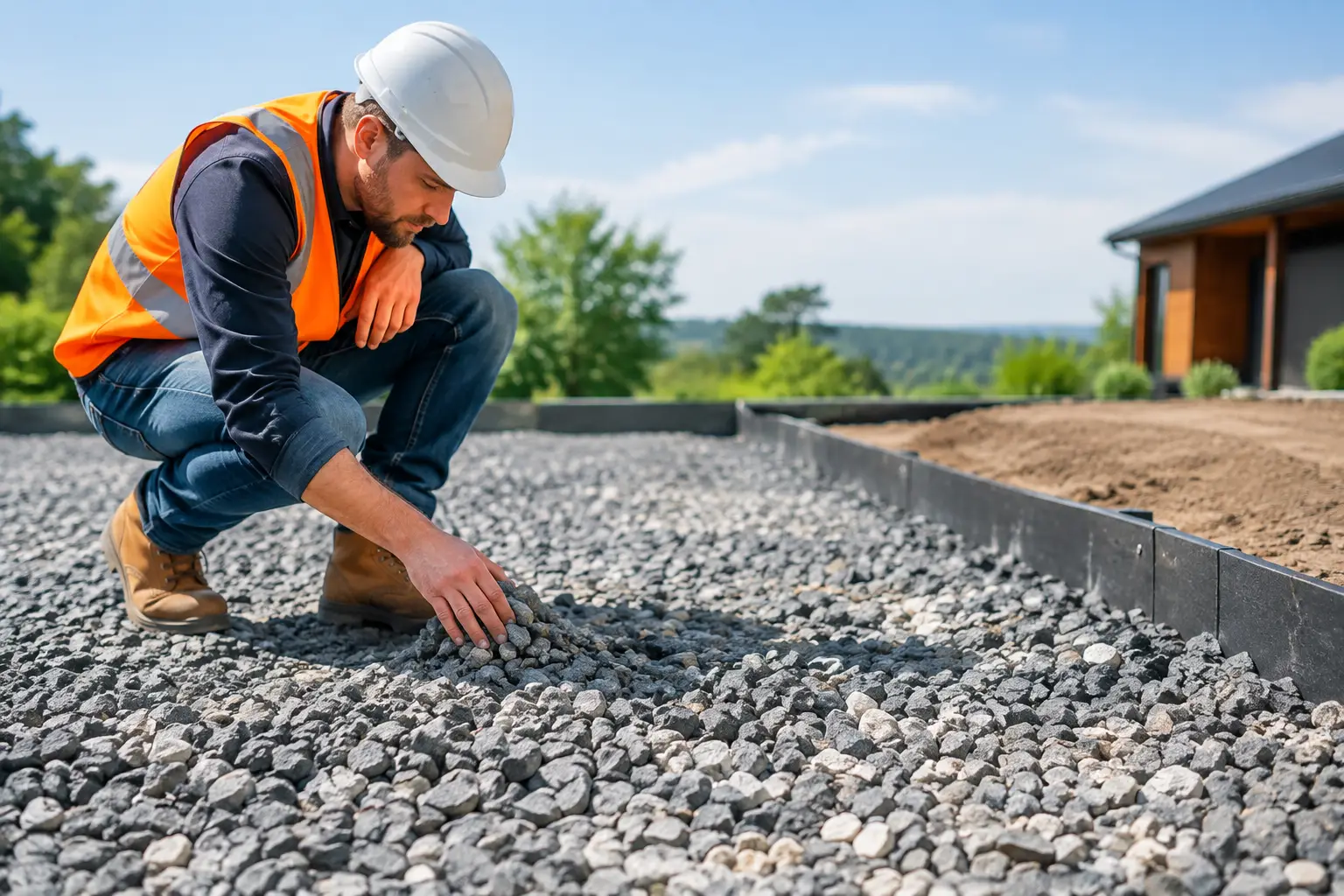
A gravel project can look finished on day one and still become a headache after the first few heavy Birmingham rains. Too little material exposes fabric and soil, shifts underfoot, and leaves bare spots. Too much gravel can raise the finished grade against edging, sidewalks, or the home itself. So, how deep should gravel be? The right answer depends on whether it is decorative ground cover, a walking surface, a driveway, or part of a drainage plan.
For most landscape beds, 2 to 3 inches is the dependable target. Paths and patios usually need a prepared base below the visible stone, while driveways need considerably more structural depth. Starting with the use of the area, rather than choosing a depth by appearance alone, helps you order the right amount and get a result that holds up.
How Deep Should Gravel Be in Landscape Beds?
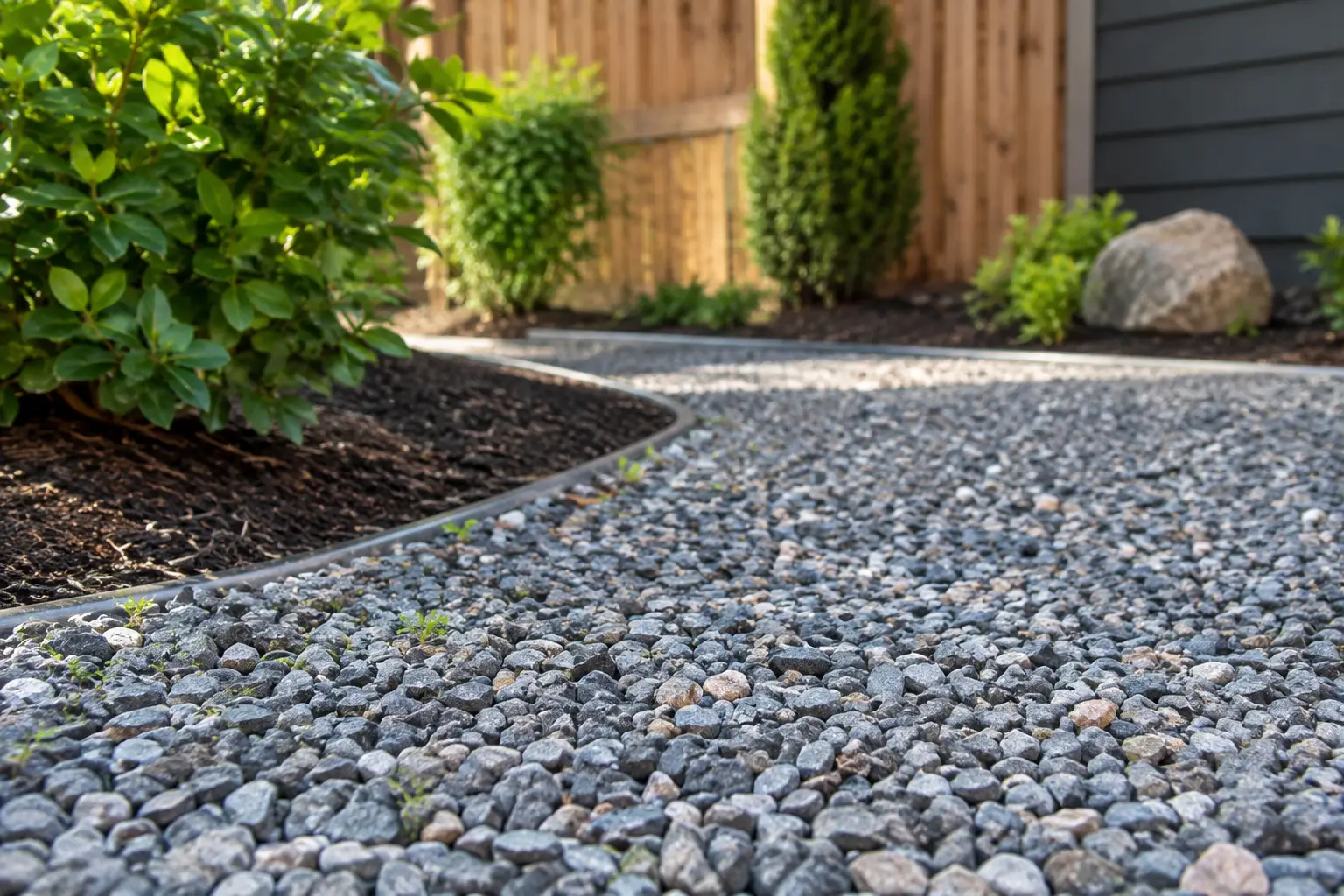
For decorative gravel around shrubs, trees, foundations, or outdoor accents, spread material 2 to 3 inches deep after it has been raked level. Two inches works well for smaller decorative stone in protected beds. Three inches is usually the better choice for larger river gravel, marble chips, red rock, or open areas where rain can move material around.
A layer under 2 inches often looks thin once the gravel settles into the soil or gets displaced during routine yard work. It also makes weeds and exposed landscape fabric more noticeable. Going much beyond 3 inches is not usually necessary in a planting bed. Deep stone can make it harder to dig, plant, or adjust irrigation, and it may hold extra heat around shallow-rooted plants during an Alabama summer.
Keep gravel a few inches away from plant stems and tree trunks. Stone is low-maintenance, but it is not maintenance-free. Leaves, soil, and mulch can collect in the gravel over time, so a clearly defined edge and occasional cleanup will help the bed stay sharp.
Gravel Depth for Paths, Patios, and Seating Areas
A gravel path needs more than a surface layer if you want it to stay level. For a simple garden path with light foot traffic, plan for about 2 inches of decorative or crushed gravel over a 3- to 4-inch compacted base. The base is commonly made from compactable crushed stone or limestone material. It creates a firm foundation and helps prevent the finished gravel from sinking into soft ground.
For a patio, fire pit area, or seating space, use a 4- to 6-inch compacted base and about 1 to 2 inches of finish gravel. Angular, crushed material is often a better choice than smooth river gravel for these surfaces because the pieces lock together more effectively. Smooth round gravel has a softer look, but it can shift beneath chairs and feet.
Excavate deeply enough that the final surface sits where you want it. A path that ends up higher than the lawn can shed gravel into the grass. A patio built too high near a structure can direct water where it does not belong. A slight slope away from buildings helps water move safely through the landscape.
Do You Need Landscape Fabric Under a Gravel Path?
Landscape fabric can be useful as a separator between native soil and the stone base, especially in areas with soft or clay-heavy ground. It helps keep soil from mixing upward into the gravel and can make future maintenance easier. It is not a substitute for depth, compaction, or proper drainage.
Choose a durable, permeable fabric rather than a thin plastic barrier. Water should be able to pass through the assembly. Fabric may not be necessary in every well-drained location, but it is often a smart addition when building a path or patio that needs to perform for years.
How Deep Should Gravel Be for a Driveway?
Driveways carry repeated vehicle weight, which is why they require a thicker, carefully compacted stone base. For a typical residential gravel driveway, plan for 4 to 6 inches of compacted base material topped with 2 to 3 inches of finish gravel. That means excavating for roughly 6 to 9 inches of total material, depending on the existing soil, drainage conditions, and vehicle use.
A driveway that sees delivery trucks, work trailers, or frequent heavy pickups may need an 8-inch or deeper compacted base. Soft soil, standing water, and low areas are also reasons to build more base depth rather than simply adding extra surface gravel. If the foundation moves, the top layer will move with it.
Layering matters. Add base stone in manageable lifts, compact each layer, then install the finish gravel. Ordering only a thick layer of decorative stone and spreading it over bare dirt may look acceptable briefly, but tires will quickly create ruts and push the stone outward.
For driveway surfaces, many property owners prefer angular gravel or crushed limestone because it compacts and stays in place better than rounded material. Larger stone can be useful in a base layer, while a smaller top size creates a more comfortable finished surface. The best combination depends on the slope of the drive and the look you want.
Depth for Drainage Gravel and French Drains
Drainage projects follow a different rule: the gravel must surround and support the drainage system, not simply cover the ground. A French drain trench commonly needs at least 3 to 6 inches of gravel below a perforated pipe and 6 inches or more above it, with gravel along both sides. Exact trench depth and pipe placement should follow the planned grade and where the water needs to discharge.
Use clean, washed drainage gravel when the goal is to move water efficiently. Fine material and soil can clog open spaces between stones. A permeable fabric wrapped around the gravel assembly can help prevent sediment from entering while still allowing water through.
Drainage work is especially worth planning before material arrives. Confirm the route, the outlet, and the slope first. Gravel can help manage water, but no amount of stone will solve a drain that has nowhere to send it.
Calculate How Much Gravel to Order
Once you know the depth, calculate volume before placing an order. Measure the length and width of the area in feet. Multiply them to get square feet, then multiply by the desired depth in feet. Divide the result by 27 to convert cubic feet to cubic yards.
For example, a 20-by-10-foot bed is 200 square feet. At 3 inches deep, divide 3 inches by 12 to get 0.25 feet. Multiply 200 by 0.25 for 50 cubic feet, then divide by 27. The project needs about 1.85 cubic yards, so ordering 2 yards allows for settling, uneven ground, and a little working room.
For irregular beds, break the space into simple rectangles, estimate each section, and add them together. It is usually better to allow a modest amount for variations in grade than to come up short with an unfinished edge. Material type also affects coverage because stone sizes and shapes settle differently.
A Better Result Starts Below the Surface
The visible gravel is what people notice, but the grade, edging, base, and drainage are what keep the project looking good. Mark utilities before digging, keep finished material below siding and weep holes, and make sure water has a path away from your home.
If you are unsure whether your project needs 2 inches of decorative gravel or a compacted multi-layer base, bring your measurements and a description of the site to a knowledgeable materials supplier. At Landscape Source, our team can help Birmingham homeowners and landscaping crews match the gravel type and quantity to the job, with pickup or dependable local delivery when the project is ready to move forward.
A little planning before you order means less shoveling twice, cleaner edges, and a gravel surface that still looks intentional after the weather has had its say.

Leave a Reply