

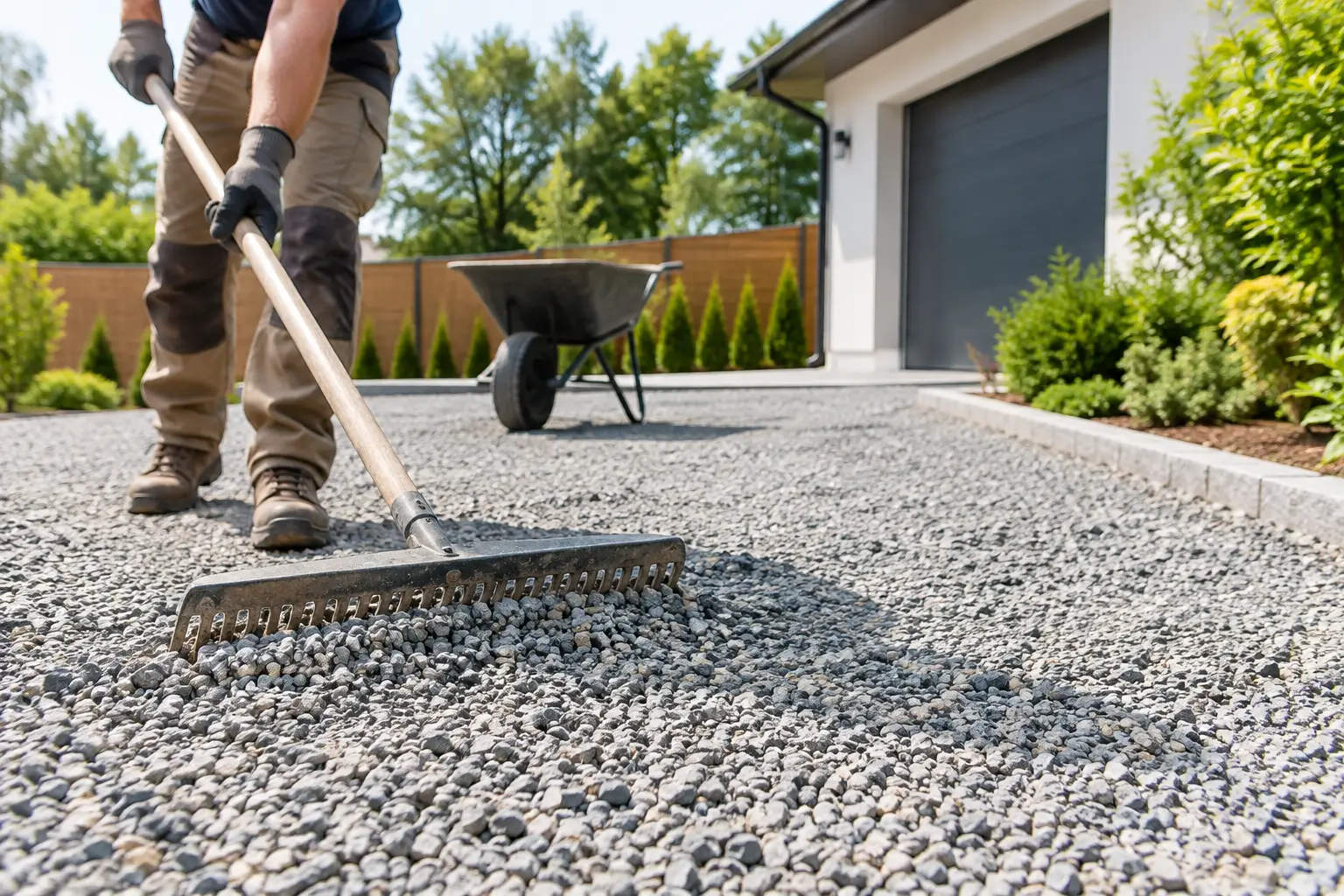
A gravel project can look finished in an afternoon, but the work below the stone determines whether it still looks good after Birmingham rain, summer heat, and regular foot or vehicle traffic. This gravel installation guide explains how to build a stable driveway, walkway, or decorative bed without wasting material or creating a recurring maintenance problem.
The first decision is not color. It is purpose. Gravel that works beautifully around shrubs may not hold up under a parked truck, and a smooth river gravel walkway can feel unsteady if the base is not prepared correctly. Start with how the space will be used, then select the material and installation depth to match.
Plan the Area Before Ordering Gravel
Measure the length and width of the project area in feet, then multiply them to find square footage. For a rectangle that is 12 feet wide by 30 feet long, the area is 360 square feet. Curved beds can be divided into smaller, simple shapes for a close estimate.
Next, decide on finished depth. Decorative gravel in beds generally needs 2 to 3 inches. Walkways commonly need 3 inches of surface gravel over a compacted base. Driveways need a deeper structural base, often 4 to 6 inches or more depending on soil conditions, traffic, and the size of vehicles using the drive.
Material is commonly sold by the cubic yard. One cubic yard covers about 100 square feet at a 3-inch depth, though the exact coverage changes with stone size and compaction. It is wise to allow a little extra for uneven ground, settling, and clean edges. Ordering too little can slow a project down, while ordering far too much creates an unnecessary pile to move later.
Before materials arrive, mark the layout with marking paint, a hose, or stakes and string. Stand back and look at the shape from the street, driveway, and main outdoor living areas. A walkway should lead naturally where people already walk. A bed border should be wide enough to look intentional, not like a narrow strip that disappears beside the lawn.
Choose Gravel for the Job
Decorative stone offers lasting color and texture around plants, trees, patios, and borders. River gravel gives a softer, rounded look. Marble and other light-colored decorative gravels can brighten a shaded bed. Red rock brings warm contrast, while limestone can create a clean, classic appearance. The best choice depends on the home, existing hardscapes, and how much contrast the landscape needs.
For driveways and load-bearing areas, use a compactable base material beneath the top layer. Crushed aggregate with fines locks together much better than rounded decorative stone. A decorative top layer may still be used, but it should not be expected to do the structural work of the base.
Size matters as much as color. Smaller gravel is generally easier to walk on and rake, while larger stone makes a stronger visual statement in broad beds. Rounded stones can shift underfoot, especially on slopes. Angular stone tends to interlock better and is often the more practical option for a path or parking area.
Prepare a Base That Can Handle Alabama Weather
Good preparation begins by removing grass, roots, loose mulch, and organic material. Do not simply spread gravel on top of turf. Vegetation will decay and settle, and the gravel will gradually sink into the soil. Mark the desired finished height before excavation, especially near doors, garage slabs, and drainage paths.
For a decorative bed, excavating 2 to 4 inches is often enough to create a clean, contained finish. For a walkway, remove enough soil for the base layer, surface gravel, and edging. A driveway requires more excavation because the compacted base needs room below the finished surface.
Shape the ground so water moves away from the house and does not collect in the gravel. A slight slope is usually all that is needed, but it must be planned before stone is installed. Birmingham-area clay soils can hold water, so low spots deserve extra attention. If water already stands in the area after rain, solve that drainage issue first rather than hoping gravel will hide it.
When Landscape Fabric Helps
Landscape fabric can be useful beneath decorative gravel beds because it separates stone from soil and makes future cleanup easier. Choose a permeable, professional-grade fabric, overlap seams, and secure it with staples. Cut openings only where plants need to go.
Fabric is not a cure for weeds. Windblown seeds can still germinate in dust and organic debris that gathers between stones. Regularly blowing or raking leaves from the bed will make a bigger difference over time. In heavily trafficked driveways, fabric can sometimes tear or interfere with the way base materials bind, so it is not always the right choice. Site conditions and the type of aggregate should guide that decision.
Install Edging Before the Stone
Edging holds the line of the project. Without it, gravel migrates into turf, beds lose their shape, and mowing becomes more difficult. Metal, brick, stone, concrete, and certain heavy-duty landscape edging products can all work well when installed at the proper depth.
Set edging securely before spreading gravel. For a walkway, keep the top of the edging slightly above the finished gravel level to contain loose stone. Along a driveway, use an edge that can tolerate tire contact and runoff. If the project meets a lawn, consider how a mower wheel and string trimmer will move along that edge.
A crisp border is one of the simplest ways to make bulk material look professionally installed. It also reduces the amount of gravel you will need to recover from grass later.
Build the Layers for Walkways and Driveways
For a decorative bed, spread the selected gravel evenly over prepared soil or fabric, then rake it to the planned depth. Work from the back of the bed toward the front so you are not constantly stepping into freshly leveled stone.
A walkway needs more structure. Install a compactable base, wet it lightly if conditions allow, and compact it in manageable lifts. Then add the surface gravel and rake it level. A hand tamper may work for a small path, while larger areas benefit from a plate compactor. The finished path should be firm, drain well, and sit slightly proud of surrounding soil so water does not wash dirt across the stone.
A driveway requires a well-compacted aggregate base, installed in layers rather than dumped in one deep lift and left loose. Compact each layer before adding the next. Keep the finished surface crowned or gently sloped so rain moves to the sides instead of forming ruts down the center. Avoid using only decorative river gravel for an active driveway, since rounded stone tends to roll and migrate under tires.
Schedule Delivery With the Work Area in Mind
Bulk gravel is efficient for larger projects, but a delivery plan saves time and protects the property. Decide where the truck can safely access the site and where the material should be placed before delivery day. Account for overhead branches, utility lines, parked vehicles, gates, and soft ground.
For many jobs, having material placed close to the work area cuts down on wheelbarrow trips. At the same time, a pile should not block the garage, damage a sensitive lawn area, or sit where runoff can carry stone into a drain. Clear instructions make a real difference, particularly on tight residential lots or active job sites.
Landscape Source Inc. can help Birmingham-area homeowners and crews select bulk material quantities and arrange delivery with practical placement instructions. That kind of planning is especially useful when a project combines base aggregate, decorative gravel, and other landscape materials.
Keep Gravel Looking Intentional
Gravel is low maintenance, not no maintenance. After the first few rains, inspect the area for settling, exposed fabric, or stone that has moved beyond the edging. Rake the surface back into place and add material where thin spots develop.
Remove leaves before they break down into soil between the stones. Pull weeds while they are small, and use appropriate weed-control products carefully according to label directions. For driveways, rake displaced gravel out of tire tracks and back toward the center as needed. A small amount of seasonal attention keeps the surface clean and helps the original investment last.
The best gravel projects feel simple once they are complete: a firm path to the gate, a clean border around healthy plants, or a driveway that handles the next hard rain without trouble. Give the base, drainage, and edges the same attention you give the stone, and the finished space will be easier to enjoy for years.

Leave a Reply