

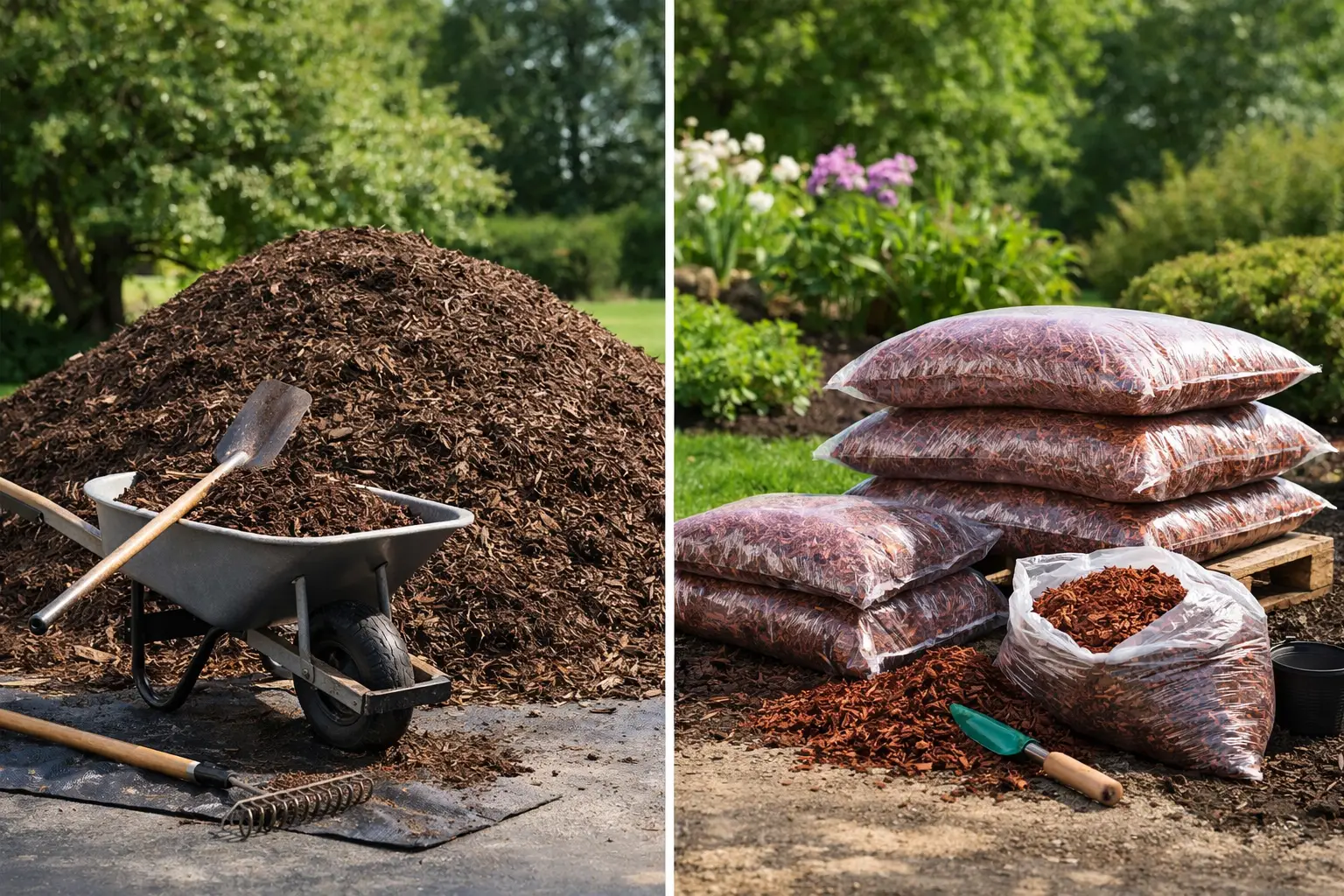
A fresh layer of mulch can make a Birmingham yard look cared for in a single afternoon, but the way you buy it affects the budget, the workload, and the final result. When comparing bulk mulch versus bags, the best choice usually comes down to how much material your beds need, how easily you can move it, and whether delivery makes sense for your property.
For a few planters or a small front-bed touch-up, bags can be convenient. For larger beds, tree rings, rental properties, or contractor jobs, bulk mulch often offers a better value and a faster path to a finished landscape. Knowing the difference before you buy keeps you from making extra trips or running short halfway through the job.
Bulk Mulch Versus Bags at a Glance
Bulk mulch is sold by the cubic yard and loaded into a truck, trailer, or delivery vehicle. One cubic yard equals 27 cubic feet. It is the practical choice when you need enough mulch to cover a substantial area at a consistent depth.
Bagged mulch is sold in individual sealed bags, commonly in 2-cubic-foot sizes. It is easy to pick up with other supplies, transport in smaller quantities, and store until you are ready to use it. The trade-off is that individual bags typically cost more per cubic foot and create more plastic waste.
A helpful rule of thumb: one cubic yard of mulch covers about 108 square feet at a 3-inch depth. Since 13.5 bags of 2-cubic-foot mulch equal one cubic yard, a project that needs several yards can quickly turn into a long stack of bags and several store trips.
| Consideration | Bulk mulch | Bagged mulch | | — | — | — | | Best for | Medium and large landscape areas | Small beds, planters, and touch-ups | | Typical value | Lower cost per cubic foot | Higher cost per cubic foot | | Transportation | Pickup truck, trailer, or delivery | Fits in many vehicles in small quantities | | Installation | Requires wheelbarrow and tools | Easy to carry one bag at a time | | Leftovers | May need a place to store extra material | Easy to save unopened bags |
When Bulk Mulch Makes the Most Sense
Bulk mulch is built for coverage. If you are refreshing multiple flower beds, mulching around mature trees, dressing up a new planting area, or handling a commercial property, buying by the yard is usually the more efficient option.
The price difference matters more as the project grows. A single bag may feel affordable, but multiplying that cost by 20, 40, or 60 bags changes the picture. Bulk pricing helps homeowners and landscape crews get professional-grade material without paying a retail premium for each individual package.
Consistency is another advantage. Ordering the full amount from one material source helps ensure the mulch has a uniform color, texture, and appearance across the property. That makes a noticeable difference along long bed lines and around entry landscaping, where mixed bag lots can sometimes vary.
Delivery can also save time. Rather than loading bags, unloading them at home, and repeating the process after discovering you need more, you can have the right amount brought to your property. For Birmingham-area customers, a local yard can be especially useful when the project is too large for a pickup bed or when a crew needs material ready to spread that morning.
Plan for the Delivery Area
A bulk mulch delivery needs a clear, accessible place for the material to be dumped. A driveway is often the simplest choice, preferably on a tarp if you want to protect the surface and make cleanup easier. Let the delivery team know about narrow drives, slopes, gates, low branches, parked vehicles, or a preferred placement area before the truck arrives.
Mulch should not be placed where it blocks vehicles, drains toward a storm inlet, or sits in a spot that makes it difficult to move a wheelbarrow. Good placement instructions can save a lot of labor once the mulch is on the ground.
When Bags Are the Better Choice
Bags are not the wrong choice. They are simply better suited to certain jobs. If you need to refresh one small bed, top off a container garden, or cover a bare spot where mulch has washed away, purchasing a few bags can be quick and sensible.
Bagged mulch also works well when access is tight. A townhome courtyard, steep backyard steps, or a landscaped area behind a fence may make a bulk pile inconvenient. Carrying a few bags through a side gate can be easier than hauling a wheelbarrow load across the yard.
Storage is another consideration. If you prefer to complete the work over several weekends, unopened bags stay contained and can be kept in a dry, out-of-the-way location. With bulk mulch, you will want to use the pile promptly or cover it if weather and timing delay the project.
For first-time homeowners, bags can also make it easier to test a mulch color or texture in a small area. Once you know what complements your brick, siding, stone, and plantings, ordering in bulk for the next refresh becomes a more confident decision.
Compare the Real Cost, Not Just the Price Tag
The right comparison is cost per cubic foot or cost per yard, not the sticker price of one bag. A 2-cubic-foot bag may look inexpensive until you calculate how many are required for the entire project. It also helps to account for fuel, time, loading, unloading, and the possibility of needing another trip.
Before ordering, measure each bed’s length and width. Multiply length by width to find square footage, then add all areas together. At a 2-inch depth, one cubic yard covers roughly 162 square feet. At 3 inches, it covers about 108 square feet. Most established landscape beds benefit from a finished mulch depth of 2 to 3 inches.
Do not automatically order the deepest layer possible. Too much mulch can hold excess moisture around plant roots and contribute to the familiar “mulch volcano” problem around trees. Keep mulch pulled back a few inches from tree trunks, shrub stems, siding, and foundations. The goal is an even blanket over the soil, not a pile against the plant.
If your calculation lands close to a full yard, bulk mulch may still be worth considering. If you only need a fraction of a yard and have no other beds to refresh, bags may prevent excess material. The best value is the option that fits the amount you truly need.
Choosing the Right Mulch for Your Property
The material itself matters as much as the buying method. Hardwood mulch offers a natural, traditional look for landscape beds. Pine bark products can provide a clean texture that many homeowners like around shrubs and ornamental plantings. Color-enhanced mulches can create stronger contrast and hold a uniform appearance longer, depending on exposure and maintenance.
For most yards, choose a mulch that complements the home rather than competing with it. Dark mulch can make green foliage and bright flowers stand out. Brown tones often suit natural landscapes and brick homes, while red mulch can add warmth in the right setting. A knowledgeable material supplier can help you match the product to the look you want and the area you are covering.
Quality also shows up in how the mulch spreads. Clean, well-processed material is easier to rake into an even layer and gives beds a finished appearance. Whether you buy bulk or bagged, look for a product suited to landscaping rather than an unknown mix of oversized wood pieces and debris.
A Better Way to Decide Before You Buy
Start with the size of the job. For a couple of containers or less than one small bed, bags are usually the straightforward answer. For several connected beds, a full front-yard refresh, or ongoing professional work, get a bulk estimate before filling a cart with bags.
Then consider labor. If you have a wheelbarrow, rake, shovel, and a clear route from the delivery pile to the beds, bulk mulch is manageable for many homeowners. If lifting and moving material is a concern, smaller bags may be easier to handle in stages. Contractors should also weigh crew time: a delivered bulk load often keeps a job moving far better than waiting on repeated retail pickups.
Landscape Source Inc. helps local homeowners and crews choose the right material amount, arrange dependable delivery, and get the project started with less guesswork. A quick measurement and a clear idea of where the mulch should go can turn a weekend chore into a clean, lasting improvement for your property.
The best mulch purchase is the one that leaves you with full, even beds instead of a half-finished project, an overloaded vehicle, or a stack of unnecessary bags. Measure first, choose the option that fits your scale and access, and give your landscape the clean finish it deserves.

Leave a Reply