

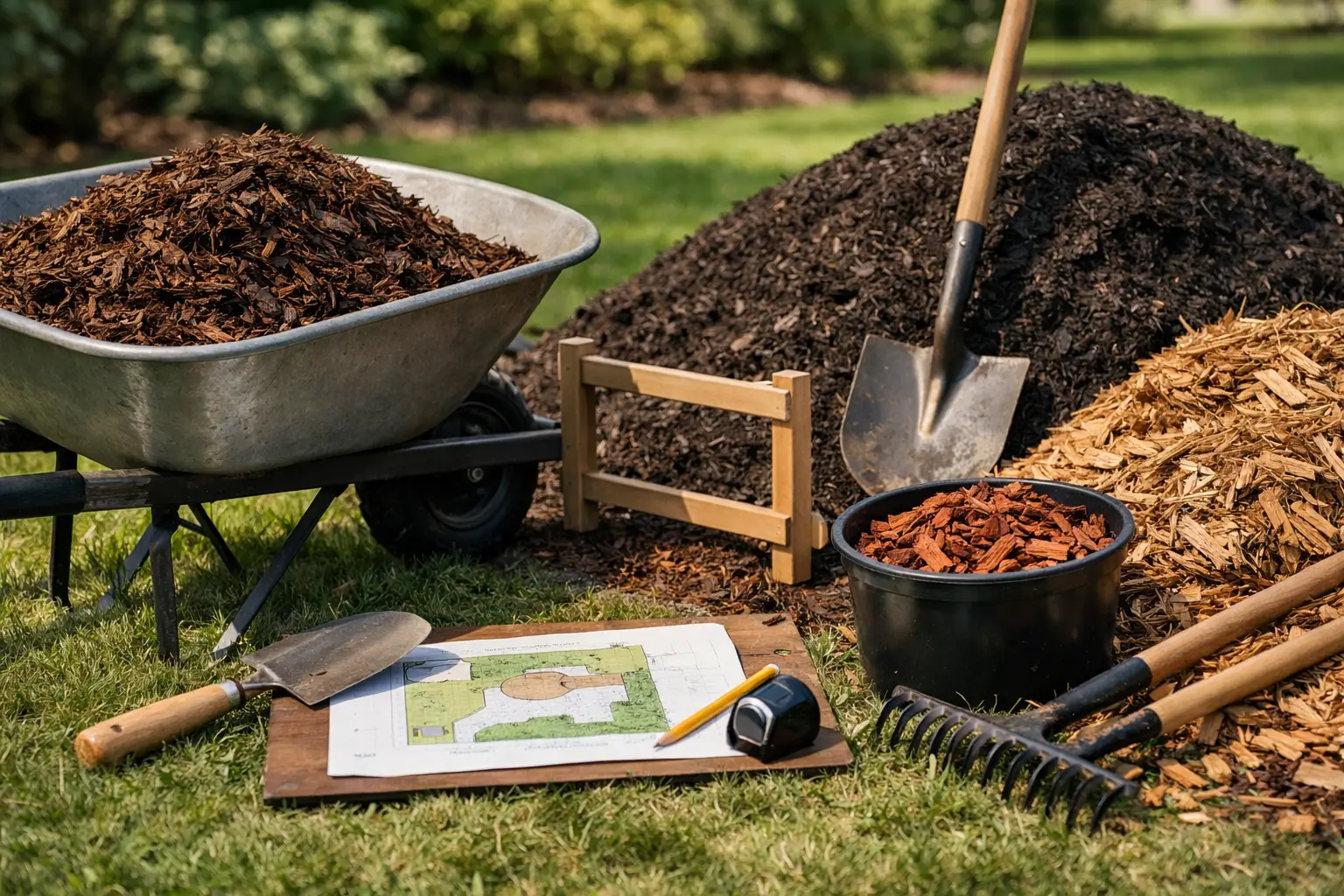
A mulch project can look small from the driveway, then turn into several wheelbarrow loads once you start spreading. If you are asking, “how much mulch do I need,” a few quick measurements can prevent the two problems everyone wants to avoid: running short before the bed is finished or ordering far more material than the space can hold.
For Birmingham homeowners and landscape crews, bulk mulch is often the practical choice for refreshing larger beds, defining tree rings, and giving a property a clean, finished look. The key is ordering by cubic yard with a realistic depth in mind – not guessing from the number of bags you used last time.
How Much Mulch Do I Need for My Landscape Beds?
Start with the area you plan to cover. Measure the length and width of each bed in feet, then multiply them to get square footage. A bed that is 20 feet long and 8 feet wide is 160 square feet.
For curved beds, do not worry about measuring every bend. Measure the longest length and average width, then use that number as a solid estimate. If the bed is an irregular triangle, multiply the length by the width and divide by two. For circular tree rings, measure from one edge across the center to get the diameter. Divide that number by two to find the radius, then multiply the radius by itself and multiply by 3.14.
Once you have the square footage, use this formula:
Square feet x mulch depth in inches ÷ 324 = cubic yards needed
The number 324 accounts for the 27 cubic feet in a cubic yard and converts the depth from inches. You do not need to memorize the math after one project. Write down each bed measurement, add the square footage together, choose your depth, and calculate the total.
For example, a 300-square-foot planting bed mulched 3 inches deep requires:
300 x 3 ÷ 324 = 2.78 cubic yards
In that case, ordering 3 cubic yards is the sensible call. A little extra is useful for low spots, touch-ups around bed edges, or an area that measures slightly larger than expected.
Quick mulch coverage by cubic yard
If you prefer a fast reference, one cubic yard of mulch generally covers about 162 square feet at 2 inches deep, 108 square feet at 3 inches deep, or 81 square feet at 4 inches deep.
That difference in coverage is why depth matters as much as bed size. A yard of mulch spread too thin may not give you the color, weed suppression, or moisture retention you expect. Spread too deeply, it can keep excess moisture near plant crowns and make it harder for air and water to reach the soil.
Choose the Right Mulch Depth Before You Order
For most established landscape beds, a finished depth of 2 to 3 inches works well. It gives the bed a full appearance while helping moderate soil temperature and slow moisture loss during Alabama’s hot months.
New beds with bare soil may need closer to 3 inches because there is no existing mulch layer underneath. If you are covering a natural path, controlling weeds in an open area, or working around larger shrubs, 3 to 4 inches can make sense. The trade-off is that deeper mulch uses more material quickly, so calculate accordingly.
Do not automatically add 3 inches of fresh mulch on top of last year’s layer. Check what is already there first. Pull back a small section and measure the existing depth. If the old mulch has broken down and you have only about an inch left, adding 1 to 2 inches may be all you need to restore the bed. If it has compacted into a dense mat, loosen or remove portions before adding new material.
Around trees, keep mulch several inches away from the trunk. A neat, shallow ring is better than piling mulch against the bark. The familiar “mulch volcano” look may seem generous, but it can trap moisture against the trunk and invite problems over time.
Measure Every Bed, Then Add the Totals
It is easy to estimate the front bed and forget the narrow strip by the driveway, the tree rings, and the backyard foundation planting. Those smaller areas add up. Measure each section separately, then combine the totals before you calculate cubic yards.
A simple project worksheet might include the front bed, side bed, backyard shrubs, and tree rings. Record length, width, square footage, and desired depth for each. If every area will receive the same depth, add all square footage first and use the formula once. If the tree rings need a different depth than the flower beds, calculate them separately and add the final yardage together.
For professional crews, this same approach helps keep estimates consistent from property to property. Measuring before loading also makes delivery scheduling easier and reduces the chance of stopping work to source another partial load.
Account for slopes, edges, and settling
Mulch settles after it is spread, especially after a few rainstorms. Beds with slopes can also need a little more material to maintain even coverage without leaving bare spots near the top. As a general rule, add 5 to 10 percent to your estimate for irregular borders, settling, and minor measuring differences.
There is no need to build in a huge cushion for a simple rectangular bed. But for a property with winding island beds, lots of tree rings, or uneven ground, rounding up to the next practical amount is usually wiser than coming up short.
Bulk Mulch vs. Bags: Think in Cubic Yards
Bulk mulch is sold by the cubic yard, while bagged mulch is sold by cubic feet or smaller volumes. One cubic yard equals 27 cubic feet. If a bag contains 2 cubic feet, it takes 13.5 bags to equal one cubic yard. A 3-cubic-foot bag takes nine bags to equal a yard.
That comparison helps explain why bulk material is often a better fit for larger projects. Fewer packages means less plastic to handle, fewer trips from the store to the bed, and a more efficient workflow for a crew. Bags can still be convenient for a small touch-up, a planter, or a tight area where a bulk delivery is not practical.
When comparing prices, make sure you are comparing equal volumes. The lowest price per bag is not always the lowest cost per cubic yard. Also consider the time involved in loading, unloading, opening, and disposing of dozens of empty bags.
Plan Delivery and Placement Before the Mulch Arrives
A correct yardage estimate is only part of a smooth mulch project. Think about where the material can be placed so you are not moving it farther than necessary. A driveway, parking pad, or accessible area near the work site is usually ideal, provided it is clear of vehicles and safe for delivery equipment.
Before scheduling, consider overhead branches, low utility lines, narrow gates, steep driveways, and soft ground. If you have a preferred drop location, communicate it clearly. Good placement can save hours of wheelbarrow work, especially when refreshing beds across a large yard.
It also helps to prepare before delivery day. Edge the beds, pull large weeds, remove fallen limbs, and have tarps or wheelbarrows ready if needed. Spread mulch soon after delivery when possible. A fresh pile is easier to work with before weather and foot traffic compact it.
A Better-Looking Bed Starts With the Right Amount
The goal is not simply to cover soil. The right amount of mulch gives beds an even finish, frames plants without burying them, and makes regular landscape maintenance easier. Measure carefully, select a sensible depth, and round up modestly when the layout is complex.
If your measurements leave you between quantities or you are planning several beds at once, bring the dimensions to Landscape Source Inc. A knowledgeable local team can help turn your measurements into a practical bulk order, so your mulch arrives ready for a project that looks finished from every angle.

Leave a Reply