

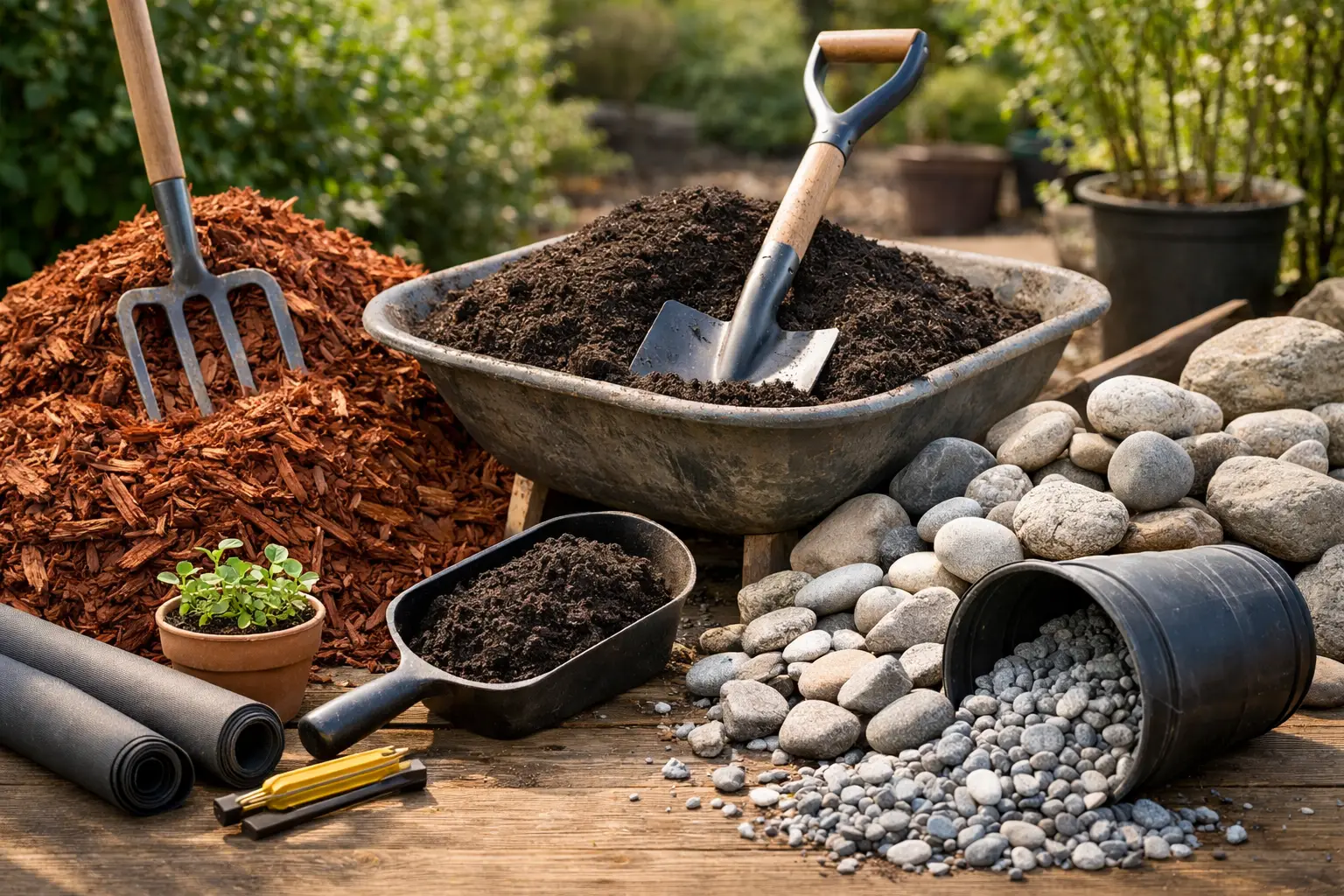
A fresh load of mulch or gravel can make a property look finished fast. The part that can slow a project down is ordering too little material, or ordering far more than the space can use. This yardage planning guide gives Birmingham homeowners and landscaping crews a straightforward way to estimate bulk material before scheduling pickup or delivery.
Landscape materials are commonly sold by the cubic yard, not by the bag. A cubic yard is a volume measurement: 3 feet wide by 3 feet long by 3 feet deep. That sounds simple, but landscape beds, slopes, curved borders, and changing depths can make the math feel less obvious. A few measurements and a realistic plan for depth will get you close enough to order with confidence.
Start With the Area You Need to Cover
First, measure the length and width of each area in feet. For a rectangular bed, multiply length by width to find square footage. A 20-foot-long bed that is 5 feet wide covers 100 square feet.
For circles, measure from one side to the other to get the diameter. Divide the diameter by two to find the radius, then multiply the radius by itself and multiply that result by 3.14. For an irregular bed, break it into smaller rectangles, circles, or triangles. Add the square footage of those smaller sections together.
Do not forget the narrow areas that often use more material than expected: tree rings, borders along a driveway, foundation beds, mailbox plantings, and pathways. For professional crews, separate each material type and depth on the job plan. Mulch and decorative stone may share a bed, but they should not be calculated as one order.
Use the Right Depth for the Material
Square footage tells you the footprint. Depth tells you how much material it will take to cover that footprint. The right depth depends on the material and what the project needs to accomplish.
For most mulch beds, 2 to 3 inches is a practical finished depth. Two inches works well when refreshing an existing bed that still has a reasonable mulch layer. Three inches is a better starting point for bare soil, new beds, or areas where a fuller appearance and stronger weed suppression are the goal. Avoid piling mulch tightly against tree trunks or the stems of shrubs. It can hold excess moisture where plants need airflow.
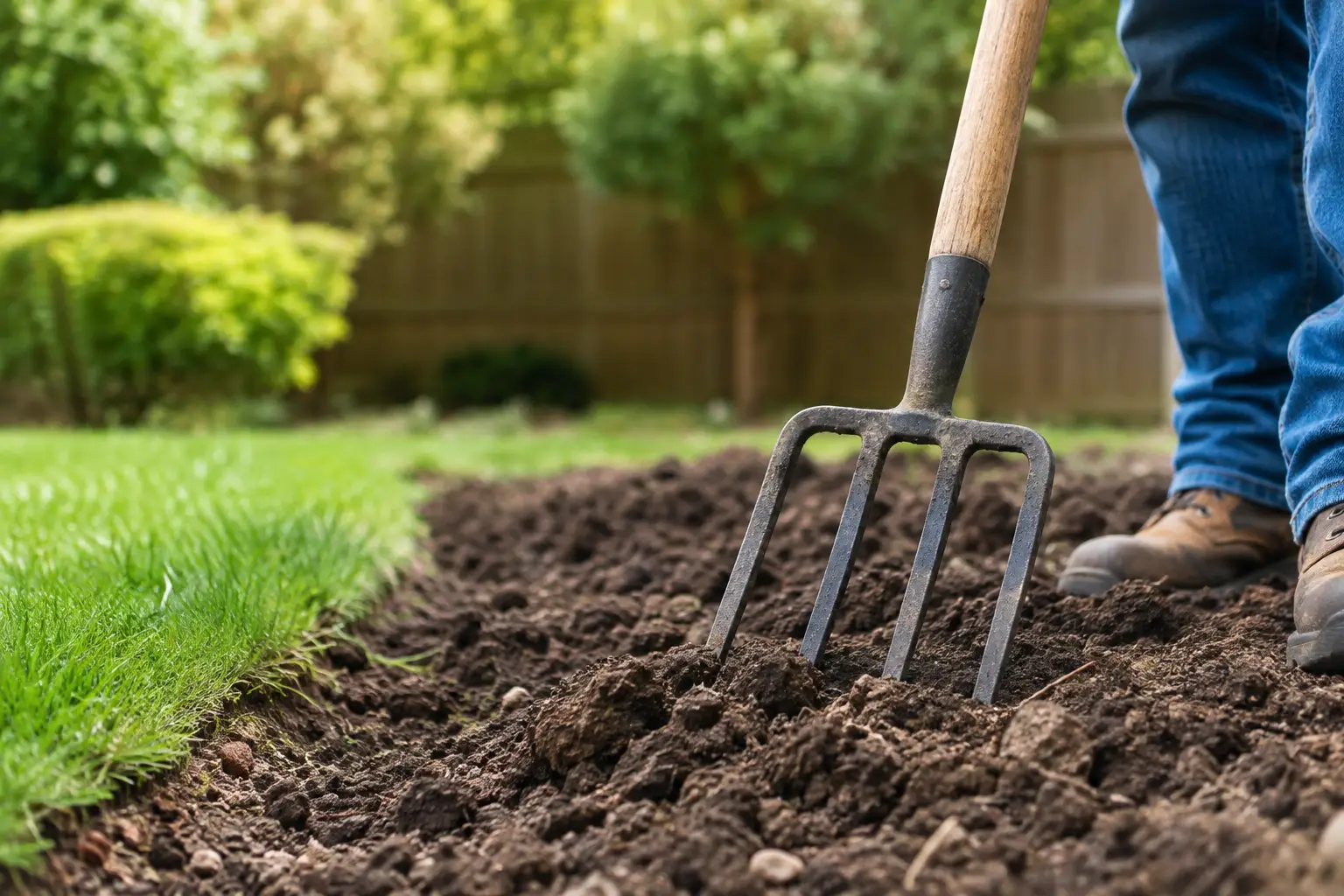
Topsoil is different because it is usually installed to build up, grade, or improve an area before planting or sod. A garden bed may need 3 to 6 inches of quality topsoil, while a low spot may need more depending on the drainage plan. If the goal is to level a lawn, remember that grass needs gradual transitions. Adding several inches in one small spot can create a noticeable ridge and may affect drainage.
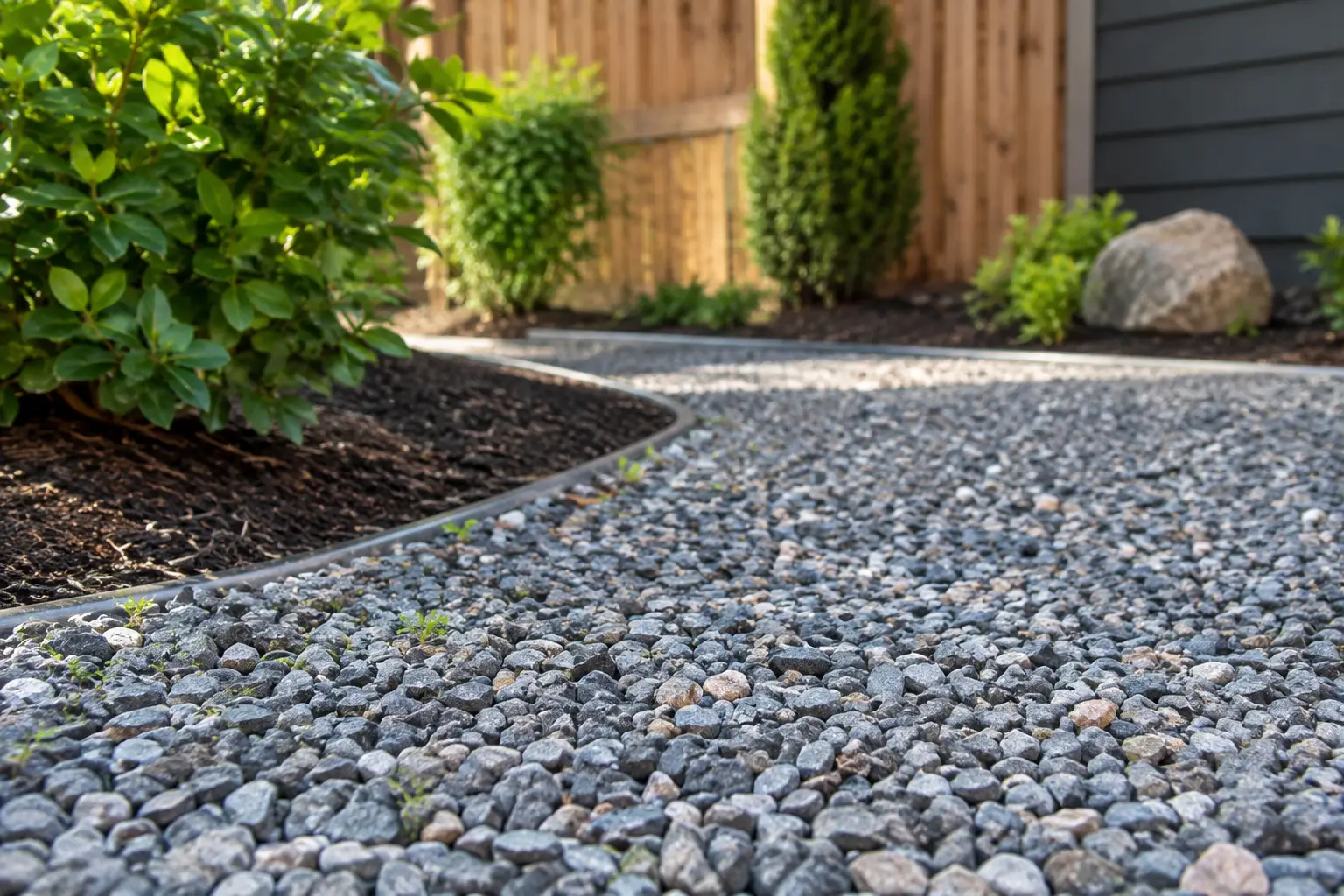
Decorative gravel, river gravel, marble, limestone, and red rock are often installed at 2 to 3 inches deep. A path, parking area, or base material may require a different depth and a different aggregate choice. Heavier stone also settles differently than mulch, so it pays to discuss the intended use before placing an order.
The Yardage Planning Guide Formula
Once you have square footage and desired depth, use this formula:
Length × width × depth in feet ÷ 27 = cubic yards
The key is converting inches to feet before you calculate. Two inches equals 0.167 feet, 3 inches equals 0.25 feet, 4 inches equals 0.333 feet, and 6 inches equals 0.5 feet.
Here is a common mulch example. You have a 20-by-5-foot bed, which equals 100 square feet. You want a 3-inch mulch layer. Multiply 100 by 0.25, which equals 25 cubic feet. Divide 25 by 27. The result is 0.93 cubic yards, so one cubic yard is the sensible order.
For a larger project, imagine 600 square feet of new beds at 3 inches deep. Multiply 600 by 0.25 for 150 cubic feet. Divide by 27 for 5.56 cubic yards. In most cases, ordering 6 cubic yards gives you enough material to achieve the intended coverage without coming up short.
An easier shortcut is useful when you are standing in the yard with a tape measure. At a 3-inch depth, one cubic yard covers about 108 square feet. At a 2-inch depth, one cubic yard covers about 162 square feet. At a 4-inch depth, one cubic yard covers about 81 square feet. These are planning estimates, not a substitute for measuring, but they help you quickly check whether your order is in the right range.
Build In a Reasonable Allowance
Landscape areas are rarely perfectly square and perfectly level. Curves require extra coverage, edges can be hard to measure, and material settles as it is spread. For that reason, a small allowance is usually wise.
For a simple, well-defined rectangular bed, rounding up to the next half-yard or full yard may be enough. For winding beds, uneven ground, new construction sites, or material spread around established plants, consider allowing an additional 5 to 10 percent. This is particularly helpful with mulch, since the finished depth may vary slightly as you work around shrubs and edging.
There is a trade-off. Ordering too much stone can leave a substantial pile, while ordering too little can pause a crew and add another delivery need. If a project is close to a half-yard or full-yard threshold, consider the shape of the site, the amount of slope, and whether you have another nearby area that could use the same material.
Account for Slopes, Edges, and Existing Material
A sloped bed can be measured by its flat, top-down footprint for a basic estimate, but it may need more material if the slope is significant. Material tends to shift downhill over time, and a consistent finished depth on a slope often takes more product than the simple formula suggests. A modest allowance can prevent thin spots near the top of the bed.
Existing mulch changes the equation as well. If you are refreshing a bed with a healthy layer already in place, do not automatically order enough for a full 3-inch installation. Pull back the old mulch in a few spots and measure its depth. If there is already an inch of usable mulch, adding 2 inches may be all you need.
Before adding topsoil, check whether you are covering exposed roots, burying the base of plants, or changing drainage near the house. Soil is valuable for establishing turf and planting beds, but more is not always better. A careful grade protects the work you are putting into the landscape.
Plan the Delivery Before You Order
The best estimate is only part of a smooth bulk-material order. Decide where the load should go before delivery day. Choose a clear, accessible location that keeps material close to the work area without blocking vehicles, drainage paths, or garage access.
A driveway is convenient for many homeowners, but stone and gravel can be heavy, and material should not be placed where it may damage a surface or create a cleanup problem. If the load needs to go in a specific location, mark the spot and provide clear placement instructions. Keep vehicles, trailers, low-hanging branches, and other obstacles out of the delivery path.
For contractors, coordinate deliveries with crew arrival, equipment access, and site conditions. A load placed too early can interfere with grading or irrigation work. A load placed too late can leave a crew waiting. Clear scheduling and placement details help keep the job moving.
Landscape Source Inc. can help customers think through material quantities, depth, and delivery placement before a load is scheduled. A quick conversation is especially useful for first-time bulk buyers, multi-bed projects, or jobs that combine soil, mulch, and decorative stone.
A Quick Check Before Ordering
Before finalizing your yardage, confirm that you have measured every separate bed or section, chosen a realistic finished depth, converted inches to feet, and rounded up where the site calls for it. Also make sure you are ordering the right material for the job. Mulch adds a finished look and helps manage moisture, topsoil supports planting and grading, and gravel or stone creates lasting texture, drainage, and definition.
Good planning does not have to turn a weekend project into a math exercise. Measure carefully, allow for the real shape of the yard, and ask for help when the project has slopes, multiple materials, or a delivery challenge. The right amount of quality material, placed where you need it, gives you a much better start on a landscape that looks right when the work is done.

Leave a Reply