

A fresh layer of mulch can make a planting bed look finished in an afternoon, but the wrong shade can make even healthy shrubs disappear into the background. Mulch colors affect the contrast around your plants, the way your siding or brick reads from the street, and how polished the entire property feels. For Birmingham homeowners and landscape crews, the best choice is usually the one that looks natural with the property and holds up well through a long Alabama growing season.
Color matters, but it should not be the only deciding factor. Material quality, texture, coverage depth, and reliable delivery all affect the finished result. A good mulch should provide a clean appearance while helping beds retain moisture, moderate soil temperatures, and reduce weed pressure.
How mulch colors change the look of a landscape
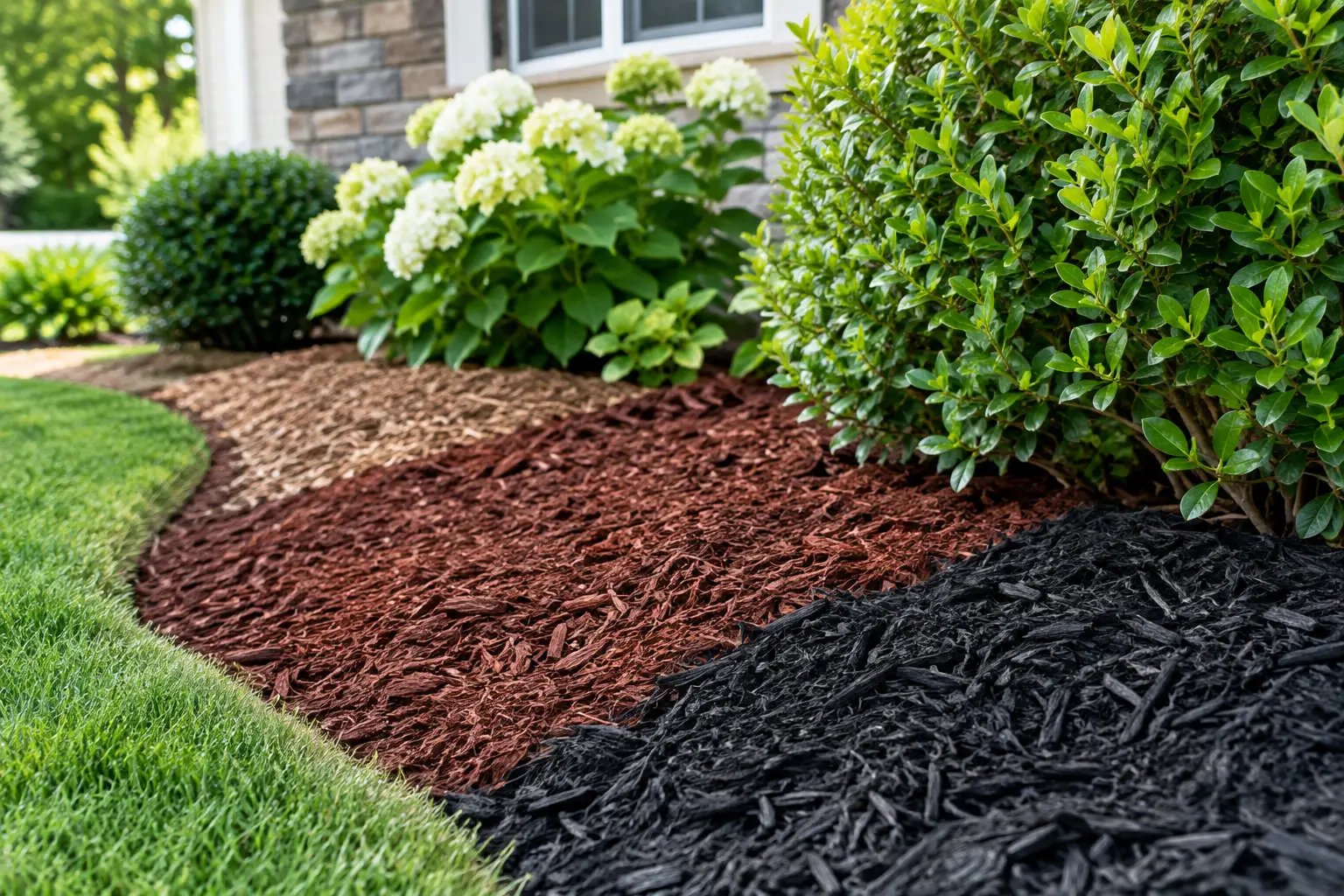
Mulch creates the visual backdrop for everything growing in a bed. Dark mulch makes green foliage, flowering annuals, and light-colored stone stand out. Brown mulch offers a softer, more traditional appearance. Red mulch creates a stronger contrast that can either complement a home beautifully or compete with it, depending on the surrounding colors.
The goal is not to match every detail perfectly. Instead, choose a color that supports the overall look of your house, hardscape, and plantings. A mulch bed should make the landscape feel intentional, not pull attention away from the front entry, foundation plantings, or specimen trees.
In the Birmingham area, many properties feature brick, warm-toned siding, mature hardwoods, and red-clay soil. That combination is one reason brown and dark brown mulches remain dependable choices. They look at home in both established neighborhoods and newer construction, and they work with a wide range of plants.
Dark brown and black mulch
Dark brown and black mulch give beds a crisp, high-contrast look. They are especially effective around boxwoods, liriope, hostas, hydrangeas, ornamental grasses, and other plants with bright green foliage. Against a light painted house, pale stone, or white fencing, dark mulch can make planting lines look sharper and more defined.
Black mulch is often chosen for a more formal or modern landscape style. It can look excellent around clean-edged beds, stone borders, and contemporary homes. The trade-off is that black is visually bold. In a heavily shaded yard with dark siding or dense evergreens, it can make beds look overly dark rather than refined.
Dark brown is usually the more forgiving option. It provides much of the same contrast while looking closer to natural forest soil. For homeowners who want a clean update without a dramatic change, dark brown often fits the bill.
Natural brown mulch
Natural brown mulch works well when you want the landscape to feel warm, established, and easygoing. It pairs naturally with tan, cream, brown, and red-brick exteriors, along with wood fencing and traditional garden designs. It also hides small amounts of leaf litter better than black mulch, which can be useful beneath mature trees.
This is a practical choice for larger beds and backyard areas where you want a consistent look without drawing attention to the mulch itself. Natural brown lets flowering plants and foliage take center stage. It is also a safe option for rental properties, neighborhood entrances, and commercial landscapes where broad appeal matters.
Because every mulch product and source can vary slightly in shade, it helps to view the material in person when color matching is especially important. A dependable landscape-material supplier can help you compare options before ordering several yards for a large project.
Red mulch
Red mulch can add warmth and definition, especially around homes with red, orange, or brown brick. It can also complement green lawns and evergreen shrubs because red and green create a noticeable contrast. Used thoughtfully, it gives a bed a bright, maintained appearance.
It is not the right choice for every property. Red mulch can clash with cool gray siding, pinkish brick, or landscapes that already have a lot of color from flowering plants, painted furniture, or decorative stone. If the exterior has strong warm tones, a deep red or reddish-brown mulch may look coordinated. If the home has neutral or cooler tones, brown or black may create a more balanced result.
For professional landscapers, color consistency is especially important with red mulch. Using the same material across visible front beds helps the installation look intentional from one side of the property to the other.
Match mulch color to your home and plants
Start by looking at the permanent features that will remain long after seasonal flowers are gone: siding, brick, roofing, driveway concrete, walkways, retaining walls, and fences. Mulch should work with these materials rather than match them exactly.
A light-colored home often benefits from dark brown or black mulch because the contrast defines the foundation beds. Red-brick homes commonly work well with natural brown or red mulch, though dark brown can give traditional brick a more updated appearance. Gray or blue-gray homes often look best with black or dark brown mulch, while homes with tan siding and warm stone can be complemented by brown mulch.
Then consider the plants. Dark mulch makes chartreuse foliage, white flowers, silver-leaf plants, and variegated shrubs pop. Brown mulch blends easily with naturalistic plantings and woodland beds. Red mulch can bring out green foliage but may compete with red, orange, or pink blooms. There is no single rule, but contrast should look purposeful rather than accidental.
If you are refreshing only one bed, match the mulch already used elsewhere on the property whenever possible. Mixed colors can make a landscape appear unfinished, particularly in front-yard foundation beds that are visible together.
Color is only part of a good mulch job
A beautiful color will not make up for mulch that is applied too thinly, piled against trunks, or spread over weeds. Most landscape beds benefit from a layer roughly 2 to 3 inches deep. That is generally enough to provide coverage and moisture retention without smothering the soil.
Keep mulch a few inches away from tree trunks, shrub stems, and the crowns of perennials. The familiar volcano shape around trees may look tidy at first, but it can hold excess moisture against the trunk and create avoidable plant-health problems. Pull mulch back into a shallow, even layer instead.
Fresh mulch also looks better when bed edges are clean. Before spreading, remove weeds, redefine the edge along the lawn or driveway, and rake old mulch so the surface is level. If the previous mulch layer is still in good shape, you may not need to remove it completely. A light topdressing can restore color and coverage. If the bed has become overly thick or compacted, removing some old material first is the better approach.
Choosing dyed or natural mulch
Many popular mulch colors are achieved with color-enhanced products, while some natural mulches develop their color from the bark and wood itself. Either can be a suitable choice when the material is clean, properly processed, and appropriate for landscape use.
Color-enhanced mulch tends to hold a more uniform shade, which can be useful for front-yard beds, commercial properties, and projects where a consistent appearance matters. Natural mulch often fades more gently and has an organic, understated look. Sun exposure, rainfall, irrigation, and foot traffic all affect how long any mulch color stays fresh.
A sunny, open bed may need a touch-up sooner than a shaded backyard border. Rather than expecting one application to look brand-new forever, plan for periodic refreshing based on the condition of the beds and the appearance you want to maintain.
Order the right amount for a consistent finish
Buying bulk mulch is often the most practical route for large beds, full-property refreshes, and contractor installations. It reduces bag handling, helps maintain a consistent product across the job, and makes it easier to cover the entire area at the proper depth.
Measure each bed’s length and width, estimate the average depth, and account for irregular curves or widened planting areas. When in doubt, it is better to discuss the project with a knowledgeable yard team before ordering. A little planning helps prevent a half-finished bed or a leftover pile that has nowhere to go.
For delivery, think through access and placement before the truck arrives. Identify a clear driveway or drop location that will not block vehicles, damage turf, or create extra wheelbarrow work. Landscape Source Inc. can help Birmingham-area customers plan bulk material orders and delivery placement so homeowners and crews can get to work without unnecessary delays.
The best mulch color is the one that makes your plants look healthier, your beds look cared for, and your property feel like it belongs together. Choose a shade you will be glad to see every time you pull into the driveway, then give it the clean edges and proper depth that let the color do its job.


Leave a Reply