

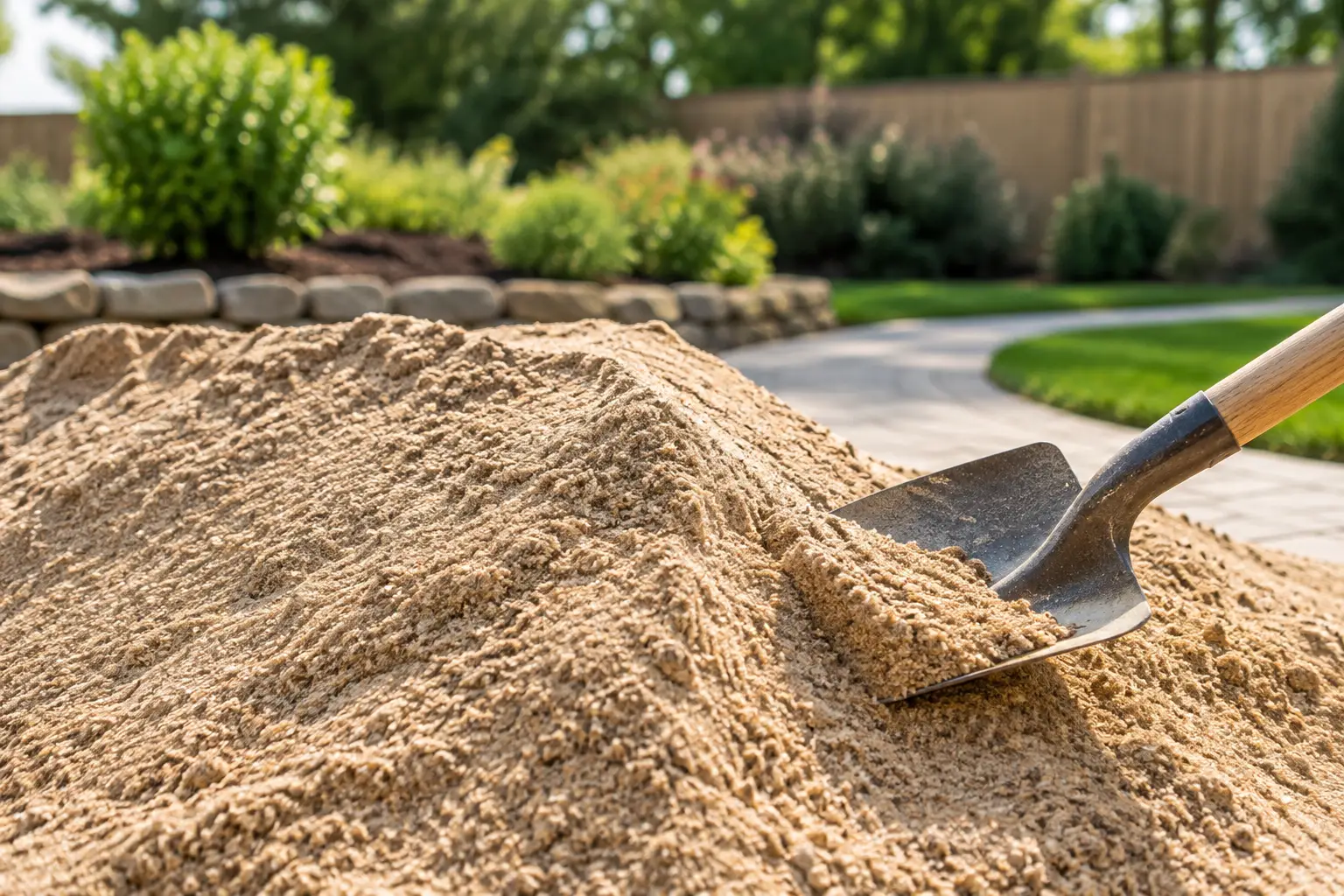
A few yards of the right landscape sand can make the difference between a patio that stays level and one that shifts after the first heavy Birmingham rain. Sand is often treated as a simple fill material, but its grain size, cleanliness, and intended use matter. Choosing the right product before delivery helps your project go faster, look cleaner, and hold up better over time.
For homeowners, sand is useful for everything from setting pavers and leveling a small backyard project to refreshing a play area. For landscape crews, it is a dependable jobsite material that needs to arrive in the right amount, at the right time, ready to work. The best choice depends on what you are building, what sits beneath it, and how water moves through the area.
What Is Landscape Sand Used For?
Landscape sand is a broad term for clean sand used in outdoor construction, lawn, garden, and recreational projects. It is not a one-size-fits-all material. Some sands are screened for a smoother finish, while others include a range of particle sizes that compact more firmly.
Its most common role is creating a level, workable base. Under pavers, sand provides a smooth bedding layer that helps installers set each unit at the correct height. In playgrounds and sandboxes, a softer washed sand is generally the better fit. Around drainage features or beneath certain hardscape areas, a coarser material may allow water to move more freely.
The key is to match the sand to the job rather than using whatever is easiest to find. A material that feels great in a sandbox may not lock together well enough beneath a patio. A compactable base material may be too rough for a children’s play area.
Choosing the Right Landscape Sand for the Job
Before ordering, start with the finished surface you want and work backward. Consider how much weight the area will carry, whether the sand needs to drain or compact, and whether it will remain exposed.
Paver Bedding and Patio Installation
For a paver patio, walkway, or small seating area, sand is typically used as a thin, carefully leveled bedding layer over a properly prepared compacted aggregate base. The base carries the weight. The sand helps create a consistent setting bed so pavers can be placed evenly.
This is where preparation matters more than simply adding extra sand. A bedding layer that is too thick can settle and leave pavers uneven. In most installations, a thin, uniform layer is the goal. Edging, correct slope away from the house, and thorough compaction underneath are just as important as the sand itself.
Joint sand is another consideration. After pavers are installed, dry sand is swept into the joints to help stabilize the surface. Standard joint sand can work for many projects, while specialty polymeric products may be preferred where homeowners want additional resistance to washout and weed growth. The right option depends on paver type, joint width, drainage, and the manufacturer’s directions.
Leveling Lawns and Garden Areas
Sand can help level low spots, but it should be used thoughtfully in Birmingham-area lawns. Sand changes soil texture, and repeated heavy applications can create a layer that does not blend well with the existing soil. For most lawn leveling projects, a blended topdressing that includes quality soil or compost is often more useful than straight sand.
Sand may still have a place when a lawn has drainage concerns or when a soil mix calls for it. The practical approach is to apply modest amounts, work them into the turf, and avoid burying healthy grass. If the low area stays wet after every storm, grading or drainage may need attention before adding more material.
In garden beds, sand is sometimes used to improve a dense soil mix, but it is not automatically the answer for Alabama clay. Adding a small amount of sand to clay can make the soil harder rather than looser if there is not enough organic matter in the mix. Quality topsoil, compost, and proper bed preparation are usually better starting points for planting areas.
Play Areas and Sandboxes
For children’s play spaces, choose clean, screened sand intended for recreational use. The material should feel comfortable underfoot and be free of large stones, debris, and sharp particles. A dedicated sandbox or contained play area makes maintenance easier, especially if it has a cover to keep out leaves, rain runoff, and neighborhood animals.
Depth depends on the type of play area. A simple backyard sandbox needs enough sand for digging and play, while an area beneath play equipment may require a deeper protective surface based on the equipment height and safety requirements. When safety is the priority, follow the equipment manufacturer’s guidance instead of estimating.
Drainage and Utility Projects
Sand may be used around certain drainage pipes, under utility lines, or as part of a grading plan because it can provide a clean, workable layer. However, it is not a cure-all for standing water. A yard that collects water may need a swale, catch basin, French drain, adjusted downspout discharge, or a change in overall grade.
The material chosen around pipe also matters. Some drainage systems call for gravel, fabric, or a specific aggregate rather than sand alone. If you are building a drainage system, confirm the design before material is delivered. It is much easier to make that decision at the yard than after a pile of material is on the driveway.
How Much Sand Do You Need?
Bulk sand is commonly sold by the cubic yard. One cubic yard covers about 324 square feet at one inch deep, but coverage changes quickly as depth increases. At two inches deep, that same yard covers roughly 162 square feet. At three inches, it covers about 108 square feet.
To estimate your order, measure the length and width of the area in feet, multiply them for square footage, then multiply by the planned depth in feet. Divide the result by 27 to convert cubic feet to cubic yards. For example, a 12-by-16-foot patio is 192 square feet. A one-inch bedding layer requires about 16 cubic feet of sand, or a little over half a cubic yard before allowing for leveling and minor waste.
Ordering a little extra is often wise for projects that involve grading, uneven ground, or compaction. Still, extra material should be reasonable. Sand takes up space, and a large surplus can create an unnecessary cleanup job. If measurements are uncertain, the Landscape Source team can help customers think through quantities before pickup or delivery.
Pickup or Delivery: Plan the Material Before It Arrives
A bulk order is convenient, but the delivery location needs some planning. Choose a firm, accessible drop area away from low branches, overhead lines, parked vehicles, and soft ground. Sand can be heavy, particularly after rain, so avoid asking a delivery truck to cross areas that may rut or sink.
Be clear about placement instructions. A load placed close to the work area can save hours of wheelbarrow trips, but the safest accessible location should always come first. Keep in mind that sand can spread as it is dumped, so leave room around the pile and cover it if rain is expected before you can use it.
For contractors, scheduling delivery around excavation, base preparation, and crew availability helps prevent downtime. For homeowners, it is often best to have tools, edging, forms, and base material ready before the sand arrives. That way, the project can move forward while conditions are dry and the material remains clean.
A Better Result Starts Below the Surface
It is tempting to focus on the visible finish – the pavers, the fresh lawn, or the new play space. But outdoor projects usually perform best when the layers underneath are handled correctly. Good grading, the right base material, proper compaction, and the appropriate sand all work together.
If you are not sure which material fits your project, bring your measurements and a clear description of the job to a local materials supplier. A quick conversation before ordering can prevent the common problems of buying too little, choosing the wrong texture, or using sand where a different material would serve you better. With dependable material and a sensible plan, even a weekend project can have a professional-looking foundation.

Leave a Reply