

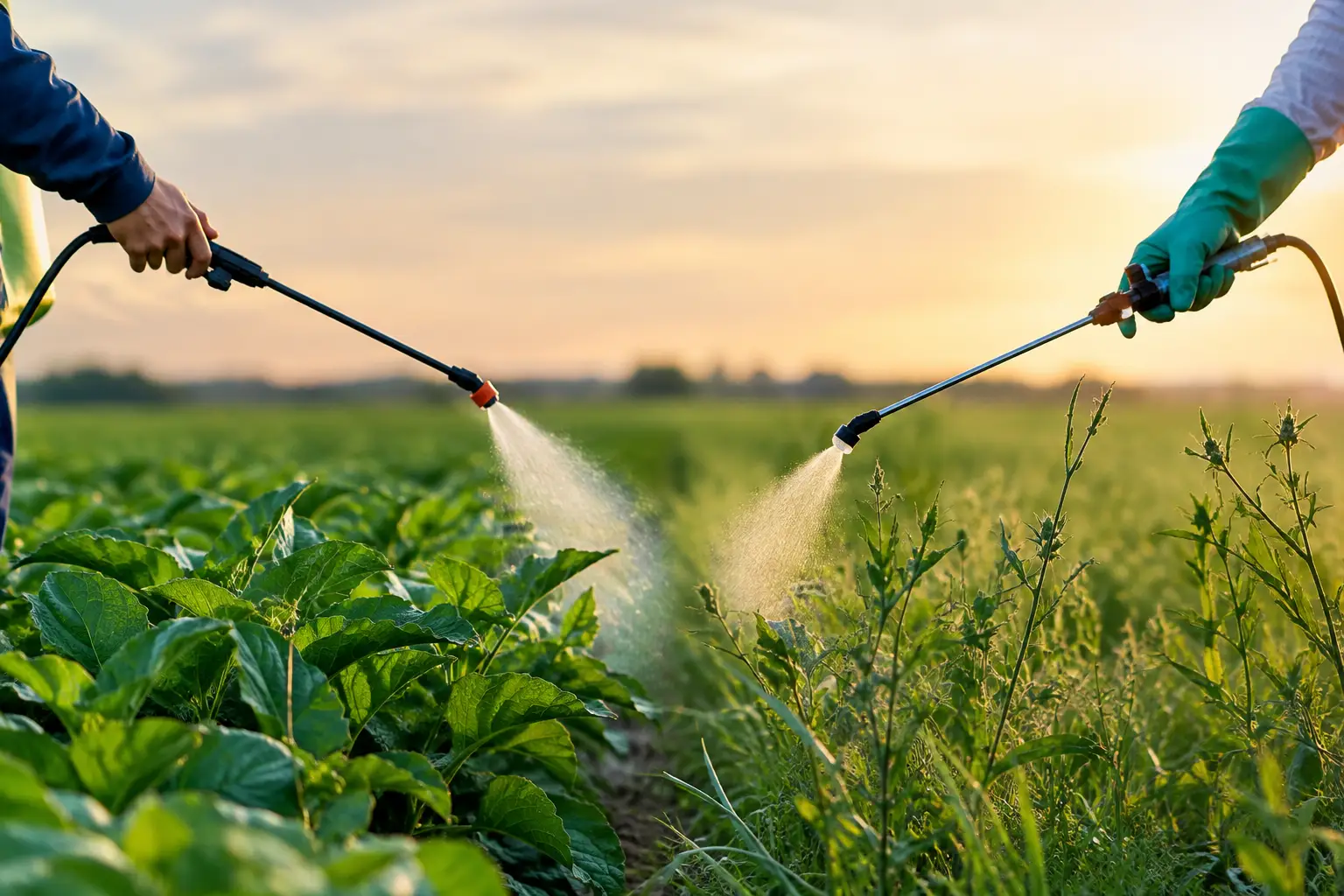
A lawn can look like it has one problem when it actually has several. Brown patches may come from insects, weeds may crowd out turf, and a garden plant may show disease damage at the same time. Understanding pesticide versus herbicide helps you choose a product for the actual issue instead of applying something that will not solve it.
For Birmingham homeowners and landscape crews, that distinction matters because warm weather and long growing seasons can bring fast weed growth, active insects, and persistent plant diseases. The right lawn or garden chemical can save time and protect a project. The wrong one can waste money, damage desirable plants, or leave the underlying problem untouched.
Pesticide Versus Herbicide: The Simple Difference
A pesticide is the broad category. It is any product used to prevent, control, repel, or destroy a pest. In landscaping, pests can include insects, weeds, fungi, rodents, and other organisms that damage plants or interfere with a healthy lawn.
An herbicide is a specific type of pesticide made to control unwanted plants, commonly called weeds. Every herbicide is a pesticide, but not every pesticide is an herbicide.
That is why a product labeled for weeds will not necessarily control fire ants, grubs, or fungal leaf spots. Likewise, an insect-control product is not meant to clear crabgrass from a lawn. Start by identifying what is causing the damage, then shop for the product category designed for it.
The pesticide category also includes insecticides for insects, fungicides for fungal diseases, rodenticides for rodents, and some products designed for other specific pests. Labels may use these technical terms, but the practical question is straightforward: What are you trying to control?
When an Herbicide Is the Right Choice
Herbicides are useful when unwanted plants compete with your turf, flowers, shrubs, or vegetables for water, sunlight, and nutrients. They can be especially helpful when weeds are spread throughout a lawn or repeatedly return in mulched beds, gravel areas, fence lines, and driveway edges.
Pre-emergent herbicides prevent weeds before they sprout
Pre-emergent herbicides create a barrier near the soil surface that stops certain weed seeds as they germinate. They are commonly used to reduce seasonal weeds such as crabgrass. Timing is critical. Once a weed is already up and growing, a pre-emergent product will not remove it.
In central Alabama, a pre-emergent plan is often most effective when applied before the target weed begins germinating, not after the lawn is already full of it. Follow the label for application timing, watering instructions, and reapplication intervals. A product can be effective, but only when it is used at the right point in the weed’s life cycle.
Post-emergent herbicides treat visible weeds
Post-emergent herbicides work on weeds that have already emerged. Some are selective, meaning they target certain weeds while being intended for use on a particular type of lawn. Others are non-selective and can injure or kill most green plants they contact.
That difference deserves close attention. A selective broadleaf weed product may be appropriate for dandelions or clover in a compatible turfgrass lawn. A non-selective vegetation killer may be useful for a hardscape crack, gravel path, or an area being completely cleared, but it can also harm grass, shrubs, and flowers through spray drift or accidental contact.
Read the label for the exact turf type and weeds listed. Bermuda, zoysia, fescue, centipede, and St. Augustine lawns do not all tolerate the same products or application rates. When in doubt, bring in a photo of the weed and details about your lawn or bed so you can get practical guidance before buying.
When You Need a Different Kind of Pesticide
If weeds are not the issue, an herbicide is not the answer. Look for clues before treating.
Chewed leaves, holes in foliage, sawdust-like material near wood, webbing, or insects visible on the plant may point to an insect problem. An insecticide may be appropriate, but correct pest identification still matters. A product for fire ants is not automatically the right treatment for aphids, grubs, caterpillars, or scale insects.
Powdery coatings, leaf spots, wilting that is not tied to dry soil, and discolored patches that spread through turf can indicate a plant disease. In some cases, a fungicide may help. In others, better drainage, improved air circulation, adjusted watering, or removal of infected plant material is the more useful first step.
A pesticide should not be the automatic response to every plant problem. Heat stress, compacted soil, poor drainage, mower damage, shallow roots, and irrigation problems can all make lawns and landscape plants look unhealthy. Treating a non-pest issue with chemicals adds expense without fixing the cause.
Choose Products Based on the Site, Not Just the Problem
The best product is not always the strongest one. It is the one that fits the site, the target pest, and the plants you need to protect.
For example, spot-treating a few weeds in a flower bed may be less disruptive than spraying a large area. Hand-pulling may be the better choice for a small weed population near newly planted flowers. A dense layer of quality mulch can also reduce light at the soil surface, helping limit many weeds before they gain a foothold.
For lawns, healthy turf is one of the best defenses against weeds. Proper mowing height, watering, fertilization, and soil conditions help grass fill in and make less room for unwanted plants. Herbicides can be valuable tools, but they work best as part of regular lawn care rather than as a substitute for it.
Professional crews should also consider the job schedule. A product’s rainfast period, temperature limits, reentry directions, and reseeding restrictions can affect when a property can be serviced and when the next phase of work can begin. Homeowners should consider the same details before spraying near patios, play areas, vegetable gardens, or pet spaces.
Apply Lawn and Garden Chemicals Carefully
The label is the product’s instructions for safe, effective use. It tells you where the product can be applied, how much to use, the personal protective equipment required, and which plants or areas to avoid. More product is not better. Overapplication can injure turf and ornamentals, create runoff concerns, and fail to improve control.
Apply only when conditions are suitable. Avoid windy days that can carry spray onto shrubs, flower beds, vehicles, or neighboring properties. Do not apply before heavy rain unless the label specifically directs otherwise. Keep children and pets away from treated areas for the period stated on the label, and store products in their original containers where they are secure and dry.
Do not mix products unless both labels specifically allow it. Mixing can reduce effectiveness, damage plants, or create avoidable safety risks. Use a dedicated sprayer when possible, especially if it has held a non-selective herbicide. Even a small amount left in a sprayer can harm flowers or vegetables later.
A Better Way to Solve Common Landscape Problems
Before selecting a pesticide or herbicide, take a few minutes to inspect the area. Identify the plant being damaged, look for the actual pest or weed, and consider what changed recently. Was there a stretch of heavy rain? Was the lawn cut too short? Did a new bed receive fresh mulch or topsoil that needs time to settle? Small details often point toward the right solution.
For a busy homeowner, a clear photo and a quick description of the area can make product selection much easier. For landscapers, consistent records of turf type, prior treatments, and seasonal weed pressure can help crews make more reliable decisions from one property to the next.
Landscape Source can help Birmingham-area customers sort through lawn and garden product options alongside the mulch, soil, gravel, and other materials that support a healthier landscape. Bring the problem into focus first, then choose the treatment that protects the work you have already put into your property.
Leave a Reply