

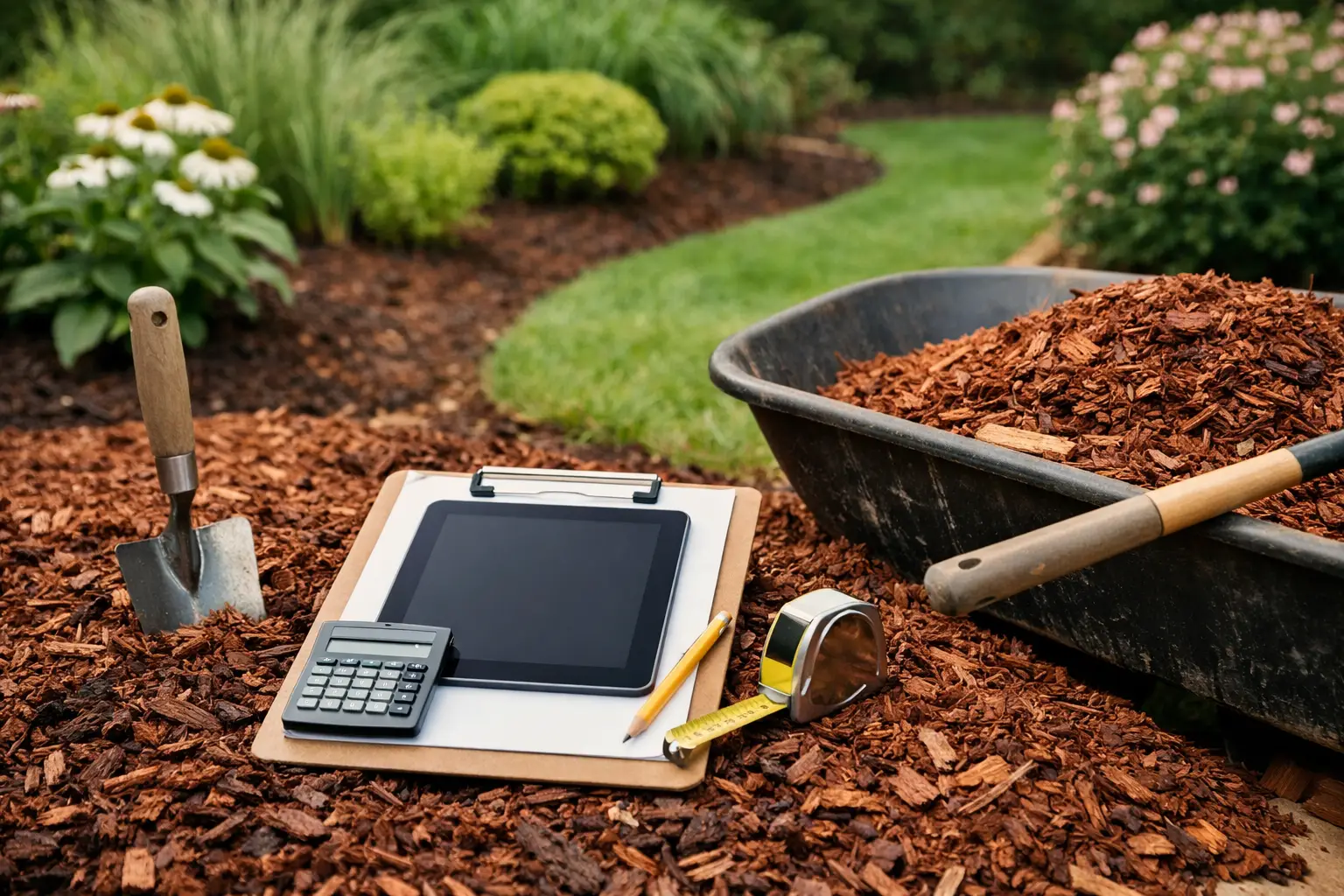
A fresh layer of mulch can make a tired front bed look finished in an afternoon. The frustrating part is realizing halfway through the project that you are several bags short, or ending up with a pile that has nowhere useful to go. A mulch coverage calculator takes the guesswork out of the order by turning your bed measurements and planned depth into a practical quantity.
For Birmingham homeowners and landscape crews, getting the amount right also helps keep a project on schedule. You can plan your pickup or delivery with confidence, spend less time moving extra material, and put the focus back on clean edges, healthy plants, and better curb appeal.
How a mulch coverage calculator works
Most bulk mulch is sold by the cubic yard. One cubic yard equals 27 cubic feet, which is enough material to cover a large area at a moderate depth. A mulch coverage calculator uses three details: the length of the bed, its width, and the depth of mulch you want.
Start by measuring every area that will receive mulch. For a rectangular bed, multiply the length by the width to find the square footage. A 20-foot bed that is 6 feet wide covers 120 square feet. Repeat that process for each separate bed, then add the totals together.
The next step is choosing a depth. Convert that depth from inches to feet, multiply it by the total square footage, and divide by 27. The result is the number of cubic yards needed.
The formula looks like this:
Square feet x mulch depth in feet ÷ 27 = cubic yards needed
For example, 120 square feet covered 3 inches deep requires 30 cubic feet of mulch. Since 30 divided by 27 is 1.11, you would generally order about 1.25 yards if partial-yard quantities are available, or round according to the supplier’s ordering options.
A quick coverage reference
If measuring and converting depth sounds like more math than you want to do at the job site, these working estimates can help. One cubic yard of mulch generally covers about 324 square feet at 1 inch deep, 162 square feet at 2 inches deep, 108 square feet at 3 inches deep, or 81 square feet at 4 inches deep.
Those figures assume a level, open bed. Mulch settles after installation, especially after rain, and uneven ground requires a little more material. They are a solid planning guide, but your actual order should account for the shape and condition of the beds.
Choosing the right mulch depth
For most established flower beds, shrub borders, and landscape islands, a finished depth of 2 to 3 inches is a dependable target. It gives the bed a full appearance, helps hold moisture in the soil, and reduces sunlight reaching many weed seeds. A lighter 1- to 2-inch refresh can work well where an existing mulch layer is still in good condition.
New beds sometimes need closer to 3 inches because bare soil and uneven surfaces absorb more material. A 4-inch depth may make sense around large trees or in broad natural areas, but it is not automatically better. Mulch piled too deeply can hold excess moisture around plant crowns and create problems for shallow-rooted plants.
Keep mulch a few inches away from tree trunks, shrub stems, and the base of perennials. The goal is an even blanket across the soil, not a mound against the plant. That simple detail looks cleaner and supports healthier landscaping over the long run.
Account for the shape of your beds
Straight foundation beds are easy to measure, but not every landscape has neat corners. For curved beds, break the space into smaller shapes you can estimate. Measure a rounded section as a rectangle using its longest length and average width, then add it to the total. For circular beds, measure across the center and use the radius, or make a reasonable square-foot estimate based on the surrounding area.
A professional crew may measure from a landscape plan, while a homeowner can use a tape measure and a quick sketch. Either method works when the measurements are honest. The calculator does not need perfection down to the inch, but it does need a realistic total area and intended depth.
When to round your mulch order up
Ordering exactly the calculated amount can be tempting, especially on a tight budget. In practice, a small cushion is often worthwhile. Round up when beds have slopes, deep ruts, irregular curves, exposed roots, or a lot of edging to work around. These areas use more mulch than a simple square-foot calculation suggests.
You may also need extra material if you plan to refresh several containers, dress the base of new trees, or improve bare spots that become obvious once the project begins. Extra mulch is easy to use in another bed. Running short can mean another trip, another delivery, and an unfinished-looking landscape while you wait.
There is one exception: avoid over-ordering for a small, tightly defined space with no additional areas to cover. If your yard has limited room for a leftover pile, calculate carefully and ask for help choosing the closest available quantity. A knowledgeable material-yard team can check your measurements and help you make a sensible call.
Bulk mulch versus bags
A mulch coverage calculator is especially useful when comparing bulk mulch with bagged products. Bags are convenient for small touch-ups, individual planters, and spaces where only a few cubic feet are needed. Once you are covering several beds, however, bulk mulch is often the more practical option.
A typical bag holds 2 cubic feet. Because one cubic yard contains 27 cubic feet, it takes 13.5 two-cubic-foot bags to equal one yard. That means a 3-yard project can involve more than 40 bags, plus the time required to load, unload, open, and dispose of each bag.
For larger Birmingham projects, bulk material can reduce packaging waste and make installation faster. It is also easier to order based on the true volume your beds require. Landscape Source can help homeowners and contractors plan a bulk mulch order that fits the job, whether you are picking up at the yard or arranging local delivery.
Plan for delivery before the mulch arrives
The calculator tells you how much mulch to order. A little preparation determines how easily you can install it. Clear vehicles, tools, and toys from the planned drop area, and make sure the spot is accessible for the delivery truck. If the load needs to be placed in a particular location, communicate that clearly before delivery.
Choose a firm, accessible area that keeps mulch close to the beds without blocking the garage, street access, or daily traffic. A tarp beneath the pile can make final cleanup easier. Keep in mind that delivery trucks need adequate clearance and cannot safely cross every lawn, driveway edge, or narrow gate.
If you are spreading several yards, stage wheelbarrows, rakes, shovels, gloves, and a hose before the material arrives. Working from the back of the property toward the front helps avoid walking repeatedly across freshly mulched beds. After spreading, use a rake to level the surface and check that plant stems and tree trunks remain clear.
Common mulch calculation mistakes
The most common mistake is measuring only the visible open space and forgetting that mulch extends under shrubs and between perennials. Measure the full bed footprint, then subtract only large permanent features such as patios, boulders, or sizable hardscape sections.
Another frequent error is mixing units. If your bed is measured in feet, keep the calculation in feet and convert inches of depth to a fraction of a foot. Three inches equals 0.25 feet, while 2 inches equals about 0.167 feet. Using 3 as though it were 3 feet will produce a wildly incorrect result.
It also helps to distinguish between a refresh and a first installation. If you have an existing 1-inch mulch layer and want a finished depth of 3 inches, calculate for the additional 2 inches, not the entire 3 inches. Rake the old mulch evenly first so you can see what is actually there.
Finally, do not select a depth just because it looks dramatic in a photo. The right amount depends on your plants, soil, drainage, and the condition of the existing bed. A well-measured 2- or 3-inch layer usually performs and looks better than an uneven, oversized pile.
Before you place an order, measure once more, decide on your finished depth, and leave room for the small real-world adjustments every landscape needs. The right mulch quantity makes the work easier, and a clean, even layer gives your outdoor space the cared-for look it deserves.

Leave a Reply