

A fresh layer of mulch can make a Birmingham landscape look finished in an afternoon, but the material you choose affects more than curb appeal. When comparing pine bark versus hardwood mulch, the right choice comes down to where it will go, how polished you want the bed to look, how much maintenance you expect, and how quickly you want it to break down.
Both materials help conserve moisture, moderate soil temperature, limit many weeds, and protect soil from hard rain. Both also look far better than bare dirt around shrubs, trees, and planting beds. The differences show up in texture, staying power, color, and how each mulch behaves through Alabama heat, rain, and changing seasons.
Pine Bark Versus Hardwood Mulch at a Glance
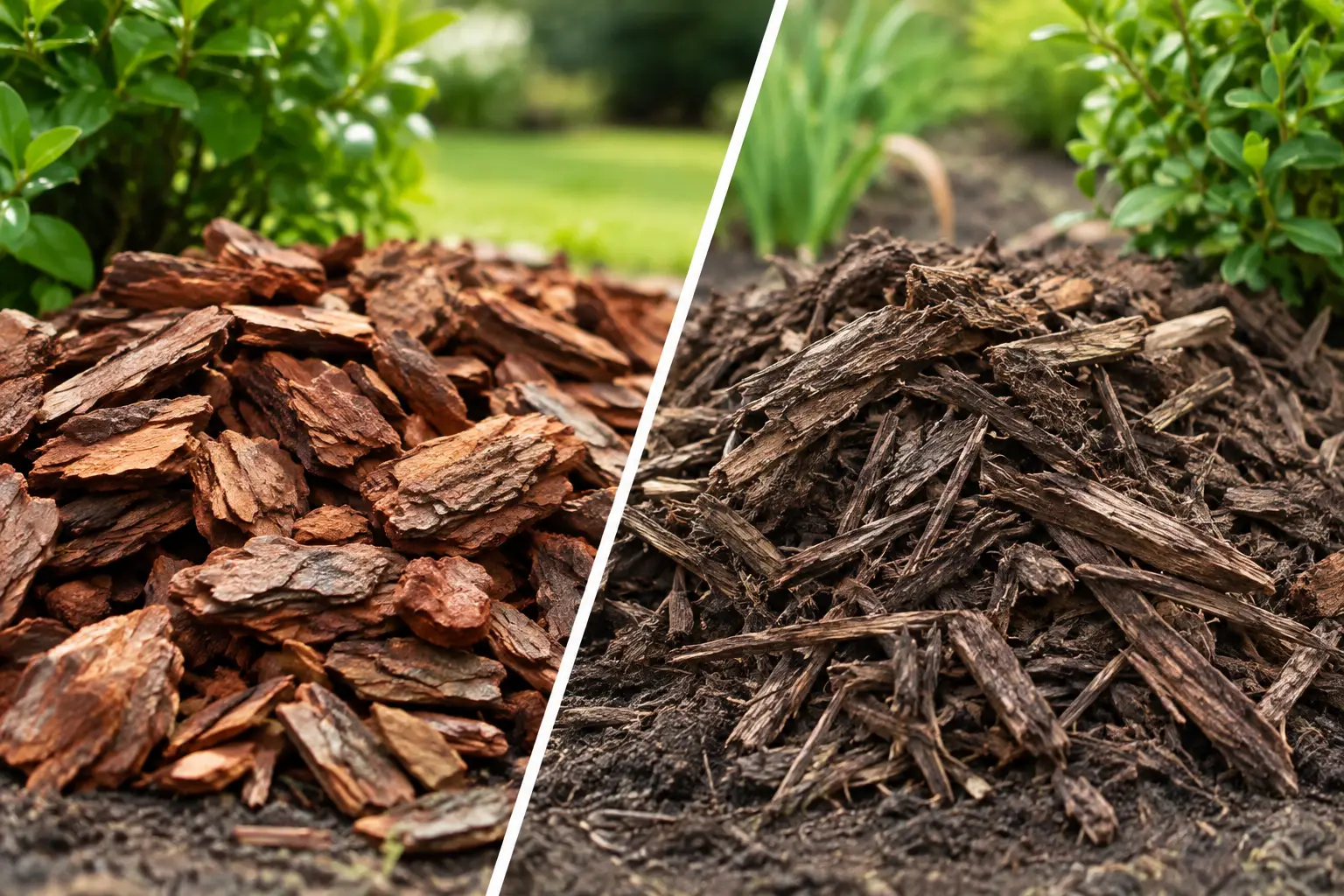
Pine bark mulch is made from the bark of pine trees. It is commonly sold in nuggets, mini nuggets, or shredded forms. Its natural color usually ranges from warm reddish-brown to deep brown, and its texture is more distinct than many wood mulches. Larger nuggets create a clean, defined appearance around established shrubs and trees, while shredded pine bark has a finer, more natural woodland look.
Hardwood mulch is made from processed hardwood tree material. It is often shredded or ground into a consistent texture and may be available in natural brown, dark brown, black, or red color options. It tends to spread easily and creates a uniform surface across wide planting beds, which makes it a popular choice for front-yard refreshes and larger landscape projects.
Neither is automatically better. A homeowner replacing mulch around a row of azaleas may prefer one material, while a landscaper covering several hundred square feet around a new construction property may choose the other for practical reasons.
Choose Pine Bark for Longer-Lasting Texture
Pine bark is often the better fit when you want a natural material that holds its shape and gives beds more visible texture. Pine bark nuggets can last longer than finely shredded wood mulch because larger pieces break down more slowly. They are especially attractive around mature trees, evergreen shrubs, ornamental grasses, and low-maintenance foundation plantings.
The bark’s chunky look can also create useful contrast. Against green foliage, light stone edging, or brick homes, pine bark adds warmth without looking overly formal. It is a good option for customers who want their beds to look natural rather than heavily colored.
Pine bark is sometimes assumed to make soil too acidic. In a properly mulched bed, that concern is usually overstated. The mulch stays on top of the soil and decomposes gradually. It may be a particularly comfortable choice around acid-loving plants such as azaleas, camellias, gardenias, hydrangeas, and blueberries, but it does not dramatically change soil pH overnight.
There are a few placement considerations. Large pine nuggets can shift in a heavy downpour or float if water collects in a low area. They are not always the best choice for a steep slope, a drainage swale, or a spot that regularly sees fast-moving runoff. For those areas, shredded mulch is generally more likely to knit together and stay in place.
Choose Hardwood Mulch for Consistent Coverage
Hardwood mulch is a practical choice for broad beds, seasonal cleanups, and properties where a smooth, uniform finish matters. Its smaller shredded pieces are easy to spread with a rake, settle neatly around plants, and cover irregular planting areas without leaving gaps.
For many Birmingham homeowners, hardwood mulch delivers the classic freshly landscaped look. Dark brown hardwood can make green foliage stand out, while black mulch gives planting beds a crisp, more formal edge. Natural brown is often the easiest color to blend with an established landscape.
Because hardwood mulch is usually more finely ground than pine bark nuggets, it often decomposes faster. That can be a benefit if your goal is to build healthier soil over time. As it breaks down, it adds organic matter to the top layer of the bed. The trade-off is that it may need refreshing sooner to maintain the same depth and appearance.
Hardwood mulch can also form a light mat after repeated rain, especially if it is applied too thickly. A quick fluff with a rake restores its appearance and helps water move through the mulch layer. This is simple maintenance, but it is worth considering for large beds that receive little attention between spring and fall.
Think About the Location Before You Buy
The best mulch often depends on the specific area of the property. Pine bark nuggets look excellent in low-traffic beds around mature shrubs and trees, where their larger shape has room to show. They are also a strong choice for naturalized borders and properties with a more relaxed, wooded setting.
Hardwood mulch is often easier to use around annual flowers, vegetable gardens, and densely planted beds. Its smaller texture works around plant stems and fills in between closely spaced shrubs. It is also convenient for a full front-yard refresh where you want every bed to have a consistent look.
For slopes, shredded pine bark or shredded hardwood usually performs better than large nuggets. For open areas that receive strong rain runoff, a heavier shredded material is less likely to travel across the lawn or wash toward a driveway. If erosion is already a problem, mulch may need to be paired with grading, edging, plants, or another drainage solution rather than asked to solve the issue alone.
Color matters, too, but it should not be the only deciding factor. A darker mulch can make a home look sharp right after installation, though it may fade over time in direct sun. Natural pine bark has color variation built into the material, so its aging process often looks less noticeable. If matching an existing bed is your priority, bring a photo or describe the current color and texture before ordering.
Cost, Coverage, and Delivery Planning
Bulk mulch is often the most efficient choice when you are covering more than a few small beds. It reduces the time spent opening bags, gives you a consistent material across the project, and makes it easier to order enough for the job.
For most established landscape beds, apply mulch about 2 to 3 inches deep. One cubic yard covers roughly 100 square feet at a 3-inch depth. If a bed already has a healthy mulch layer, you may only need enough material to refresh thin or faded areas rather than starting over at full depth.
Before placing an order, measure the length and width of each bed and add the square footage together. Curved beds do not need perfect measurements. A reasonable estimate is usually enough, especially when you allow for a little extra around tree rings and bed edges. For larger jobs, it is better to have a small amount left for touch-ups than to come up short with bare sections still showing.
Placement matters when mulch is delivered in bulk. Decide ahead of time where the material can be safely unloaded without blocking vehicles, damaging turf, or creating extra wheelbarrow trips. Clear instructions help the delivery go smoothly, whether the pile needs to go near the driveway, beside a side gate, or in a designated work area. Landscape Source can help customers choose quality bulk material and plan delivery for projects throughout the Birmingham area.
Apply Either Mulch the Right Way
Even premium mulch can cause problems if it is piled too deeply or pushed against the wrong surfaces. Keep mulch a few inches away from house siding, wood trim, and the trunks of trees and shrubs. Mulch pressed against these areas can hold moisture where you do not want it.
Avoid the common “mulch volcano” around trees. A mound of mulch against the trunk can encourage surface roots, trap moisture, and create stress for the tree over time. Instead, spread a level layer in a wide ring, leaving the root flare and trunk base visible.
Pull existing weeds before spreading fresh mulch, and edge the bed if needed. Mulch helps suppress new weeds, but it will not permanently stop weeds that are already rooted in the soil. A clean bed and a proper mulch depth will give you the best result with either material.
The Better Choice Is the One That Fits Your Bed
Choose pine bark when you want a natural, textured mulch that tends to hold its form longer, especially around established shrubs and trees. Choose hardwood mulch when you want even coverage, easier spreading, and a uniform appearance across larger or more densely planted beds.
A well-chosen mulch does more than cover soil. It gives plants a better growing environment and gives the whole property the cared-for appearance people notice from the street. Start with the needs of the bed, then choose the color and texture that makes your landscape feel like home.

Leave a Reply