

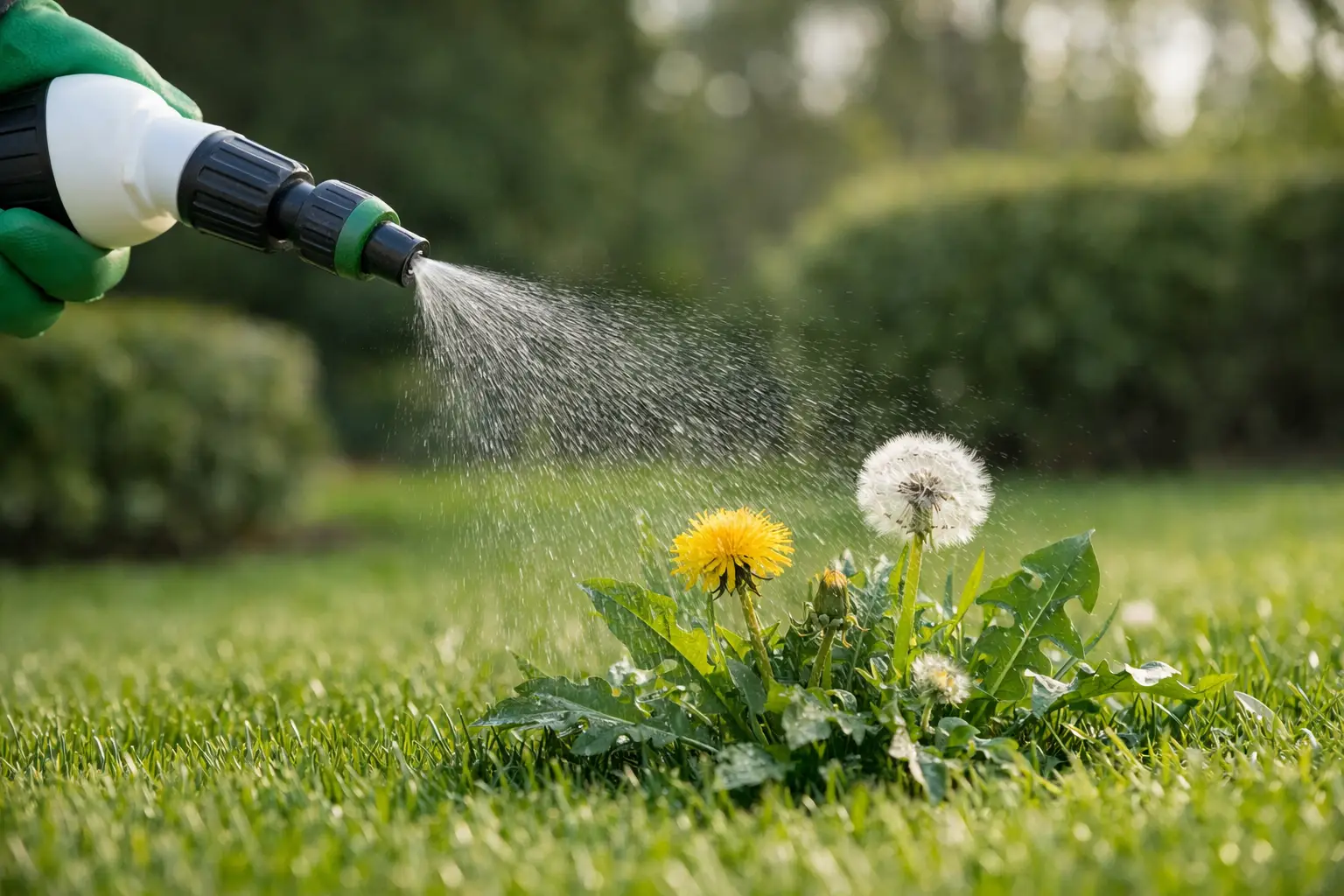
A lawn can be thick, green, and still look unfinished when weeds are scattered through it. The right selective lawn herbicide helps you treat the weeds you want gone without sacrificing the turf you have worked to grow. For Birmingham homeowners and landscape crews, that distinction matters: a product that works well in one grass type or on one weed may damage another.
The best result starts before the sprayer comes out. Identify the weed, know your lawn grass, and choose a treatment labeled for both. A few extra minutes at the start can prevent brown patches, wasted product, and another weekend spent trying to repair the lawn.
What a Selective Lawn Herbicide Does
A selective herbicide is designed to control certain weeds while leaving desirable turfgrass unharmed when used according to its label. Most lawn products target broadleaf weeds, such as clover, dandelion, chickweed, henbit, and plantain. These weeds have a noticeably different leaf structure from grass, allowing a broadleaf herbicide to affect them without harming properly established turf.
That does not mean every selective product is safe for every lawn. Bermuda, zoysia, centipede, St. Augustine, fescue, and Bahia grass can have very different tolerances. Centipede and St. Augustine, in particular, may be more sensitive to certain ingredients and application rates. Always read the label for approved turf types, weed targets, seasonal guidance, and temperature limits.
A selective product also differs from a non-selective herbicide. Non-selective products kill or injure nearly any green plant they contact, which makes them useful for clearing cracks, fence lines, or areas being completely renovated. They are not the right choice for spraying weeds throughout an established lawn.
Start With the Weed in Front of You
Choosing by the picture on the bottle alone can lead to poor control. Weed problems usually fall into three groups: broadleaf weeds, grassy weeds, and sedges. Each group often needs a different approach.
Broadleaf weeds
Broadleaf weeds are the most common reason homeowners look for a selective lawn herbicide. They often have wide, visible leaves and can stand out sharply against fine turf. Henbit and chickweed are frequent cool-season visitors in Birmingham lawns, while clover, spurge, dollarweed, and plantain can show up as temperatures warm.
A broadleaf herbicide can be very effective on young, actively growing weeds. Once weeds are mature, flowering, stressed by drought, or spreading heavily through thin turf, control can take longer. A follow-up application may be allowed by the label, but more product is not automatically better.
Grassy weeds
Grassy weeds are trickier because they resemble the lawn itself. Crabgrass, goosegrass, annual bluegrass, and dallisgrass are common examples, but they do not respond to the same treatment. A product that controls crabgrass may not solve a dallisgrass problem, and an herbicide safe for Bermuda may not be suitable for centipede or fescue.
For annual grassy weeds, prevention is often the better plan. A pre-emergent treatment creates a barrier that stops many weed seeds from establishing. It will not kill weeds that are already growing, so timing is the whole game. In central Alabama, spring applications are generally made before summer annuals such as crabgrass begin germinating, while fall applications help reduce winter annual weeds. Local weather shifts from year to year, so watch soil temperatures and product directions rather than relying only on the calendar.
Sedges
Sedges, including yellow nutsedge, are often mistaken for grass. They tend to grow faster than surrounding turf, have a lighter green color, and may have a triangular stem. Mowing can temporarily hide them, but it will not solve the problem.
Sedges typically require a product specifically labeled for sedge control. They also often point to a drainage issue, frequent overwatering, or a low area that stays wet after rain. Treating the weed without improving the site can mean seeing it again next season.
Match the Product to Your Birmingham Lawn
Warm-season lawns dominate the Birmingham area, but there is no one-size-fits-all herbicide program. Bermuda grass is durable and commonly used in sunny yards. Zoysia offers a dense, polished look but can be slower to recover from stress. Centipede is popular for its lower-input reputation, yet it needs careful product selection. St. Augustine performs well in some shaded or moist locations but can be sensitive to certain herbicides. Tall fescue is more common in shaded lawns and is usually managed on a different seasonal schedule.
Before buying, take a clear photo of the weed and bring it with you if you are uncertain. A knowledgeable local supplier can help narrow down whether you are dealing with a broadleaf weed, a grass-like weed, or a sedge, then help you choose a lawn-care product appropriate for your turf. That practical guidance is especially useful when a yard has more than one grass type or when a new lawn is still getting established.
Do not apply herbicide to newly seeded, sodded, plugged, or sprigged turf unless the label specifically says it is safe to do so. Young grass needs time to establish roots, and a treatment that is fine for mature turf can be hard on a new lawn.
Apply at the Right Time, Not Just When You Have Time
Good weed control depends heavily on conditions. Selective herbicides work best when weeds are actively growing and are not under drought stress. In Birmingham, spring and fall are often productive broadleaf-weed treatment windows because temperatures are milder and weeds are actively taking in the product.
Avoid spraying right before rain unless the label allows enough drying time. Windy conditions are another reason to wait. Even a selective product can damage nearby ornamentals, vegetables, shrubs, or flowers if spray drifts onto them.
Hot weather deserves extra caution. Some products have temperature restrictions because heat can increase the risk of turf injury, especially on centipede and St. Augustine. If the lawn is dry, brittle, recently fertilized heavily, or struggling after disease or insect damage, address that stress first. A healthy lawn handles a properly selected treatment more reliably than one already under pressure.
Mowing also affects results. Many labels recommend avoiding mowing for a short period before and after treatment so the weed has enough leaf surface to absorb the herbicide. Check the exact instructions rather than guessing. The label is the legal application guide and the best source for mixing rates, personal protective equipment, watering directions, and reapplication intervals.
Spot Treating Versus Treating the Whole Lawn
For a handful of weeds, spot treatment is usually the smarter and more economical choice. Apply only enough spray to wet the weed foliage, not so much that it drips or runs off. This reduces chemical use and protects the rest of the lawn.
A blanket application may make sense when broadleaf weeds are scattered throughout the yard and the product is labeled for broadcast use on your grass type. It requires more careful measuring and consistent coverage. Use a properly calibrated sprayer, mix only what you need, and never assume a stronger mixture will provide faster results. Overapplication raises the chance of turf damage without guaranteeing better control.
Professional crews should also keep dedicated, clearly labeled equipment for herbicide use. A sprayer previously used for a non-selective product can cause expensive damage if residue reaches a lawn or ornamental bed.
Herbicide Works Best With Better Lawn Habits
Herbicide is a tool, not a substitute for basic lawn care. Weeds take advantage of bare soil, weak turf, compacted ground, poor drainage, and mowing mistakes. Improving those conditions helps your grass compete naturally.
Mow at the recommended height for your grass and avoid removing too much at once. Water deeply but only as needed, instead of keeping the lawn constantly wet. Feed the lawn based on its needs and the season, not simply because weeds are visible. If bare spots keep returning, consider whether the area needs better soil, improved drainage, more sunlight, or a different grass choice.
For homes and job sites across Birmingham, Landscape Source can help make that decision less complicated. Bring in a weed photo, explain your grass type and site conditions, and get practical help selecting lawn-care products that fit the job.
A cleaner lawn rarely comes from one aggressive application. It comes from choosing the correct product, using it carefully, and giving healthy turf the conditions it needs to fill in and stay competitive.

Leave a Reply