

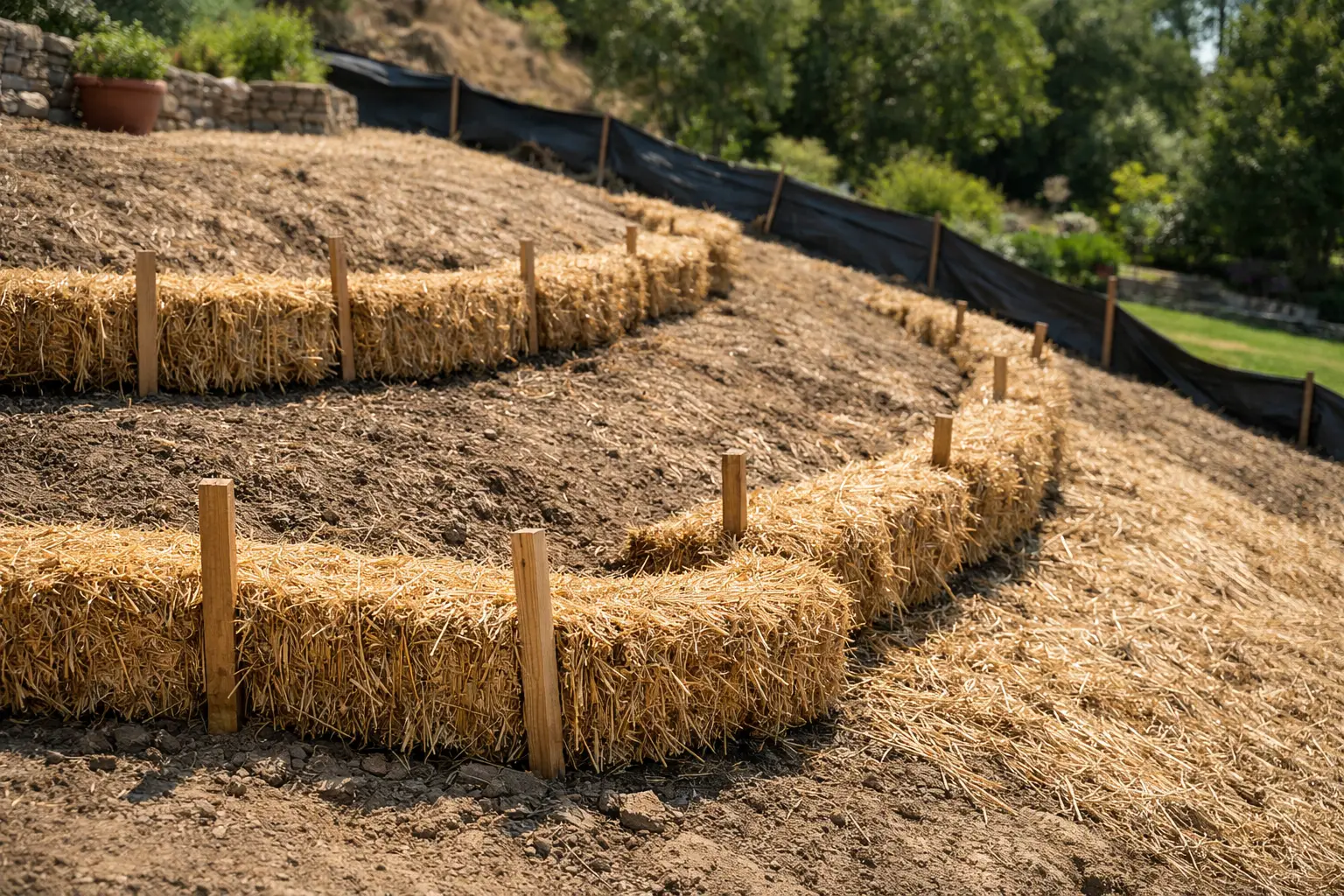
A hard Alabama rain can turn a freshly graded yard into a muddy problem before the new grass has a chance to take hold. Straw bales erosion control is a practical temporary measure for slowing runoff and catching loose soil near the bottom of a slope, around a disturbed garden area, or beside a construction entrance. But bales only work when they are installed tightly, trenched in properly, and used in the right location.
For Birmingham homeowners and landscape crews, the goal is simple: keep soil where it belongs while a project settles in. Whether you are preparing for sod, repairing a washout, building a bed, or working around a new drainage feature, a few well-placed bales can help protect the rest of the property from muddy runoff.
What Straw Bales Actually Do
Straw bales are most useful as a temporary sediment barrier. They slow shallow sheet flow moving across bare ground, allowing dirt and small debris to settle before water continues downhill. That can protect a driveway, sidewalk, drainage path, neighboring property, or street edge while grass, groundcover, mulch, or permanent erosion-control materials are put in place.
They do not stop a major flow of water, fix poor grading, or replace a properly designed drainage system. If water is rushing through a defined ditch, gully, or steep channel, it will often go around, under, or straight through a row of bales. In that situation, the better answer may involve reshaping the grade, adding a stabilized swale, using rock, or installing an appropriate drainage solution.
That distinction matters. Straw bales are meant to catch sediment from slow-moving runoff, not hold back a pond of water. When used for the job they can handle, they are affordable, readily available, and easy to remove once vegetation is established.
Where Straw Bales Erosion Control Works Best
A row of bales is a good fit below a small-to-medium disturbed area where water spreads across the slope rather than concentrating in one fast stream. Common examples include the lower edge of a newly graded lawn, below a garden expansion, along the downhill side of a bare planting bed, or near the perimeter of a project where loose soil could wash toward pavement.
They can also help after a small excavation or hardscape project, especially when the surrounding lawn is temporarily bare. If a crew has brought in topsoil and rain is in the forecast, bales can provide a useful line of defense while final grading and seeding are completed.
The condition of the site matters more than the size of the project. A gentle slope with exposed soil may benefit from bales. A steep backyard with repeated washouts may need more than a temporary barrier. Before loading materials, look at where water enters the area, where it naturally collects, and what is downhill from the work.
Straw versus hay
Use straw, not hay. Straw is the dry stalk left after grain harvest and is generally cleaner for erosion-control use. Hay contains more seeds and can introduce unwanted growth into a lawn or bed. A little volunteer growth from straw is possible, but hay is far more likely to create a weedy cleanup job.
For projects with a polished finished landscape nearby, clean, tightly bound straw bales are easier to handle and less likely to create a mess during installation.
How to Install Straw Bales So They Can Work
Most bale failures come down to one issue: water finds an opening. A bale placed on top of the ground with spaces between it and the next bale may look fine on a dry day, then let muddy water pass underneath during the first storm.
Start by placing the bales along the contour of the slope, meaning the row runs across the slope rather than straight downhill. The barrier should intercept runoff, not guide it toward one low point. Extend the ends slightly uphill when possible so water is less likely to slip around each side.
Dig a shallow trench along the proposed line, usually several inches deep. Set each bale into the trench with the cut side facing the direction of flow. The bales should touch firmly from end to end. Pack the excavated soil against the uphill side and around the bottom edge to close gaps where water could escape.
Stake the bales securely. Drive wooden stakes through or immediately behind the bales and into firm ground so a saturated bale will not shift or float. Stakes should be strong enough to remain in place through wind and heavy rain. Where bales meet, make the joint tight and secure the connection so the row acts as one continuous barrier.
Once the bales are installed, inspect them after the first rain. If water has cut beneath the row, add soil and compact it. If sediment is collecting heavily on the uphill side, remove it before it builds high enough to send water around the ends. A temporary control measure only remains useful when it is maintained.
Common Mistakes That Lead to Washouts
Putting bales in the path of concentrated runoff is one of the biggest mistakes. A deep swale or active ditch can carry enough force to flatten, undercut, or bypass the barrier. Bales belong at the edge of a disturbed area where runoff is shallow and spread out.
Another problem is expecting bales to last indefinitely. Straw breaks down, settles, and loses shape with weather exposure. If a project will leave soil exposed for many weeks, establish grass or use another stabilizing material as soon as conditions allow. A barrier is not the finished solution.
It also helps to avoid placing bales where they block a working drainage route. Redirecting water without a plan can create a new wet spot closer to the house, driveway, or neighbor’s yard. If a slope has recurring drainage trouble, address the source of the water first instead of only trying to catch the dirt after it moves.
Finally, do not leave damaged bales in place after the project is complete. Once vegetation is growing well and the soil is stable, remove the bales, clear accumulated sediment where needed, and restore the area neatly.
Pair Bales With Ground Stabilization
The best erosion-control approach usually has two parts: slow or redirect the runoff, then cover the soil. Straw bales handle the first part temporarily. Seed, sod, straw cover, mulch, erosion-control blankets, gravel, or planted groundcover can handle the longer-term job, depending on the location.
A newly seeded lawn may need a light straw cover to protect seed and reduce surface splash. A planting bed may be better served by a proper layer of mulch once plants are installed. A high-traffic slope beside a driveway may call for stone or another durable surface. The right material depends on slope, drainage, sunlight, foot traffic, and the look you want after the project is finished.
For larger jobs, contractors should also confirm whether local project requirements call for a specific sediment-control method. Some sites may require professionally installed silt fence, inlet protection, or other measures beyond straw bales. Using the approved solution from the start saves time when inspections or weather delays are involved.
Get the Materials Before the Rain Arrives
Erosion control is easier when materials are on site before bare dirt meets a forecast. Landscape Source Inc. can help Birmingham-area homeowners and crews plan for the straw bales, soil, mulch, gravel, and other landscape materials needed to finish a project properly. Pickup works well for smaller jobs, while local delivery can keep a larger project moving without tying up trucks and trailers.
If you are unsure whether bales are enough for your slope, take a close look after the next rainfall. The path water chooses will tell you far more than a dry-yard guess, and it can point you toward a solution that keeps your landscape clean, stable, and ready to grow.

Leave a Reply