

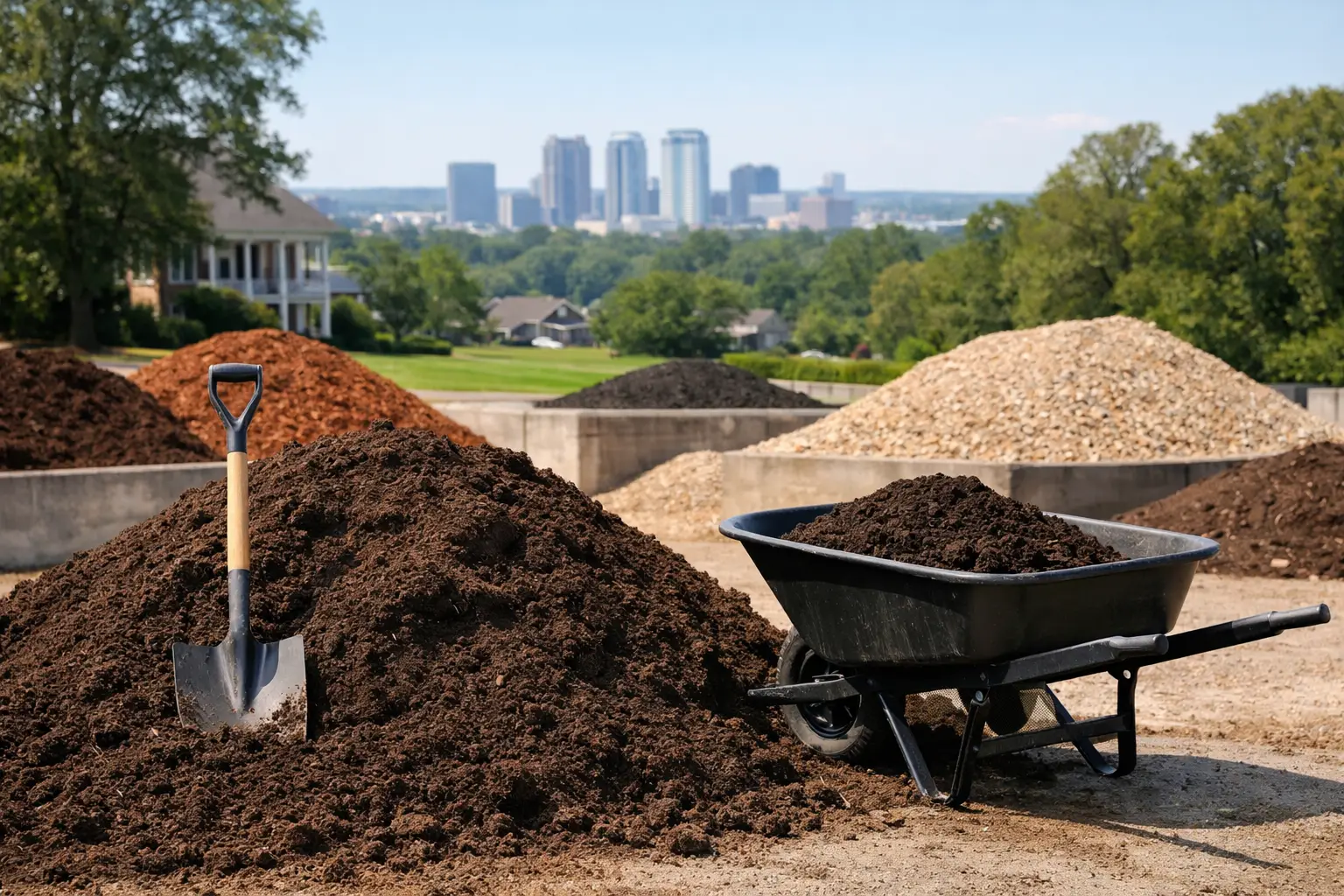
A few bags of soil can handle a porch planter. But when you are filling new garden beds, leveling a low spot in the lawn, or preparing a full yard renovation, bags become expensive, slow to move, and hard to estimate. Knowing where to buy bulk soil gives Birmingham homeowners and landscaping crews a more practical way to get the material they need by the yard.
For most larger projects, a local landscape-materials yard is the best place to start. You can see the material, ask questions about the application, buy the quantity your project calls for, and arrange pickup or delivery without making repeated trips to a big-box store.
Where to Buy Bulk Soil in Birmingham
The right supplier depends on your project size, the type of soil you need, and whether you have a truck available. Birmingham-area customers generally have three options: a local landscape supply yard, a big-box retailer, or a general dirt-hauling source. Each has a place, but they are not interchangeable.
A dedicated landscape-materials retailer is usually the strongest choice for garden beds, lawn work, and professional installations. These yards specialize in bulk products, meaning soil is measured and loaded by the cubic yard rather than sold only in small bags. Their staff can help match the material to the job, whether you need screened topsoil for grading and filling or a richer planting soil for beds and shrubs.
Big-box stores are convenient for a few bags, especially when you are already shopping for tools or plants. Once a project needs a half yard or several yards, however, bagged soil often costs more per cubic foot and creates a lot of plastic waste and loading time. Stock can also be inconsistent during busy spring weekends.
A dirt-hauling company may offer inexpensive fill material for major grading, but low-cost dirt is not always suitable for growing grass or plants. It can contain rocks, heavy clay, roots, or uneven material. For visible landscape areas and planting projects, ask specifically for screened topsoil or a soil blend appropriate for the intended use.
For customers throughout Jefferson County, Landscape Source Inc. offers an open-to-the-public retail yard along with local delivery, so homeowners can get professional-grade bulk material without guessing at what belongs in the truck.
Start With the Job, Not the Cheapest Soil
“Bulk soil” is a broad term. Before ordering, decide what the soil needs to do. The best material for filling a deep hole is not necessarily the best material for a vegetable garden, and the soil for a new lawn may need a different texture than soil used around ornamental plantings.
Garden beds and planting areas
New planting beds need soil that supports root growth and holds moisture without staying soggy. A quality topsoil or planting mix can provide a better starting point than the compacted clay commonly found in many Birmingham yards. If you are building raised beds or growing vegetables, ask what is recommended for edible gardening and whether compost or other amendments should be added.
Lawn repair and leveling
For shallow low spots, bare areas, and lawn preparation, screened topsoil is often a dependable choice. Screening removes larger debris and helps the material spread more evenly. Keep in mind that soil alone will not correct every drainage issue. If water consistently collects near the foundation or across a large section of the yard, the grade and drainage plan should be addressed before bringing in more soil.
Filling, grading, and construction work
If the goal is simply to build up an area before installing sod, gravel, or another finish, fill dirt may be appropriate. It is often more economical for volume, but it is not intended to be premium planting soil. Be clear with your supplier about depth, final use, and whether the area will receive topsoil later.
The lowest price is only a good value if the material fits the job. Buying the wrong soil can lead to poor drainage, weak plant growth, extra labor, and a second delivery when the project has already started.
How Much Bulk Soil Should You Order?
Bulk soil is typically sold by the cubic yard. One cubic yard covers about 324 square feet at a depth of 1 inch, 162 square feet at 2 inches, or 108 square feet at 3 inches. That makes it easier to estimate soil for beds, lawns, and larger landscape areas.
To calculate your order, multiply the length of the area by its width to find square footage. Then multiply that number by the planned depth in feet. Divide the result by 27 to convert cubic feet to cubic yards.
For example, a 20-by-15-foot bed has 300 square feet. At a 3-inch depth, that bed needs 75 cubic feet of soil, or just under 3 cubic yards. Ordering a little extra is usually wise because soil settles, irregular bed edges use more material than expected, and spreading depth can vary across the site.
If math is not your favorite part of the project, bring your measurements to the yard or have them ready when you call. A knowledgeable supplier can help you turn those dimensions into a reasonable yardage estimate. It is better to confirm the quantity before delivery than to realize a half yard short of finishing the bed.
Pickup or Delivery: Choose What Saves Time
Picking up bulk soil can work well for smaller orders when you have a suitable truck or trailer. Confirm its payload capacity before loading. A cubic yard of soil is heavy, and wet soil weighs more than dry material. Overloading a vehicle is unsafe and can damage the truck, trailer, or suspension.
Delivery is often the better choice for projects involving several yards, tight schedules, or homeowners without hauling equipment. It also keeps your driveway and weekend free from repeated loading trips. When scheduling delivery, provide clear placement instructions. Let the supplier know about gate widths, overhead limbs, parked vehicles, steep drives, soft ground, and any area the truck should avoid.
A properly placed delivery can save hours of wheelbarrow work. Still, a dump truck needs room to maneuver and cannot always place soil exactly beside a backyard bed. If access is limited, plan for a staging area near the project and have tarps, wheelbarrows, and tools ready before the truck arrives.
What to Ask Before You Buy
A good bulk-soil supplier should make the buying process straightforward. Ask whether the soil is screened, what applications it is recommended for, and how it is measured. Confirm the minimum delivery quantity, delivery timing, and whether the price includes delivery or lists it separately.
It also helps to ask about availability early in the season. Spring and fall are busy times for soil, mulch, stone, and other landscape materials. Ordering ahead gives you a better chance of receiving material when your crew, rental equipment, or planting schedule is ready.
For professional landscapers, consistency matters as much as price. A supplier that can provide dependable material, load efficiently, and communicate clearly about delivery timing helps keep client work moving. Homeowners benefit from the same reliability, especially when a project is being completed around work schedules or before a gathering at the house.
Prepare the Site Before the Soil Arrives
Bulk soil should not sit in the driveway longer than necessary. Clear the delivery area, mark irrigation heads or low edging near the drop zone, and make sure vehicles are moved. If soil will be placed on pavement, consider laying down a tarp when practical to make cleanup easier.
Have the bed shape, grade, or lawn area prepared in advance. Remove weeds and construction debris, loosen compacted ground where appropriate, and know where the soil needs to go. For planting beds, spread soil evenly and avoid piling it high against tree trunks, shrub stems, siding, or foundations.
After spreading, lightly rake the surface, water as needed, and allow for some settling. New soil is a foundation for the landscape, not a finished landscape by itself. Mulch, proper planting, seed or sod, and regular watering are what turn that fresh delivery into a healthy outdoor space.
A local bulk supplier gives you more than a pile of dirt at the curb. It gives you a practical starting point, a better way to buy for the scale of your project, and a team that can help you get the right material moving in the right direction.

Leave a Reply