

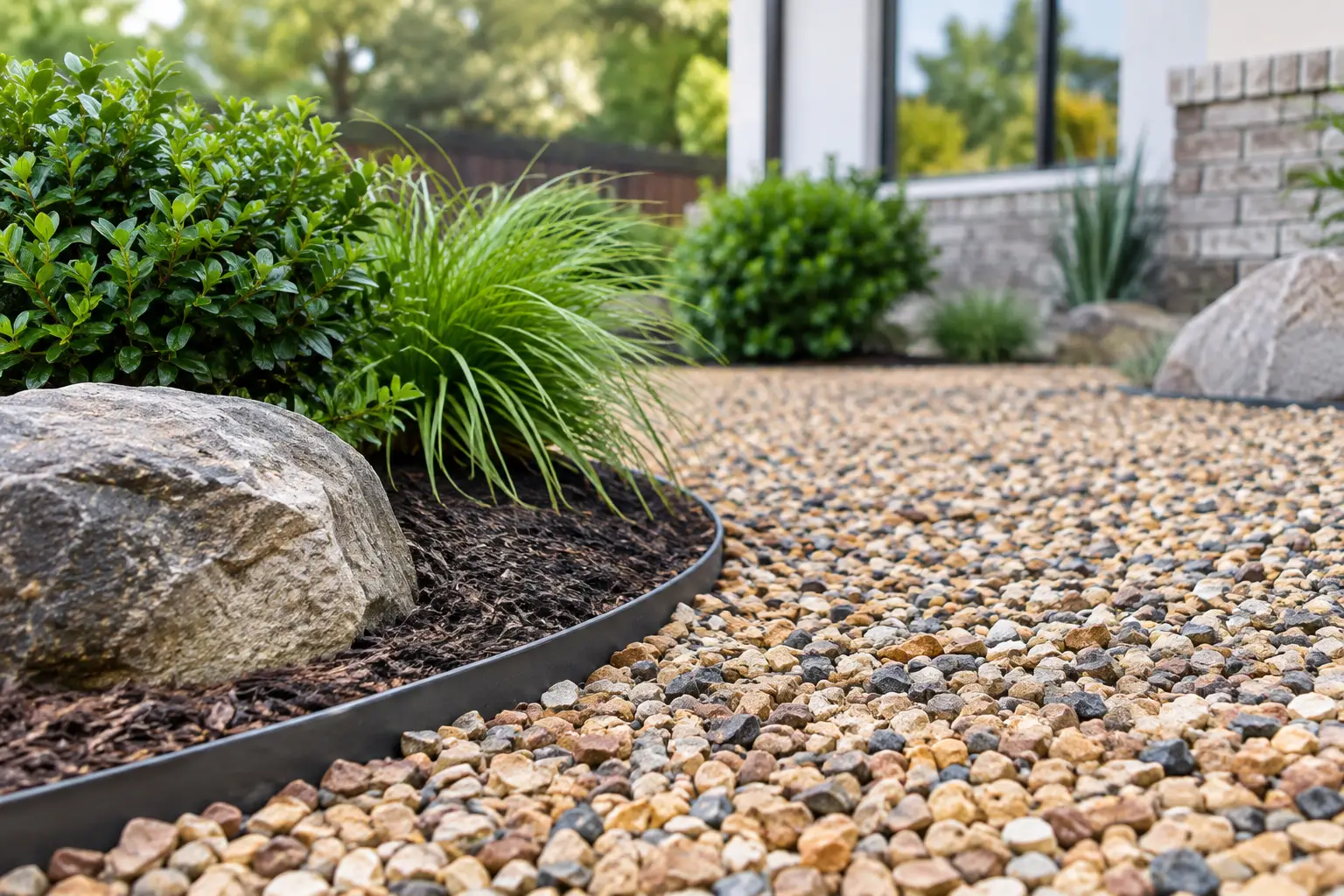
A fresh layer of landscape gravel can change the look of a Birmingham property in a single afternoon. It gives planting beds a finished edge, keeps muddy walkways more usable after rain, and adds texture that mulch alone cannot provide. The right stone also holds up through Alabama heat, seasonal downpours, and regular foot traffic with far less maintenance than many organic ground covers.
Gravel is not one-size-fits-all, though. A smooth river gravel that looks great around a patio may shift too much under a wheelbarrow. A crushed limestone that packs firmly for a path may not be the look you want around delicate shrubs. Choosing the material with the job in mind is what makes the finished project look intentional and perform well for years.
Start With the Job Your Gravel Needs to Do
Before choosing color or stone size, decide whether the area is primarily decorative, functional, or both. Decorative beds, foundation plantings, dry creek features, garden borders, walkways, patios, and drainage areas all place different demands on the material.
For a planting bed, appearance and weed suppression are usually the main priorities. Decorative gravel gives beds a clean, polished surface and does not break down the way mulch does. It can be a practical choice near evergreen shrubs, ornamental grasses, succulents, and areas where you want a long-lasting color contrast against green foliage.
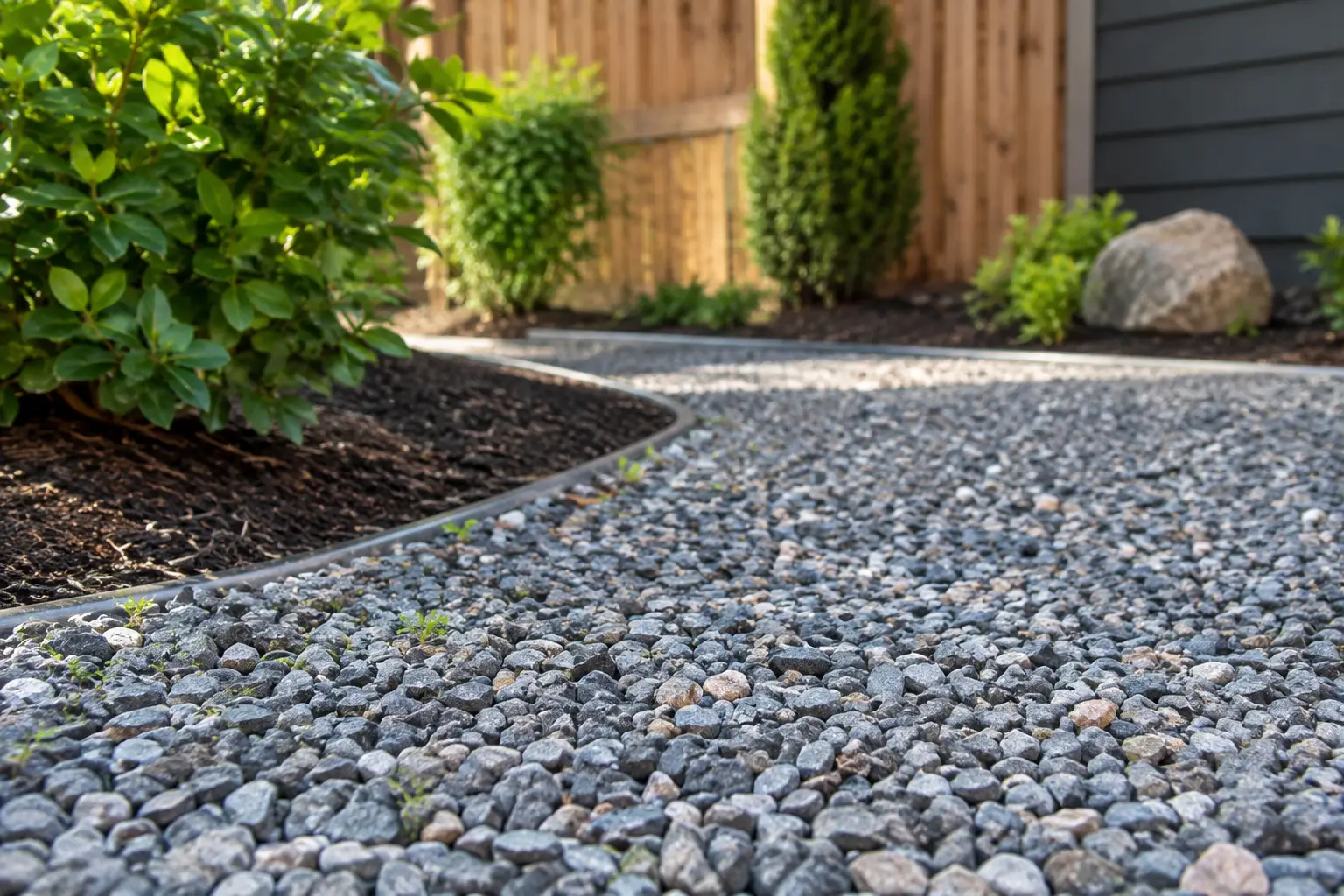
For a path or seating area, stability matters more. Crushed stone has angular edges that lock together better than rounded gravel, making it a stronger choice where people will walk often. Smooth river gravel is comfortable-looking and naturally attractive, but its rounded shape can move underfoot. It works especially well as an accent material, in low-traffic spaces, or where a softer, natural appearance is the goal.
Drainage is another common reason Birmingham homeowners choose gravel. Water can move through stone instead of pooling on the surface, which is useful along downspout outlets, beside patios, and in thoughtfully designed drainage features. Gravel will not solve every grading problem on its own. If water regularly runs toward your foundation or stands in the yard, the slope and drainage plan need attention before stone is installed.
Choose Landscape Gravel by Color, Size, and Texture
The best landscape gravel should fit both the architecture of the home and the way the space will be used. A traditional brick home may look sharp with warm red rock, brown-toned river gravel, or natural earth-colored stone. White or light marble can create a bright, formal look around entry beds and dark green plants, while gray limestone often suits walkways and more understated designs.
Color is worth considering in direct Alabama sun. Light-colored stone reflects heat and can make an area feel brighter, but it may show leaf litter, red clay, and debris more quickly. Darker stone can create strong contrast and hide some soil, though it may absorb more heat around heat-sensitive plants. Looking at a sample beside your siding, brick, and existing hardscape is often more useful than choosing from a photo.
Stone size affects coverage, stability, and appearance. Smaller gravel generally gives a smoother, more finished surface and is easier to spread evenly. Larger decorative stone creates bolder texture and can stand out well around substantial shrubs or in broad beds. For walking surfaces, choose a size that feels stable and comfortable rather than overly large or loose.
Keep the surrounding scale in mind. Fine gravel can get lost beside large boulders or tall ornamental grasses. Oversized rock can overwhelm a narrow foundation bed. The stone should support the rest of the landscape, not become the only thing people notice.
River Gravel, Marble, Red Rock, and Limestone
River gravel is valued for its naturally rounded shape and mixed, earth-toned color. It fits well in dry creek beds, around water features, beneath downspouts, and in natural-style planting areas. Its softer edges give it a relaxed look, though it is less likely than crushed stone to stay tightly packed on a frequently used path.
Marble gravel brings a clean, bright finish. It is a popular option for formal beds, front-yard accents, and areas where homeowners want crisp contrast against dark mulch, brick, or green foliage. Because it is light in color, a bed beneath messy trees may need more routine blowing or raking to stay bright.
Red rock introduces warmth and can complement brick homes, reddish soil tones, and Southern planting palettes. It is often chosen when a homeowner wants a more noticeable decorative statement without the stark contrast of white stone.
Limestone is a dependable, versatile material for many practical applications. Depending on the size and type selected, it can work well for paths, base layers, drainage, and general landscape projects. Ask for guidance when selecting limestone for planting beds, since some stone applications and soil conditions call for a more specific material choice.
Build a Base That Keeps Gravel Looking Neat
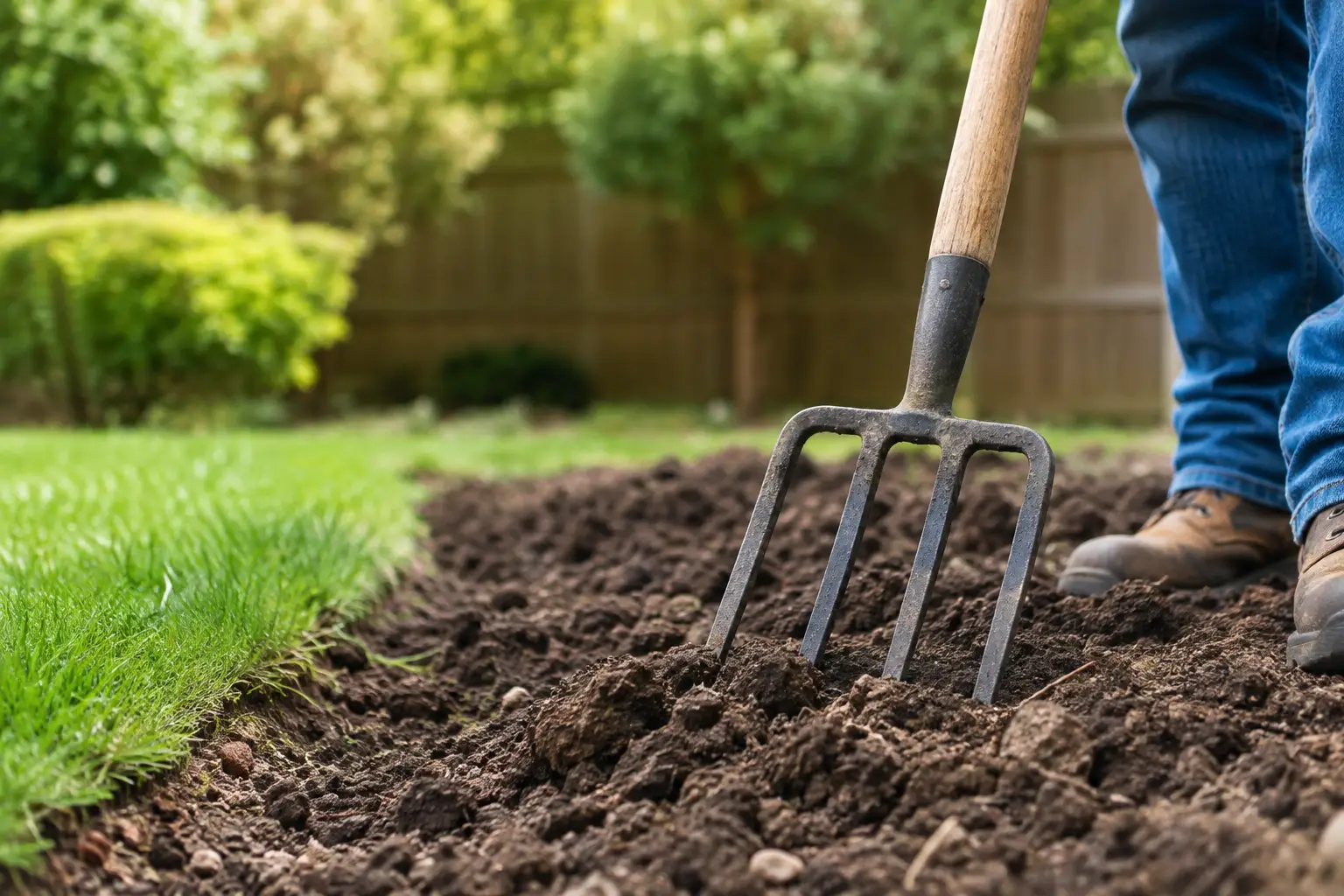
Even premium stone will look unfinished if it is installed over an unprepared surface. Start by removing weeds, grass, roots, and loose debris. Shape the area so water drains away from the home, then create a defined edge with metal, stone, brick, or another border suited to the design. Edging matters because it helps keep gravel in the bed rather than scattered across the lawn or driveway.
A quality landscape fabric can be useful under decorative gravel, particularly in beds and paths where you want a separation layer between soil and stone. It helps reduce weed growth and slows the gravel from sinking into soft ground. Fabric is not a substitute for weeding forever, since windblown seeds can still germinate in leaves and organic matter that collect on top. It does make routine maintenance much easier when installed on a clean, level base.
Depth should match the purpose. Decorative planting beds often need enough gravel to cover the fabric evenly and prevent thin, bare spots from showing through. Paths and functional areas may need a more substantial base, especially on soft soil or where traffic is frequent. If you are building a driveway, parking area, or a path that must support equipment, the base material and compaction plan are just as important as the top layer.
Avoid piling gravel against siding, wooden structures, or the base of shrubs and trees. Leave room around plant stems and trunks so moisture and debris do not stay trapped against them. Around a house, keep the finished grade below weep holes and maintain clear drainage away from the foundation.
Estimate How Much Gravel to Order
Bulk landscape gravel is usually sold by the cubic yard, which is far more practical than hauling dozens of small bags for a sizable project. To estimate your needs, measure the length and width of the area, then decide on the desired depth. A supplier can help convert those measurements into yards and account for the type of material you choose.
It is better to measure each bed or path separately than to guess from the total yard size. Curved beds, narrow side yards, and irregular islands often use less material than they appear to need, while a deeper installation can add volume quickly. Ordering a little extra can be sensible for touch-ups, but an accurate measurement protects the budget and keeps leftover stone from taking up space in the driveway.
For homeowners without a truck, delivery can make the project much simpler. Before scheduling, identify a safe drop location that is accessible to the delivery truck and clear of low branches, vehicles, and overhead lines. Think through where the gravel needs to go after it is dropped. Placing a load close to the work area saves time and repeated wheelbarrow trips.
Landscape Source Inc. helps Birmingham-area homeowners and landscaping crews select bulk materials, calculate quantities, and arrange dependable local delivery with clear placement instructions. That support can be especially valuable when a project involves multiple materials, such as gravel for beds and drainage plus soil or mulch for nearby planting areas.
Maintain Gravel Without Making It a Chore
Gravel has a reputation for being maintenance-free, but low-maintenance is the more accurate description. A quick rake occasionally levels areas that have shifted. Blowing off leaves before they break down keeps the stone color visible and reduces the soil-like layer where weeds can take hold.
If weeds appear, remove them early or use an appropriate landscape weed-control product according to its label. Over time, small amounts of gravel can migrate, settle, or get carried away during cleanup. Keeping a little matching material on hand makes those touch-ups easy and helps the area continue to look consistent.
The most successful gravel projects begin with a simple decision: choose stone for the work it needs to do, prepare the ground carefully, and order enough quality material to finish the job properly. With the right plan, a bed, path, or drainage feature can look clean on installation day and stay that way through many Birmingham seasons.

Leave a Reply